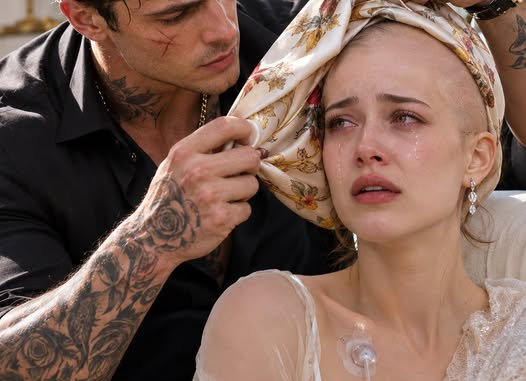
Chapter 1 – Nineteen Thursdays
Nineteen Thursdays I drove myself to the fourth floor of St. Ambrose and sat in chair eleven, and my husband never knew. I scheduled my poisoning around his war — infusion at nine, home by four, dinner on the table by six — because in Dominic’s world men get killed the week they look away, and I would not be the thing that made him look. I was good at disappearing. Eleven years of carrying plates taught me how. Then Sloan pulled my scarf off at a Fourth of July barbecue, and I learned what my husband had been noticing all along.
Sloan Rourke was three bourbons deep when she reached for her sister-in-law’s scarf.
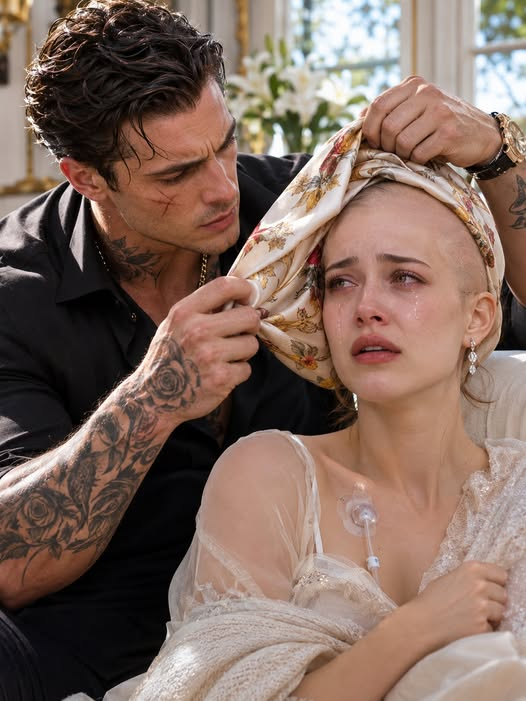
It was ninety-four degrees in Chestnut Hill, the kind of heat that comes up off the asphalt and sits on the back of your neck like a hand. Sixty people were in Victor Rourke’s backyard on Winfield Lane. The smoker had been going since noon. Springsteen was coming off the porch speakers, and the cousins had a horseshoe pit going, and somebody’s kid was running through the sprinkler in his church clothes.
Sloan said it loud enough to carry over all of it.
“It’s ninety-four degrees, Tessa.” She announced it to half the yard. “The Grace Kelly routine was cute in May. It’s the Fourth of July. Nobody’s buying it.”
Her fingers caught the knot of white silk at Tessa’s throat and flicked it, the way you’d flick a bow off a present that annoyed you.
The scarf slid.
Tessa’s hand flew up so fast she knocked her lemonade into the grass. That was the thing — not the scarf. The speed. The way her whole body went after it like a woman catching a falling glass.
The Rourke cousins laughed from the horseshoe pit. They had been laughing at her all summer, in the lawn chairs and the group texts and the silence that followed her into rooms. The waitress Dominic married in six weeks, wearing silk to breakfast like she was somebody, sweating through June with her neck wrapped up like it was Christmas.
Across the yard, Dominic Rourke stood near the smoker with a beer he had not touched.
He came to his uncle’s barbecue every year because not coming was a statement, and in his world statements got men killed. He had spent the afternoon doing what he always did at these things — standing slightly apart, watching the yard the way he watched everything, out of habit. Counting exits. Counting guests. Noticing which cousins had drifted toward which conversations.
So he saw what nobody laughing saw.
Not embarrassment on his wife’s face.
Terror.
He crossed the lawn without putting the beer down — he simply let it go, and it hit the grass and tipped, and nobody picked it up. Guests stepped out of his way the way water moves for a keel. Down at the fence line, the two men with earpieces straightened, read his face, and stayed exactly where they were.
“Oh, come on, Nick.” Sloan was already talking, already backpedaling. “It was a joke. It was a joke—”
He walked past her like she was weather.
Tessa had both hands clamped at her collar now, holding the loosened silk together, and her eyes were doing something he had not seen them do in two years of marriage.
They were begging.
“Please,” she said. Barely sound. “Not here.”
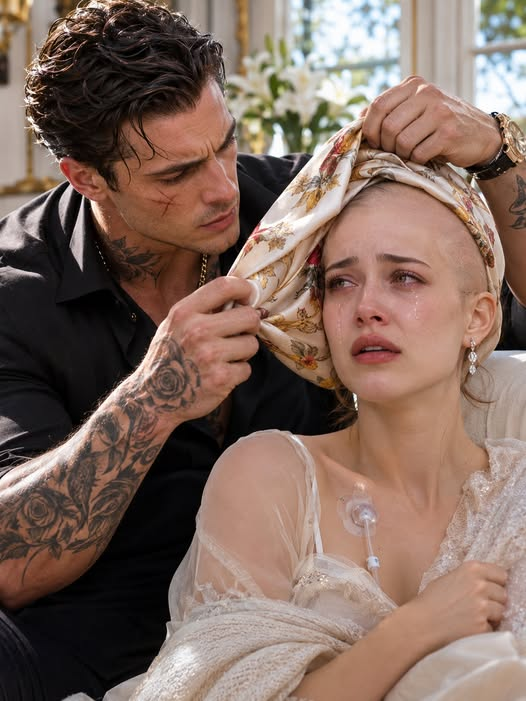
He reached up and untied it.
He was not rough. That was the detail people would whisper about for weeks afterward — how gently the knot came apart, how carefully he drew the silk off her neck. Like a man defusing something. Like the whole yard was full of gas and the wrong breath would take the roof off.
The scarf hung from his fist.
Sixty people went quiet in a backyard in Chestnut Hill. The sprinkler ticked. Some kid’s sparkler hissed by the garage. Up on the porch, the song changed and nobody heard it.
An inch below her left collarbone, under the skin, sat a small raised disc. A triangle of white surgical tape, edges lifting in the heat. A short scar, pale and newer than it should have been. And around all of it, fading up her neck and down under the neckline of her dress, the faint yellow-green of a bruise that had been made and remade for months.
Dominic knew what it was before his mind let him know. The knowledge arrived in his hands first, the way bad news sometimes does.
They started to shake against her bare shoulder.
Dominic Rourke’s hands did not shake. He had signed things, and watched things, and put men in the ground, and his hands had never once done this.
He had seen a disc like that before, a long time ago.
Twenty-six years.
He had spent every year since not thinking about it.
“How long?” he said.
It did not come out like a question. It came out like a door tearing off a hinge.
Tessa looked up at him, and something in her face gave way — not the fear, which was going, but the wall behind the fear. The thing she had been holding up with both arms since February.
“Nineteen Thursdays,” she said.
Nineteen.
He did the math the way he did all math — instantly, against his will.
Nineteen weeks.
Nearly five months.
Back to a gray morning in February, when she had kissed his cheek at the door and said she was driving out to see a friend in Doylestown.
Dominic stared at her.
The backyard disappeared for him.
All he saw was February.
Then March.
April.
Every dinner she had pushed around the plate and claimed she had eaten late. Every morning she had stood at the sink with both palms flat against the counter before turning around with a smile. The first scarf. The second. The Saturday she had fallen asleep upright on the library sofa while waiting for him to come home.
The night she had vomited in the downstairs bathroom and told him the shrimp had been bad.
He had believed exactly none of it.
But he had believed something safer.
Pregnancy, maybe.
Stress.
Fear of the war.
Anything except this.
“Tessa.” His voice dropped. “What is it?”
She looked past him.
At Sloan.
At Victor.
At all the people who had laughed.
Then she looked back at her husband.
“Lymphoma.”
Dominic stopped breathing.
Somewhere behind them, a glass broke.
Tessa kept speaking because if she stopped, she knew she would never start again.
“They caught it early enough to treat aggressively. Dr. Patel says the scans are improving. Thursday was supposed to be my nineteenth infusion. I have three more before they decide whether I need radiation.”
“Thursday,” he repeated.
“Yesterday.”
“You had chemotherapy yesterday.”
She nodded.
“And you came here today.”
“Victor invited us.”
His jaw shifted once.
Tessa knew that movement.
Men had apologized after seeing it.
Sometimes with money.
Sometimes with blood.
This time, Dominic didn’t look at anyone else.
“Why didn’t you tell me?”
And there it was.
Not rage.
Not accusation.
Pain.
Raw enough that she wished he had shouted.
“Because the Calderones were moving on your warehouses,” she whispered. “Because two of your men were shot in February. Because you were sleeping three hours a night. Because every time your phone rang, I watched you become someone else.”
“I am your husband.”
“I know.”
“Do you?”
That hurt.
Her eyes filled.
His did not.
Dominic Rourke had learned before adolescence that tears were information, and information was ammunition.
But his hands were still shaking.
“I watched my mother die in that hospital,” he said.
Tessa closed her eyes.
She knew.
Of course she knew.
Everyone in the family knew that Evelyn Rourke had died when Dominic was twelve.
But nobody talked about how.
“I couldn’t make you go through it twice,” Tessa said.
His face changed.
That was when she realized she had made the wrong calculation.
She had thought telling him would force him to choose between his wife and his war.
She had never considered what hiding it would do.
Dominic stepped closer until the toes of his shoes touched hers.
“You drove yourself?”
She said nothing.
“Tessa.”
“Yes.”
“Nineteen times?”
Her silence answered.
He turned his head.
“Anthony.”
One of the men at the fence was beside him in seconds.
“Car.”
Tessa caught Dominic’s wrist.
“We don’t need to leave.”
“Yes, we do.”
“This is your family.”
His eyes moved to Sloan for the first time.
“No,” he said quietly.
Then he looked down at Tessa.
“This is my family.”
Nobody in Victor Rourke’s yard mistook who he meant.
Chapter 2 – The Passenger Seat
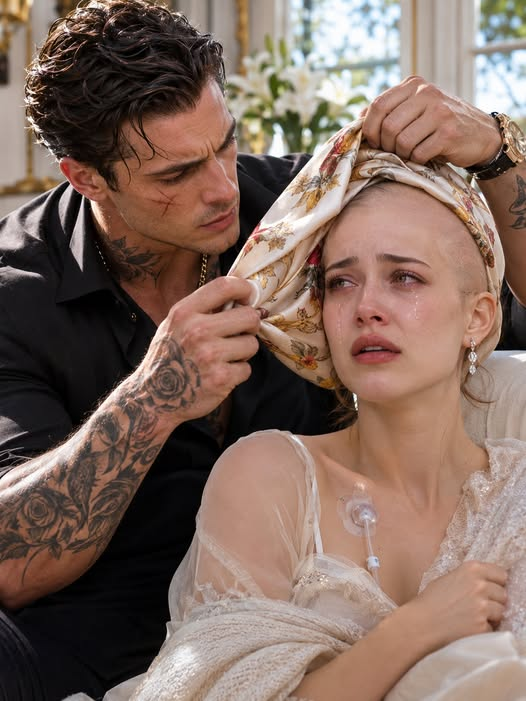
Dominic had not ridden in the back seat with his wife in almost two years.
He did that afternoon.
Anthony drove. Another SUV followed them. Dominic sat beside Tessa with the partition down and one hand pressed flat against his knee as if holding it there required conscious effort.
Tessa stared out the window.
Chestnut Hill slid past in clean sidewalks, stone houses, American flags hanging from porches. It looked offensively normal.
She had spent five months becoming an expert at normal.
Normal was putting foundation over the shadows beneath her eyes.
Normal was learning which foods still tasted like food after infusion.
Normal was keeping ginger candies in every purse and pretending they were for motion sickness.
Normal was cutting her hair to shoulder length before the drugs could thin it enough to make the change obvious.
Normal was telling the housekeeper she wanted privacy on Thursdays.
Normal was throwing hospital wristbands into gas-station trash cans before driving home.
She had planned everything.
Except Sloan.
Except Dominic’s face.
“St. Ambrose,” he said.
Tessa turned.
“What?”
“Your doctor. St. Ambrose?”
She nodded.
“Name.”
“Dominic—”
“Name.”
“Dr. Anika Patel.”
He reached for his phone.
She put her hand over it.
“No.”
He looked at her hand.
Then at her.
“You don’t call doctors and order them around like your accountants.”
“I wasn’t planning to order her around.”
“That’s exactly what your face says.”
“My face says my wife has cancer.”
The word filled the car.
Cancer.
Not lymphoma.
Not treatment.
Not scans.
The word people used when they were afraid of another word.
Death.
Tessa pulled her hand away.
Dominic did not make the call.
That frightened her more than if he had.
He leaned back and studied her with the same terrible concentration he used on men he suspected of lying.
“When did you find out?”
“February seventeenth.”
“Time.”
She blinked.
“What?”
“What time?”
“Why does that matter?”
“Because I want to know where I was.”
Tessa swallowed.
“Eleven twenty-three in the morning.”
His eyes shut.
Only for a second.
“I was at Pier Nine.”
She remembered.
He had come home after midnight with someone else’s blood on the cuff of his shirt.
The Calderone crew had tried to take a shipment.
Four men went to hospitals.
One never came out.
Tessa had been sitting alone at the kitchen island with a pathology report folded in her purse.
Dominic opened his eyes.
“You knew that day.”
“Yes.”
“And you made dinner.”
“I didn’t eat it.”
“I remember.”
Of course he did.
Dominic remembered details that other people forgot they had lived.
“You made chicken.”
“Piccata.”
“You put too much lemon in it.”
“I couldn’t taste it.”
His jaw tightened.
She looked away.
“How did I not know?”
The question was so quiet that she almost missed it.
Tessa let out a breath.
“Because I didn’t want you to.”
“That’s not an answer.”
“It is.”
“No. That’s you taking responsibility for my failure.”
Her head snapped toward him.
“Your failure?”
“My wife spent five months getting chemotherapy alone.”
“I wasn’t alone. Nurses were there.”
His expression turned murderous.
She almost smiled.
“Don’t look at the nurses like that. They’re wonderful.”
“Who else knows?”
“Dr. Patel. Her staff. Rosa knows something’s wrong, but not what.”
“Your sister?”
“No.”
“Your friends?”
“No.”
Dominic stared at her.
“You told nobody.”
“It was easier.”
“For whom?”
She didn’t answer.
The car turned through the gates of their property in Bryn Mawr.
The Rourke house was old Pennsylvania money on the outside and Dominic on the inside: limestone, black iron, cameras where ornamental brackets used to be, security glass disguised as eighteenth-century windows.
Anthony stopped beneath the porte cochere.
Dominic got out first.
Normally he would wait, give Tessa his hand, let her step out herself.
This time he opened her door and bent down.
“What are you doing?”
“Taking you inside.”
“I can walk.”
“I know.”
“Then move.”
“No.”
Tessa stared at him.
Anthony found the hedges fascinating.
“Dominic Rourke, if you pick me up in front of your men, I will divorce you before sunset.”
“Then I’ll make sure the lawyer comes to the bedroom.”
“Don’t.”
He did.
One arm beneath her knees, one behind her back.
Tessa made an angry sound that would have intimidated most men.
Dominic carried her toward the house.
“You are unbelievable.”
“You weigh nothing.”
“That’s rude.”
“That’s not what I meant.”
“I have lost twelve pounds, not forty.”
His steps slowed.
Tessa regretted saying it.
“How much?”
“Forget it.”
“Twelve.”
“Dominic.”
“Since February?”
She looked toward the front door.
He tightened his hold.
“Tessa.”
“Fourteen.”
He stopped.
The men behind them stopped too.
She could practically hear Anthony mentally swearing.
Dominic continued walking.
Inside, Rosa hurried from the dining room.
“Mrs. Rourke?”
“I’m fine,” Tessa said automatically.
Dominic looked down at her.
“No more of that sentence.”
“What sentence?”
“I’m fine.”
“You’re banning words now?”
“Those two.”
Rosa’s eyes moved from Dominic’s face to Tessa’s bare neck.
Then to the port.
Her hand flew to her mouth.
“Oh, sweetheart.”
Tessa’s control nearly broke.
Not because Rosa knew.
Because Rosa looked at her exactly the way Tessa had been trying to prevent people from looking at her.
Like she was already hurt.
Dominic felt her stiffen.
“Rosa,” he said gently.
The older woman lowered her hand.
“What do you need?”
Tessa answered before he could.
“Tea.”
Dominic said, “Doctor.”
They glared at each other.
Rosa backed away.
“I’ll make both.”
Dominic carried Tessa upstairs.
Their bedroom was cool, curtains half closed against the July glare.
He set her carefully on the edge of the mattress.
For several seconds he stood over her.
Then he knelt.
Dominic Rourke did not kneel.
Not in church.
Not at graves.
Not to anyone.
But he lowered himself until they were eye level.
“You don’t get to protect me from being your husband.”
Tessa’s throat burned.
“I was protecting you from losing a war.”
“I would burn every warehouse I own.”
“That’s exactly why I didn’t tell you.”
“I’d give every dollar back.”
“You mean that now.”
“I meant it in February. You just never gave me the chance to say it.”
That landed.
She looked down.
Dominic touched two fingers to the edge of the surgical tape beneath her collarbone.
He did not touch the port itself.
“Does it hurt?”
“Sometimes.”
“Did it hurt yesterday?”
“Yes.”
His face hardened.
She covered his hand.
“Don’t turn this into anger.”
“What am I supposed to turn it into?”
“Fear.”
His eyes rose.
Tessa had never asked Dominic to be afraid before.
For a man like him, fear was a room with no exits.
She whispered, “Just be scared with me.”
Something broke behind his eyes.
He lowered his forehead to her knee.
And for the first time since she had met him, Dominic Rourke let another person see him cry.
Để lại một phản hồi