The deed smelled like my uncle’s shirt pocket. Tobacco, and something damp that had dried a long time ago.
Calvin kept it in a cigar box with two eagle feathers, a button, and forty-three dollars in old coin. When the lawyer read his will, I didn’t cry. We hadn’t spoken in eleven years. And the ranch he left me was listed in county records as *uninhabitable, requiring substantial remediation.*
I drove out in November to see what I’d gotten.
Three of the six windows in the main house were gone. The fourth was cracked clean through, and when the wind came across the flats, it made a low sound like a man blowing across the lip of a bottle. The barn roof had caved in a section twelve feet wide. The corral was mostly fence. The pasture was mostly rock.
But the pump in the yard still worked. I don’t know why that got to me, but it did.
I was fifty-eight years old. I’d been a farrier for thirty years until my back decided I wasn’t anymore. After that, rough carpentry, fencing, day labor for a horse outfit near Prior until they sold. I had a truck, my tools, and no place I needed to be.
So I stayed.
I’ve turned it over a hundred times and I still can’t find a clean answer. Part of it was that I had nowhere better to go. Not a noble reason, but an honest one. Part of it was the silence at dusk, when the wind dropped and you could hear absolutely nothing for ten seconds before a coyote started up. That got into me. And part of it was that fixing things is the one thing I know how to do without thinking too hard.
I fixed the barn roof first. Then the windows. I patched and chinked and reglazed through that whole cold winter, working until dark. By February I had a real bed hauled out from a house sale in town.
The first woman showed up in late March, when the ground in the hollows hadn’t thawed.
I heard her before I saw her. A truck engine laboring, running rough. Then a rusted 1979 Chevy with a camper shell crawled up the track and stopped in my yard, and just sat there, like the driver was deciding whether to go or stay.
The window came down. Darlene was maybe forty-five, hair going gray at the temples, her jaw set the way a person sets it after holding something in for a long time.
“I heard there’s a place out here nobody’s using,” she said. “I’ll pay in work.”
“What kind of work?”
“Whatever kind you need done.”
I gave her the near room in the bunkhouse I’d been fixing up. She asked for nothing else. She unloaded six boxes, a bedroll, and a coffee can with the lid wired shut.
I didn’t ask about the coffee can.

Darlene cooked without fuss and talked only when she had something to say. I learned in pieces that she’d left a husband in New Mexico. Not run from him. Just decided she was done and walked. And there were two grown sons somewhere she no longer spoke to.
In April, her cousin Estelle arrived. Darlene hadn’t mentioned a cousin, and she didn’t apologize for that either. Estelle was thirty-eight, drove a car with a cracked windshield, and brought a border collie mix named Pepper with one blue eye and one brown. She cried quietly all of the first week. Then she stopped and went out and started fixing my fence line on her own time, because she saw it needed doing.
A few weeks later, I rode into town for lumber and came back with a third.
Opal was sitting on her suitcase outside the hardware store, perfectly still, watching traffic. When I came out an hour later, she was still there. I asked if she needed somewhere to go.
“I don’t have money,” she said.
“I didn’t ask about money.”
She was in her early fifties, Crow, with the look of someone who’d dealt patiently with fools for years and developed a certain economy of words. She was a healer. By summer, her kitchen garden against the bunkhouse wall was growing things I’d never seen.
The fourth came on a borrowed horse. Luz, maybe sixty, white hair in a braid, a face weathered until it looked carved instead of aged. She said she’d return the horse when she could. I decided not to ask whose it was. She sewed everything by hand, and within a week there were curtains on the bunkhouse windows and a patch on my work coat so clean I couldn’t find where the tear had been.
The fifth was a surprise. Darlene told me over coffee one morning, no preface: “My youngest is coming. If that’s all right.”
Merritt was nineteen, thin, with dark circles under her eyes and a way of watching everything. She ate carefully, like someone who’d learned not to count on a second helping. I never asked about that either.
The sixth came in June, driving a truck that made Darlene’s look new.
Rosalie Fitch, fifty-four, short gray-brown hair, a laugh that arrived suddenly and was gone just as fast. She’d run a ranch in Wyoming for fifteen years with her husband, until he died and the bank took it. She looked over the patched barn, the fences, the garden.
“You’ve done a lot of work here.”
“I had some help.”
“I don’t mean the women. I mean the *bones* of the place. Somebody knew what they were doing.”
I couldn’t answer. It had been a long time since anyone noticed what I’d done instead of what still needed doing.
By July, six women lived on a ranch the county had written off. It wasn’t romance. It was something I didn’t have a word for yet. A settlement, maybe. Something being built.
I got up first every morning and cooked eggs and biscuits, and by seven there were six women at my table and a dog underneath it.
I didn’t know what that felt like until I had it.
I also didn’t know that somebody had been watching us, counting, and deciding.
Then, one evening in August, at supper time, a truck I knew pulled into my yard with two men in it I had never seen before.
Then, one evening in August, at supper time, a truck I knew pulled into my yard with two men in it I had never seen before.
I wiped my hands on a dish towel and walked out to meet it. Cutter Briggs owned the land that joined mine to the east. He wasn’t a violent man or a dishonest one, exactly. But he had a way of looking at things he wanted that made them feel already his.
Sometime in the spring, he’d decided my place belonged on that list. He’d been dropping by every few weeks, always polite. *Must be hard managing so much. So many complications. Ever considered an offer? * Each time, I told him no.
But he had never come at supper. That was deliberate, and I knew it. The two men stayed by the truck. They didn’t speak. They looked at nothing in particular, the way men do when they’re meant to be a reminder of something.
 “Larger numbers this time,” Cutter said, holding out a folded paper. I looked at the paper. I looked at the two men. I looked back at him. “I appreciate you coming by. The answer’s the same as it’s always been.” “Let me say this plain.”
He gave me credit for honesty, at least. “I don’t think a man alone can hold a place like this. It’ll fall apart. The smart thing is to take the money while there’s money to take.” He wasn’t entirely wrong. That was the part that stung.
Eight months of work had held this place up, and some nights I wondered if it would hold for good. I opened my mouth to answer. Behind me, the screen door opened. I heard the porch boards creak. Not one set of footsteps. Several, near enough all at once.
I didn’t turn around. I kept my eyes on Cutter’s face, and I watched it change. The smugness drained out of him slowly, like water from a cracked trough. Behind me, Darlene stood at the top of the steps with her arms crossed and that jaw set.
Beside her was Rosalie, and Rosalie was holding my own . 30-30, the one I kept on the rack inside the door. She wasn’t pointing it. She held it the way a woman holds something she’s carried her whole life. Not a threat. A simple fact of the world.

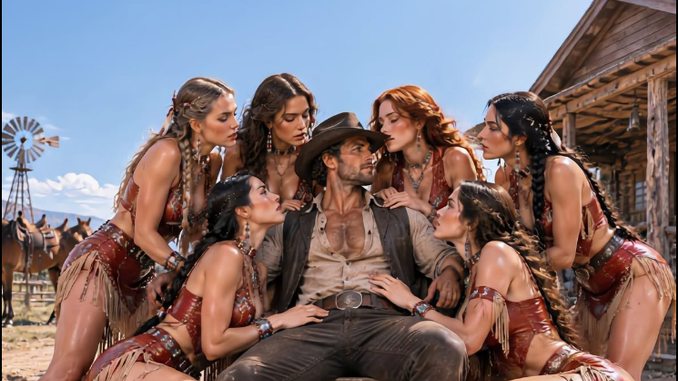
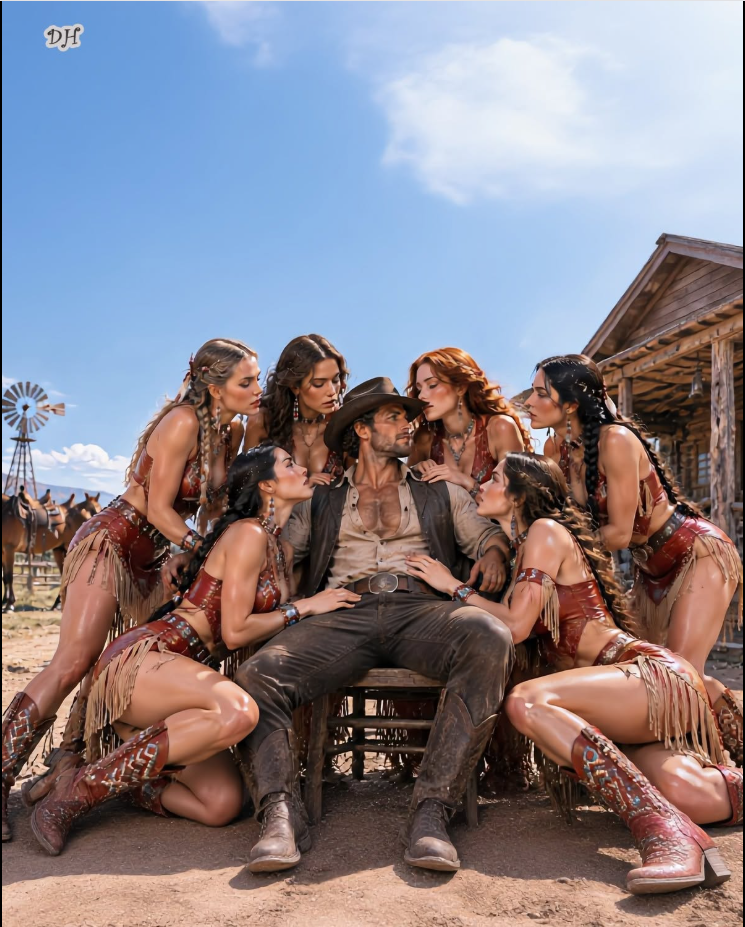
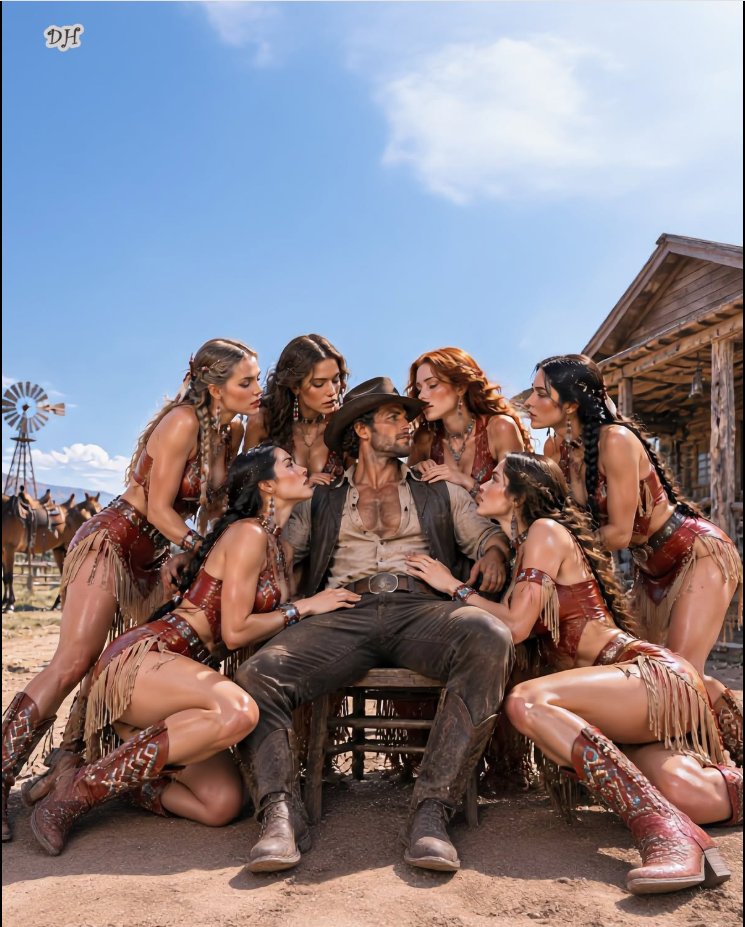
Opal stood at the garden gate, still holding whatever she’d been cutting. And Luz, who I had no idea could move that fast, had simply appeared on my right, between me and the truck. Six women. One old farrier. The wind moving through dry grass, and nobody saying a word.
My women, I thought. Then I thought that was the wrong word. Then I thought maybe it wasn’t. Cutter looked at the picture of us. One of the two men by the truck shifted his boots, then went still. Cutter’s eyes came slowly back to mine.
I knew what I was about to say. I didn’t plan it. It rose up from some place in me that had been quiet for fifty-eight years. And I knew that whatever came out of my mouth next, there’d be no taking it back.
Để lại một phản hồi