The first thing that appeared on the screen was a photograph.
Not the photograph Natalie had chosen for our wedding slideshow. Not the engagement portrait taken beneath the autumn trees, where she had rested her head against my shoulder and smiled as though nothing in the world could ever come between us.
This photograph showed Natalie standing beside another man outside the very barn where we were supposed to get married.
And that man was my best friend, Evan.
For several seconds, nobody seemed to understand what they were looking at.
The photograph had been taken the previous evening, shortly after our rehearsal dinner. Natalie was wearing the pale blue dress I had helped her choose. Evan stood close enough that his forehead nearly touched hers, one hand resting against her cheek.
The timestamp was visible in the lower corner.
Then the screen changed.
A message appeared beneath Evan’s name.
Michael, I was at the party. Natalie and I have been involved for months. She told me the wedding would still happen. I should have told you before any of this started.
I heard someone gasp.
Natalie stopped walking.
Her father, who had been holding her arm, looked from the screen to his daughter. The expression on his face changed slowly, as though his mind was refusing to accept what his eyes had already understood.
Behind me, Evan stood beside the altar in the charcoal suit we had chosen together.
He had been my best man since the moment I proposed.
Now he looked like a stranger.
“Michael,” Natalie said.
Her voice barely carried beyond the first row.
I stepped forward and raised my hand toward the technician.
The screen went dark.
That was all I had asked him to show.
I had prepared several more slides, but standing there and looking at the people who had traveled to celebrate our marriage, I realized they had already seen enough.
I took the microphone from its stand.
“I’m sorry you’ve all come here under these circumstances,” I said. “I know many of you traveled a long way. I know you rearranged your schedules, spent money, and came because you believed you were celebrating something good.”
Nobody moved.
I looked at Natalie.
“But there won’t be a wedding today.”
Her bouquet slipped slightly in her hands.
“What are you doing?” she whispered.
I looked toward the rows of guests, where my mother was sitting with both hands clasped tightly in her lap.
“I’m choosing not to start my marriage with a lie.”
For the first time since I had met Natalie, she seemed unable to find an answer.
But the most important part of that morning had actually begun eight days earlier, when an unfamiliar number sent me a video.
And if I had ignored the final four seconds, I might have married her without ever knowing the truth.
I met Natalie three years earlier at a charity fundraiser in Richmond.
She was standing beside a table of donated books, arguing cheerfully with a volunteer about whether a first edition should be placed in the silent auction or reserved for a separate sale.
She was intelligent, confident, and impossible to overlook.
I had gone to the event because my sister, Amy, was helping organize it. Natalie had attended with coworkers from the interior design firm where she worked.
By the end of the evening, we were talking as though we had known each other for years.
She asked thoughtful questions about my work as a civil engineer. She laughed at stories about my childhood in Ohio. When I mentioned my mother’s habit of saving every greeting card she received, Natalie said that was exactly the kind of thing families should never stop doing.
I remember thinking that she understood what mattered to me.
For a long time, I believed she did.
Our relationship moved steadily. We traveled together, spent holidays with each other’s families, and eventually rented a townhouse on the western side of Richmond.
Natalie brought warmth and energy into rooms that I had always kept quiet. She chose paintings for the walls, replaced my mismatched kitchen chairs, and convinced me that a home should look like someone actually enjoyed living there.
When I proposed, she cried before I had even opened the ring box.
She called her parents immediately afterward.
Then she called Evan.
At the time, that had seemed perfectly natural.
Evan had been my closest friend since college. We had shared an apartment during our final year, helped each other through family difficulties, and remained close even after taking jobs in different cities.
He moved to Richmond about a year after I did.
I introduced him to Natalie at a backyard barbecue.
She liked him immediately.
Everyone liked Evan.
He had the easy confidence of a person who could walk into a room full of strangers and leave with three new friends.
He was the person who remembered birthdays, offered to help move furniture, and knew exactly when to make a joke.
When my father needed assistance repairing the deck at his house during a visit, Evan spent an entire Saturday helping without accepting a dollar.
My parents considered him family.
That was why I never questioned his friendship with Natalie.
They sometimes exchanged messages about birthday surprises for me. He offered opinions about wedding venues. When Natalie needed recommendations for local restaurants, he sent her a list.
Their friendship seemed like another good thing that had come from our relationship.
Looking back, I understand how easily trust can become a reason to stop noticing what is happening directly in front of you.
But I also know that suspicion was not how I wanted to live.
I wanted to marry someone I could trust.
And until that week, I believed I had found her.
The first real warning arrived in the middle of an ordinary Tuesday morning.
I was reviewing construction drawings at my office when my phone vibrated.
The message came from a number I didn’t recognize.
I know this isn’t easy to receive. Please watch the whole thing before you decide what to do.
Below the message was a video attachment.
I stepped into an empty conference room and closed the door.
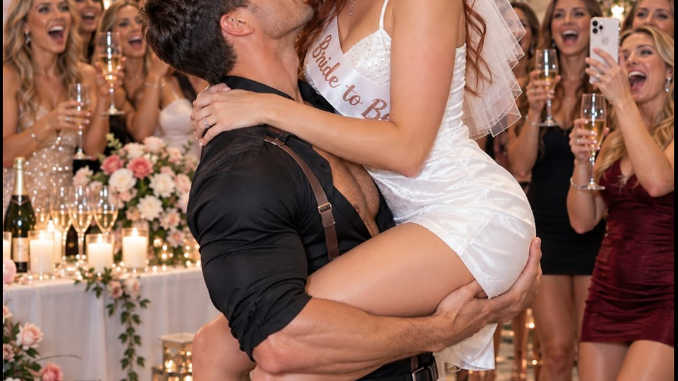
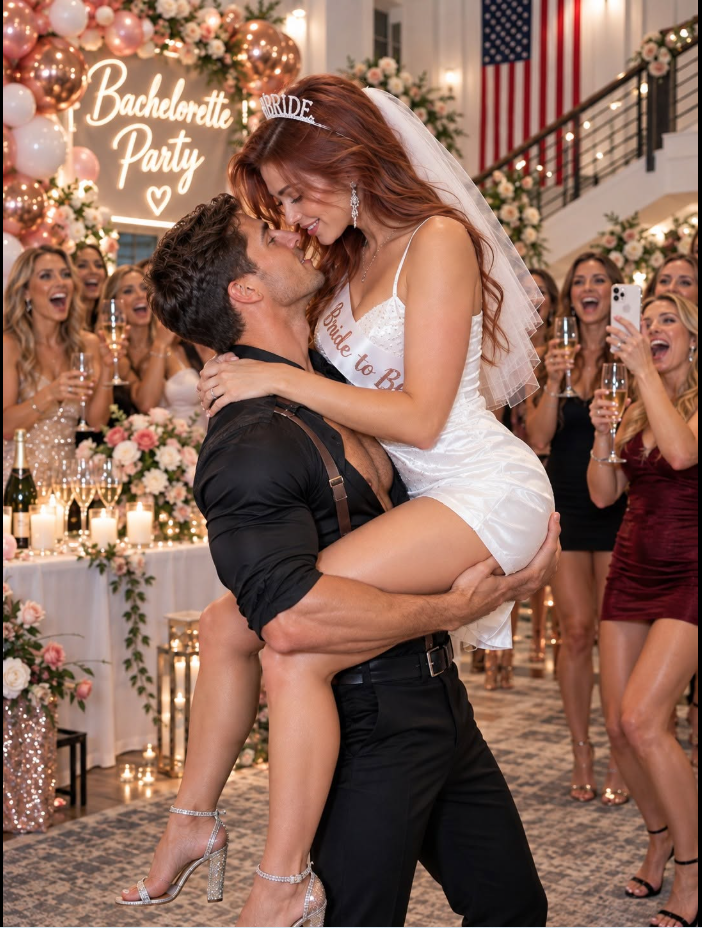
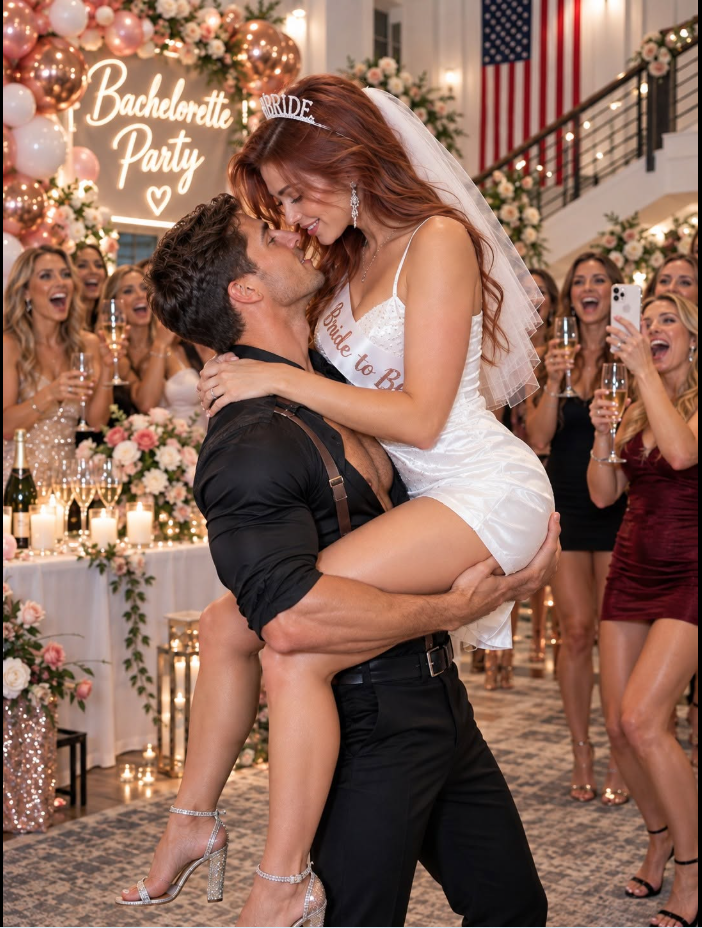
At first, the video looked like something from any noisy celebration.
There were balloons, music, brightly colored drinks, and a group of women laughing around Natalie.
Then the hired dancer moved closer.
Natalie reached for him.
She wrapped her arms around his shoulders and kissed him while her friends cheered.
Someone shouted something about the wedding.
Another woman laughed.
I watched Natalie turn toward the camera with a triumphant smile.
Then the clip ended.
I didn’t feel angry at first.
I felt strangely disconnected, as though I were watching footage of people I had never met.
I watched it again.
Then I called Natalie.
She didn’t answer.
I sent one message.
We need to talk when you get home.
She replied almost immediately.
About what?
I attached a still image from the video.
The three dots indicating she was typing appeared, disappeared, and appeared again.
Finally, she wrote:
Seriously? We’re doing this now?
That was the first moment I understood the conversation would not be what I expected.
When Natalie came home that evening, I was waiting at the kitchen table.
I had imagined she might apologize. I had imagined confusion, embarrassment, perhaps even tears.
Instead, she set her purse on the counter and sighed.
“Michael, please tell me you haven’t spent the whole day thinking about that.”
I stared at her.
“You kissed another man.”
“It was a performance.”
“You were the one holding him.”
“And everyone was laughing. That’s the point.”
I asked whether she understood why it hurt me.
She folded her arms.
“You’re really going to embarrass both families over a joke?”
The word embarrass stayed with me.
Not hurt.
Not betray.
Not even sorry.
She was worried about how my reaction might look.
When I asked who had sent me the video, she said she didn’t know.
Then she told me I was making an innocent celebration into something unpleasant.
“You know how these parties work,” she said. “Nobody takes them seriously.”
“I take our relationship seriously.”
“Then act like it.”
I remember looking toward the refrigerator, where our wedding invitation was held in place by a magnet from a trip to Charleston.
Our names were printed together in elegant lettering.
Michael Carter and Natalie Bennett.
Underneath was the date.
For nearly a year, we had planned every detail of a day that was supposed to mean the beginning of our future.
Now she was speaking as though my responsibility was to protect the schedule.
I told her I needed some time alone.
She shrugged.
“Fine. Just don’t make any decisions you’re going to regret.”
That night, I drove through our neighborhood without knowing where I intended to go.
Eventually, I parked near a small public park and watched the video again.
This time, I paid attention to the background.
The recording had been made near a mirrored wall behind the bar.
When Natalie turned toward the camera at the end, the angle shifted slightly.
For four seconds, the reflection showed part of the room behind the person filming.
Several people were standing there.
One wore a blue jacket.
A familiar watch caught the light as he lifted his hand.
I paused the video.
Then I enlarged the image.
The man’s face was partially obscured, but I recognized the jacket immediately.
Evan had worn it to dinner with me only two nights earlier.
I looked at the watch.
Silver case. Dark leather band. A small scratch near the clasp.
I knew that watch because I had helped Evan choose it after he received his first major promotion.
My first thought was that I had made a mistake.
Evan had told me he was visiting his father that weekend.
There was no reason for him to be at Natalie’s bachelorette party.
And there was certainly no reason for him to keep it from me.
I called him.
He answered on the fourth ring.
“Hey, man. Everything okay?”
“Where were you Saturday night?”
There was a brief silence.
“Norfolk. Remember? Visiting Dad.”
“All night?”
“Pretty much. Why?”
I looked at the frozen image on my phone.
“Just asking.”
Evan laughed.
“You sound exhausted. Wedding stress finally getting to you?”
I almost told him what I had seen.
Instead, I said good night.
Because something in his voice made me want to know the truth before he had a chance to explain it away.
The next morning, Natalie behaved as though our argument had never happened.
She came downstairs wearing one of my old college sweatshirts, poured coffee into her favorite mug, and opened the wedding planning spreadsheet on her laptop.
“The florist needs confirmation before noon,” she said.
I was standing near the sink.
“Are you going to apologize?”
She looked up.
“We already talked about this.”
“You explained why I shouldn’t be upset. That’s different.”
Natalie closed the laptop.
“Michael, if you cancel now, everyone is going to blame you.”
I didn’t answer.
“My parents have spent too much money. Your mother has already invited half the neighborhood. People are flying here.”
“And that means what happened doesn’t matter?”
“It means you need to think about what matters.”
I looked at her for a long moment.
“Do you love me?”
Her expression hardened.
“What kind of question is that?”
“A simple one.”
“Of course I love you.”
“Then why are you more worried about the wedding than about us?”
She stood.
“Because one of us has to be practical.”
She walked upstairs before I could respond.
I remained in the kitchen, listening to her footsteps move across the floor.
For the first time, our home felt like somewhere I had been invited to stay rather than somewhere I belonged.
At work, I struggled to concentrate.
Every time my phone vibrated, I wondered whether it would bring another explanation I didn’t want to hear.
Instead, just after lunch, I received a message from the unknown number.
Did you notice who was in the mirror?
I stared at the words.
Then I replied.
Who is this?
Several minutes passed.
My name is Rachel. I’m one of Natalie’s bridesmaids. I sent the video.
I remembered Rachel.
She was quiet, usually standing toward the edge of group photographs, and had been friends with Natalie since college.
We had met several times, but never spoken for more than a few minutes.
Why send it to me? I asked.
Her reply came slowly.
Because you were the only person in that room who didn’t know what was happening.
I called her immediately.
She declined the call.
Then she sent another message.
I can’t talk at work. Meet me tomorrow somewhere private. I have more to tell you.
I spent the rest of the afternoon looking at my phone.
When I returned home, Natalie was discussing seating arrangements with her mother over speakerphone.
She smiled at me as though nothing had happened.
“Michael’s here,” she told her mother. “Everything’s fine.”
I almost laughed.
Everything was fine because I was standing in the kitchen.
Because the invitations had been mailed.
Because the flowers had been ordered.
Because nobody outside our house knew how close I was to walking away.
That evening, Evan called and asked whether I wanted to grab dinner.
I told him I was busy.
“Come on,” he said. “You’ve been acting strange all week.”
“Have I?”
“Yeah. Natalie says you’re upset about some harmless party thing.”
I closed my eyes.
“What did she tell you?”
“Nothing important. Just that you’re stressed.”
I considered telling him I knew he had been there.
Instead, I asked, “Do you think I should marry Natalie?”
He answered immediately.
“Absolutely.”
“Even if she’s lying to me?”
“People make mistakes, Mike.”
I hadn’t told him about any mistake.
There was another silence.
Then he added, “Don’t throw away something good because you’re emotional right now.”
I thanked him for his opinion.
After the call, I wrote down everything I remembered.
His insistence that I forgive her.
Natalie’s certainty that I wouldn’t cancel.
The laughter in the video.
The reflection in the mirror.
Each detail meant something different now.
And together, they suggested a truth I wasn’t ready to say aloud.
Rachel met me at a coffee shop on the edge of town.
She arrived carrying a canvas bag and looked over her shoulder before sitting down.
“I’m sorry,” she said immediately.
I waited.
“I should have told you sooner.”
“About Evan?”
Her eyes filled with tears.
“So you saw him.”
I nodded.
Rachel placed her phone on the table.
“He wasn’t supposed to be there at first. At least that’s what I was told.”
She explained that the bachelorette party had been organized by Natalie’s maid of honor, Claire, with help from several friends.
Evan had apparently offered to arrange transportation and recommend a venue.
His involvement had been described as a favor to the group.
Rachel had thought it was unusual, but Natalie and Evan were both friends with me.
She saw no reason to assume the worst.
Then Evan arrived at the party.
He spent much of the evening near the back of the room, talking quietly with Natalie whenever the others were distracted.
Rachel noticed that they seemed unusually comfortable together.
When she asked Claire about it, Claire told her to stop worrying.
“She said there was history between them,” Rachel whispered.
I felt something tighten in my chest.
“What history?”
Rachel hesitated.
“I don’t know how far it goes. I only know what I saw.”
She showed me photographs from the party.
In one, Evan stood beside the bar while Natalie leaned close to him.
In another, they were speaking in a corner of the room.
Neither image proved anything by itself.
But they established something important.
Evan had lied about where he was.
“Why didn’t anyone tell me?” I asked.
Rachel looked down.
“Some people thought it wasn’t their business. Some thought Natalie would eventually tell you. Others thought you would forgive her anyway.”
“Did you believe that too?”
She swallowed.
“At first.”
I leaned back in my chair.
It was difficult to hear someone describe the collapse of my relationship as though it had been a topic of casual conversation.
Rachel continued.
“The dancer wasn’t the real problem. Natalie was upset afterward because you weren’t supposed to see the recording.”
“Why?”
“Because she thought you might start asking questions about Evan.”
I looked toward the window.
Cars moved through the parking lot. A delivery truck stopped outside the bakery next door.
The rest of the world continued normally.
Only mine seemed to have changed.
Rachel told me she had argued with Claire about sending the video.
Claire insisted that revealing it would only create unnecessary drama.
But Rachel couldn’t forget one particular moment.
After the dancer left, Natalie had apparently laughed about how much I trusted her.
Someone joked that I was too committed to the wedding to reconsider.
Evan didn’t defend me.
He laughed along with them.
Rachel looked embarrassed as she described it.
“I know it sounds awful.”
“It is awful.”
She nodded.
“I started filming because everyone else was filming. When I watched it afterward, I realized how ugly it looked.”
I asked whether she knew Natalie and Evan were involved romantically.
“I suspected it. I couldn’t prove it.”
“Then why did you say everyone knew?”
“Because they knew there was something between them. Nobody knew how much.”
That distinction mattered.
I didn’t want guesses.
I wanted facts.
Rachel promised to contact me if she learned anything else.
Before leaving, she said something I would remember for months.
“Michael, you don’t have to prove she’s a terrible person to decide you can’t marry her.”
I thanked her.
Then I sat alone until my coffee had gone cold.
For the next several days, I tried to behave normally while quietly reconsidering everything I had accepted as truth.
It was harder than I expected.
Every familiar detail seemed to have acquired a second meaning.
The late nights Natalie said she spent helping clients.
The dinners Evan occasionally missed because of last-minute obligations.
The way Natalie sometimes looked at her phone and smiled before quickly turning the screen away.
None of those things proved anything.
I knew that.
And I refused to become someone who treated every forgotten appointment or private conversation as evidence of dishonesty.
But I also couldn’t ignore the lies I had already confirmed.
Evan had been at the party.
He had told me he was somewhere else.
Natalie knew he was there.
Neither had mentioned it.
When I confronted Evan privately, he tried to minimize the situation.
We met outside his apartment building after work.
He came downstairs wearing gym clothes and carrying a bottle of water.
“What’s going on?” he asked.
I showed him the image from the mirror.
His expression changed.
“That’s not what it looks like.”
“What does it look like?”
He looked away.
“Fine. I stopped by.”
“You told me you were in Norfolk.”
“I was in Norfolk earlier.”
“Then why lie?”
He rubbed the back of his neck.
“Because I knew you’d make a big deal out of me helping with the party.”
I looked at him.
“You helped organize a night where my fiancée kissed another man, and then you told me to forgive her.”
“Mike, don’t twist this.”
“I’m asking you what happened.”
“Nothing happened between me and Natalie.”
He answered too quickly.
I asked him again.
He became irritated.
“You’re going to ruin your own wedding because of something you think you saw?”
That sentence sounded so much like Natalie that I almost smiled.
They had both decided the wedding was the strongest argument against the truth.
I told Evan I didn’t want him standing beside me at the ceremony unless he could be honest.
He looked offended.
“After everything we’ve been through?”
“Exactly because of everything we’ve been through.”
He shook his head.
“You’re letting this get out of control.”
I walked away without answering.
That night, Natalie asked why Evan seemed upset.
I hadn’t mentioned speaking to him.
“Did he call you?” I asked.
She hesitated.
“He said you were being strange.”
I looked at her across the dining table.
“How long have you been close?”
“What?”
“You and Evan.”
She laughed.
“He’s your best friend.”
“That wasn’t my question.”
Her smile faded.
“Michael, this is becoming ridiculous.”
I asked whether anything had happened between them that I deserved to know.
She stared at me.
Then she stood and pushed her chair beneath the table.
“If you keep interrogating me, you’re going to destroy this relationship yourself.”
She went upstairs.
I didn’t follow.
For the first time, I understood that her refusal to answer was also an answer.
Not proof of every suspicion.
But proof that she wasn’t willing to have an honest conversation.
And I had reached a point where honesty mattered more to me than preserving the appearance of happiness.
My sister Amy arrived two days before the wedding.
She found me sitting on the back steps of the townhouse with an unopened bottle of water beside me.
She sat down without asking permission.
“Mom says you’re quiet.”
“Mom says everyone is quiet when they aren’t eating enough.”
Amy smiled briefly.
Then she studied my face.
“What’s wrong?”
I considered lying.
It would have been easier.
Instead, I showed her the video.
She watched without speaking.
When it ended, she handed me the phone.
“Does Natalie know you have this?”
“Yes.”
“What did she say?”
“That I’m embarrassing everyone.”
Amy closed her eyes.
“Oh, Michael.”
I told her about Evan.
About the mirror.
About Rachel.
About the lies.
She listened without interrupting.
When I finished, she asked whether I still wanted to get married.
I looked toward the small garden behind our house.
Natalie had planted white flowers along the fence during our first spring there.
She had said she wanted something beautiful to look at when we grew old together.
“I don’t know anymore.”
Amy leaned forward.
“Then you shouldn’t walk into that barn pretending you do.”
I told her how much money had already been spent.
She shrugged.
“Money matters. But it isn’t a reason to marry someone.”
“I don’t want Mom and Dad to be humiliated.”
“Then tell them the truth.”
“I don’t have all of it.”
“You have enough to know something is wrong.”
Her voice softened.
“Michael, you keep talking about what everyone else will lose if you cancel. What do you lose if you go through with it?”
I couldn’t answer.
She rested her hand on my shoulder.
“You don’t owe anybody a wedding.”
That evening, I told my parents there might be a problem.
My father was quiet.
My mother looked frightened.
“Are you sure?” she asked.
“No.”
“Then maybe you should delay things.”
I explained that Natalie refused to consider postponing the ceremony.
My father looked at me.
“That’s not her decision alone.”
It was such a simple statement that I wondered why I had needed someone else to say it.
My mother reached across the table.
“We love Natalie,” she said. “But we love you too. Don’t confuse our disappointment with a demand that you sacrifice your life.”
I had spent days imagining how devastated my parents would be.
Instead, they were worried about me.
I went home feeling both lighter and sadder.
Because I was beginning to understand how much fear had shaped my decisions.
Fear of hurting people.
Fear of making a public mistake.
Fear of becoming the person responsible for ruining a day everyone had anticipated.
Natalie had counted on those fears.
And until then, she had been right.
The rehearsal dinner took place at the renovated barn on the evening before the wedding.
The building glowed with warm lights.
White roses framed the entrance, and long tables had been arranged beneath exposed wooden beams.
Everyone seemed happy.
Relatives hugged.
Old friends exchanged stories.
My uncle joked about how nervous I must be.
I smiled when appropriate.
Natalie moved through the room like someone who had already won.
She greeted guests, adjusted table decorations, and thanked the catering staff.
Occasionally, she touched my arm.
Each time, I wondered whether she understood what was happening between us.
Evan arrived wearing the charcoal suit jacket he planned to wear the following morning.
He avoided being alone with me.
During dinner, he stood and gave a toast.
He talked about loyalty.
He talked about friendship.
He said Natalie and I were proof that good people could find one another.
I looked down at my plate.
Across the table, Amy stared at him with an expression I had never seen before.
After dinner, I stepped outside for air.
The evening was warm, and the grass beyond the barn was silver beneath the lights.
I was trying to decide whether to speak to Natalie again when Rachel approached.
“Can we talk?” she asked quietly.
I nodded.
She looked toward the building.
“I think you should leave.”
“Why?”
“Because I just saw something.”
My heart began pounding.
She handed me her phone.
The photograph showed Natalie and Evan standing near the side entrance.
Natalie’s hand rested against his chest.
Evan was touching her face.
They were close enough that no reasonable explanation involved an innocent conversation about wedding decorations.
I looked at the timestamp.
The photograph had been taken less than fifteen minutes earlier.
“Did you see them?” I asked.
Rachel nodded.
“I was leaving the kitchen entrance. They didn’t notice me.”
“Did they kiss?”
She hesitated.
“Yes.”
I handed back the phone.
For a moment, I felt nothing.
Then I became aware of the music drifting from the barn.
Inside, someone had started playing a song Natalie and I planned to use during our first dance.
“Send it to me,” I said.
Rachel nodded.
“I already did.”
I walked toward the parking area.
Behind me, Rachel called my name.
I stopped.
“You don’t have to do anything tonight,” she said. “Just don’t let them convince you that you imagined this.”
I got into my truck.
Then I sat in the dark for a long time.
My phone filled with messages from Natalie asking where I had gone.
I didn’t answer immediately.
Instead, I called Evan.
He answered sounding irritated.
“What now?”
“I saw you with Natalie.”
Silence.
“At the side entrance,” I continued. “Fifteen minutes ago.”
He didn’t speak.
“Tell me the truth.”
“Michael—”
“No explanations. No excuses. Just the truth.”
I heard him breathing.
Then he said something that made the last few days suddenly clear.
“I never meant for it to go this far.”
I closed my eyes.
“How far?”
He remained silent.
“How long, Evan?”
“A few months.”
I looked through the windshield at the dark road.
“And you were going to stand beside me tomorrow?”
His answer was almost inaudible.
“I’m sorry.”
“Did Natalie tell you she was going to marry me anyway?”
“Yes.”
“Did you agree to keep seeing her?”
Another silence.
Then:
“Yes.”
I ended the call.
A few minutes later, I sent him one message.
I need you to tell me in writing what you’ve just admitted. No excuses. No blaming anyone else.
He didn’t respond immediately.
But later that night, the message arrived.
He acknowledged that he and Natalie had been involved for months.
He confirmed his presence at the party.
He admitted that he had known I was being misled.
And he said he was sorry.
I read it once.
Then I put my phone down.
Whatever remained of my friendship with Evan ended in that moment.
When I returned home, Natalie was waiting in the living room.
She stood as soon as I entered.
“Where have you been?”
I took off my jacket.
“Driving.”
“People were looking for you.”
“I know.”
“Tomorrow is our wedding, Michael. You can’t just disappear whenever you’re upset.”
I looked at her.
“Did you talk to Evan tonight?”
Her face changed slightly.
“Why?”
“He admitted everything.”
For the first time, she seemed genuinely alarmed.
“What exactly did he say?”
I almost laughed.
Not what happened.
Not I’m sorry.
She wanted to know how much I knew.
“He told me you’ve been involved for months.”
Natalie looked toward the staircase.
Then she sat down.
“It wasn’t supposed to become serious.”
I remained standing.
“Wasn’t it?”
“No.”
“Then why keep doing it?”
She pressed her fingers against her forehead.
“Things got complicated.”
“Things don’t become complicated by themselves.”
She looked up sharply.
“You don’t understand.”
“Then explain.”
She was quiet for a long time.
Finally, she said Evan made her feel different.
With him, she didn’t have to think about responsibilities.
Their conversations were spontaneous.
They could laugh without worrying about mortgage payments, schedules, or long-term plans.
I listened.
Then I asked why she had agreed to marry me.
“Because I love you.”
“Then why him?”
She shook her head.
“I don’t know.”
It might have been the only honest answer she gave me that night.
I asked whether she had intended to tell me.
She looked away.
“No.”
“And after the wedding?”
“I thought things would settle down.”
“You thought you’d stop seeing him?”
She hesitated.
“I thought I could figure it out.”
I sat in the chair opposite her.
For several minutes, neither of us spoke.
Then Natalie began crying.
She said she had made mistakes.
She said she had been afraid of losing me.
She said the wedding had become so important to everyone that she didn’t know how to stop it.
I wanted to believe her tears meant she finally understood.
But then she said:
“We can still get married tomorrow. We can work through this afterward.”
I looked at her.
“You still want to go through with it?”
“Yes.”
“After everything?”
Her voice grew urgent.
“Michael, please. Think about our families.”
There it was again.
The same argument.
The same assumption.
The same belief that my responsibility to everyone else would outweigh my responsibility to myself.
I stood.
“I’m not marrying you tomorrow.”
Natalie stared at me.
“You can’t mean that.”
“I do.”
She began speaking quickly.
She talked about deposits.
Travel arrangements.
The embarrassment her parents would feel.
She said people would gossip for years.
I let her finish.
Then I told her I would handle my share of the expenses and speak to the venue manager.
She looked at me as though I had betrayed her.
“You’re going to humiliate me.”
I shook my head.
“You made choices without telling me. I’m making this one openly.”
She covered her face.
I went upstairs and packed a small bag.
Before leaving, I looked into the bedroom we had shared for almost two years.
Our framed engagement photograph stood on the dresser.
Beside it was the small ceramic bowl where Natalie placed her rings at night.
I remembered buying that bowl during our first trip together.
At the time, it had seemed like an ordinary souvenir.
Now it looked like evidence of a future that had never existed in the way I imagined.
I left without taking either object.
I called the venue manager shortly after midnight.
Mr. Lewis had coordinated our ceremony from the beginning.
He answered with the weary voice of someone accustomed to last-minute wedding emergencies.
“Mr. Carter? Is everything all right?”
“No. The ceremony needs to be canceled.”
There was a pause.
“Is someone ill?”
“No.”
“Would you like to postpone?”
“I need it canceled.”
He asked whether Natalie knew.
I told him she did.
Then I explained that I wanted the guests to be informed when they arrived, but I didn’t want anyone spreading rumors before I could speak to our families.
He listened carefully.
Finally, he said, “You still have access to the venue for the day. The catering arrangements are already in place.”
I looked at the clock.
“What happens to the food?”
“We can discuss that tomorrow.”
I thanked him.
Then I asked about the large screen.
He said the technician would arrive early to test it.
“There’s something I need him to display instead of the slideshow,” I said.
Mr. Lewis hesitated.
“What kind of material?”
“A short explanation. Nothing inappropriate. Nothing that puts the guests at risk.”
He told me to send the file for review.
I spent the next hour sitting at the kitchen table in my sister’s guest room, deciding what I wanted to say.
At first, I created a slideshow containing every message I had received.
The party video.
The images from Rachel.
Evan’s admission.
Natalie’s texts.
I stared at the collection and felt a strange sense of power.
For days, other people had decided what I was allowed to know.
Now I had the evidence.
I could show everyone.
I could make them understand.
But while reviewing the file, I remembered something my father had once told me.
He had worked for years managing a small construction company, where arguments were inevitable.
Whenever someone came to him furious about being treated unfairly, he would listen before asking one question.
“What do you want to be true about yourself after this is over?”
I opened the slideshow again.
Then I began removing slides.
I didn’t want to show a private video from the party.
I didn’t want a room full of relatives watching footage of a woman making a mistake simply to satisfy their curiosity.
I didn’t want to turn the day into entertainment.
But I also refused to stand alone before a hundred confused guests while Natalie and Evan continued insisting that I had misunderstood everything.
So I kept two pieces of evidence.
The photograph from the rehearsal dinner.
And Evan’s written admission.
I added a final slide announcing that the ceremony would not take place.
Then I closed the file.
It was not a perfect decision.
I knew that.
But it was the one I could live with at that moment.
The following morning, I arrived at the barn before most of the guests.
Amy drove me because she didn’t think I should be alone.
Neither of us spoke much during the trip.
Richmond was bright beneath the early summer sun.
The roads were familiar.
We passed the same gas station where Natalie and I had stopped for coffee during our first visit to the venue.
The same stretch of highway where she had excitedly described the kind of wedding photographs she wanted.
I looked out the window and wondered how a place could hold so many happy memories and still become somewhere you dreaded going.
At the venue, Mr. Lewis met us beside the entrance.
He looked concerned but professional.
“The caterers are already preparing lunch,” he said.
“Let them continue.”
“Are you certain?”
“People traveled to be here. They should at least have a meal.”
He nodded.
Then he introduced me to Ben, the technician responsible for the screen.
Ben was younger than I expected, with dark hair and an equipment case slung over one shoulder.
I handed him the file.
He opened it on his laptop.
For a moment, he said nothing.
Then he looked at me.
“Are you sure you want this shown?”
I nodded.
“Only those slides. No party video.”
Ben glanced toward Amy.
She stood beside me with her arms crossed.
“I’ll be right here,” she told him.
He seemed reassured.
We tested the screen once, before any guests arrived.
The images appeared clearly.
Then I asked him to leave the display blank until Natalie began walking down the aisle.
Ben looked uncomfortable.
“You’re certain about the timing?”
I hesitated.
The sensible choice would have been to announce the cancellation before the ceremony began.
I knew that.
But part of me wanted Natalie to experience one moment of the certainty she had forced me to live with.
I wanted her to walk into the room believing she controlled the story.
And then I wanted that certainty to disappear.
It wasn’t my proudest thought.
But I won’t pretend I didn’t have it.
I had been hurt.
I had been lied to.
And some part of me wanted her to feel the consequences in a way she could no longer dismiss.
I told Ben to follow the plan.
Then I went outside.
My mother was standing near the entrance.
She had arrived in a navy dress and carried a small purse that matched her shoes.
When she saw me, her expression softened.
“Are you all right?”
“No.”
She nodded.
“That makes sense.”
I told her the ceremony was canceled.
She closed her eyes briefly.
Then she hugged me.
I had been afraid she would cry about the wedding.
Instead, she whispered:
“I’m glad you told us.”
My father stood a few feet away.
He approached and placed a hand on my shoulder.
“You don’t have to prove anything to anyone,” he said.
I looked toward the barn.
“I think I need them to know why.”
Dad considered that.
“Then say what you need to say. But remember that you still have to live with yourself afterward.”
I nodded.
At the time, I thought I understood.
Later, I would realize he was warning me about something much larger than a wedding slideshow.
By the time Natalie arrived, the barn was full.
Guests were seated beneath the wooden beams.
The white roses looked exactly as she had imagined.
Soft music filled the room.
I stood near the altar, feeling strangely calm.
Evan arrived late.
When he saw me, he stopped.
I looked at him.
He glanced toward the screen, then toward the guests.
“Michael,” he whispered. “Can we talk?”
“No.”
“Please.”
“Not here.”
He looked as though he wanted to argue.
Then he stepped back.
For several minutes, we stood near each other without speaking.
The distance between us was less than six feet.
It felt enormous.
When the music changed, everyone turned toward the entrance.
Natalie’s father appeared first.
Then Natalie stepped beside him in her wedding dress.
She was beautiful.
That was the hardest part.
For a brief moment, I remembered why I had wanted to marry her.
I remembered our first dinner.
The night she cried when I proposed.
The plans we made for our future.
The way she laughed when she was genuinely happy.
All of those memories were real.
But they were no longer enough.
Natalie smiled toward the guests.
Then the screen lit up.
The photograph appeared.
She stopped.
Her father looked up.
I saw the moment he recognized Evan.
Then the message appeared.
A murmur moved through the room.
Evan stepped backward.
Someone in the second row whispered his name.
Natalie’s bouquet trembled in her hands.
I signaled Ben to stop.
The screen went dark.
Then I took the microphone.
I apologized to our guests.
I told them the ceremony would not take place.
I explained that the decision was mine.
I didn’t describe every detail.
I didn’t mention the dancer.
I didn’t read private conversations aloud.
I simply said I had learned that the relationship I was being asked to commit my life to was not the relationship I believed I had.
Then I added:
“I hope you’ll respect that I won’t discuss the details here. The food has been prepared, and you’re welcome to stay. But there will be no marriage today.”
The silence was heavy.
Natalie took one step toward me.
“Michael, please.”
I looked at her.
There were tears in her eyes.
For a moment, I wanted to comfort her out of habit.
Then I remembered the conversation in our kitchen.
The way she had treated my pain as an inconvenience.
The way she had insisted I could not leave.
I set the microphone down.
“I’m sorry it happened this way,” I told her quietly. “But I’m not changing my mind.”
She stared at me.
Then she turned toward Evan.
I watched his expression collapse.
He couldn’t look at her.
And somehow, that told me more than any of the photographs.
He had helped create this situation.
But he had never expected to stand inside it.
The next hour was the strangest of my life.
Guests didn’t know whether to remain seated, approach us, or leave.
Some walked outside.
Others gathered in small groups near the reception tables.
My aunt hugged me and started crying.
A cousin I hadn’t seen in years shook my hand without saying anything.
Someone asked whether the wedding had been postponed.
I told him it had been canceled.
That word sounded final in a way I hadn’t anticipated.
Across the room, Natalie’s mother sat beside her husband.
Both looked devastated.
I felt sorry for them.
They had not asked for this.
They had welcomed me into their family.
Her father had helped us compare caterers and had spent an entire afternoon discussing the outdoor lighting.
Now he was sitting beneath decorations purchased for a wedding that would never happen.
I approached him.
“Mr. Bennett.”
He looked up.
For a moment, I thought he might be angry.
Instead, he said, “Is it true?”
I nodded.
He lowered his head.
“How long?”
“I only found out this week.”
He looked toward Natalie, who was speaking to her mother near the side entrance.
Then he looked back at me.
“I’m sorry, Michael.”
I felt my throat tighten.
“You don’t need to apologize.”
He shook his head.
“I know. But I’m sorry anyway.”
His kindness nearly broke me.
I had expected accusations and arguments.
Instead, I found myself looking at a man who had lost something too.
He had believed his daughter was entering a loving marriage.
He had imagined walking her down the aisle as one of the happiest moments of his life.
Now he was struggling to understand what had happened.
I offered to reimburse my share of any outstanding expenses.
He waved the suggestion away.
“We’ll discuss money later.”
Then he stood and shook my hand.
It was one of the most painful gestures of the entire day.
A few minutes later, Evan approached.
Amy stepped between us.
“Not now,” she said.
He looked at me.
“Michael, I know you hate me.”
I said nothing.
“I never wanted to hurt you.”
Amy shook her head.
“Then you had a strange way of showing it.”
Evan looked down.
He asked whether we could talk privately after the guests left.
I told him I had nothing to discuss.
He nodded slowly.
Then he walked out of the barn.
I watched him leave.
Part of me expected to feel satisfaction.
Instead, I felt a deep, quiet sadness.
The man who had helped me move into my first apartment, attended my father’s birthday dinners, and promised to stand beside me at my wedding was gone.
I didn’t know whether I would ever trust those memories again.
Natalie found me near the garden behind the barn.
She had taken off her veil.
Her makeup was smudged, and she held her phone so tightly that her knuckles had turned pale.
“You didn’t have to do that,” she said.
I looked at her.
“You’re right.”
She seemed surprised.
“I could have handled it differently,” I continued. “I could have told everyone before you arrived.”
“Then why didn’t you?”
I considered lying.
I could have said I wanted the truth to come out.
I could have insisted I had no choice.
Instead, I answered honestly.
“Because I was hurt, and I wanted you to understand how serious this was.”
Natalie’s expression changed.
“So you wanted to punish me.”
“Part of me did.”
She stared at me.
I continued before she could answer.
“But the wedding was over before the screen came on. I told you that last night.”
She looked away.
“I thought you’d change your mind.”
“I know.”
She began crying again.
“Michael, I love you.”
I leaned against the railing.
“I believe some part of you does.”
“Then why can’t we fix this?”
“Because love isn’t the only thing a marriage needs.”
She shook her head.
“People forgive worse things.”
“Some do.”
“Then why can’t you?”
I looked at her.
“Because you weren’t asking me to forgive you. You were demanding that I pretend it didn’t matter.”
She opened her mouth, then closed it.
I asked whether she had planned to stop seeing Evan after the wedding.
She wiped her face.
“I wanted to.”
“That’s not an answer.”
“I didn’t know what I wanted.”
I nodded.
“Then you weren’t ready to marry me.”
She looked toward the barn.
For the first time, she seemed to understand that I wasn’t negotiating.
There was no argument left to win.
No guest list to invoke.
No deposit large enough to change my decision.
She said she couldn’t believe I had shown everyone the photograph.
I told her I understood why she was angry.
Then I said something I had needed to hear myself.
“What I did today doesn’t erase what you did. And what you did doesn’t make every choice I made today right.”
Natalie looked at me for a long moment.
Then she asked whether I hated her.
I thought about our years together.
The laughter.
The plans.
The ordinary evenings when we cooked dinner and watched television on the couch.
“No,” I said.
She began crying harder.
“I just can’t trust you enough to marry you.”
That was the last conversation we had at the venue.
The reception lunch continued.
Not because anyone wanted to pretend the wedding had happened, but because the food was ready and many guests had traveled hundreds of miles.
Mr. Lewis quietly removed the wedding signage.
The staff turned down the music.
Families gathered at tables and ate beneath the white flowers.
It was awkward.
It was sad.
But it was also strangely human.
My uncle told a story about getting lost on the way from the airport.
My cousin helped an elderly relative find her seat.
A little girl asked why nobody was cutting the wedding cake.
Her mother gently explained that plans had changed.
I sat beside my parents and Amy.
For the first time in days, I ate an entire meal.
My mother noticed.
She didn’t comment.
Instead, she passed me the bread basket.
Later, when most of the guests had left, my father and I walked outside.
The American flag near the venue entrance moved gently in the wind.
I watched it for a moment.
“Do you think I went too far?” I asked.
Dad thought before answering.
“I think you were trying to protect yourself.”
“That’s not what I asked.”
He looked at me.
“I think showing people the truth was understandable. I also think you may wish you’d done it differently.”
I nodded.
He continued.
“But don’t spend so much time judging how you ended it that you forget why you needed to end it.”
I looked toward the empty parking lot.
For days, I had wanted someone to tell me exactly what the right decision was.
Now I understood that life rarely offered such clear answers.
I could regret the public presentation without regretting the canceled marriage.
I could care about Natalie’s family without taking responsibility for Natalie’s choices.
And I could mourn the future I had lost without trying to recover it.
Dad placed his arm around my shoulders.
“Come on,” he said. “Let’s get you home.”
For the first time that day, I knew which home he meant.
The practical consequences began the following morning.
I woke in Amy’s guest room to sunlight streaming through the curtains.
For several seconds, I forgot what had happened.
Then I reached for my phone.
There were dozens of messages.
Some were supportive.
Others were confused.
A few came from people who had watched recordings made by wedding guests.
Someone had posted a short clip of the screen online.
By afternoon, strangers were sharing opinions about a relationship they knew almost nothing about.
I hated it.
I had wanted our families to understand.
I had not wanted our lives turned into public entertainment.
Amy helped me contact the people who had posted the recordings.
Several removed them.
Others didn’t respond.
I couldn’t control that.
It was another consequence of choosing a public confrontation.
And it taught me that even justified anger can create outcomes you never intended.
I decided not to answer comments or defend myself online.
The people who mattered knew what had happened.
Everyone else could believe whatever they wanted.
There were more important things to handle.
Our townhouse lease had several months remaining.
Our furniture was mixed together.
We had joint wedding expenses and deposits that could not be recovered.
The next week became a series of uncomfortable conversations.
I contacted the property manager.
I reviewed our shared accounts.
I made a list of furniture we had purchased together and items that belonged to each of us before we moved in.
Amy helped me organize the documents.
I spoke with an attorney to make sure I understood my obligations.
Nothing about the process was dramatic.
It was paperwork.
Phone calls.
Receipts.
Appointments.
And the slow work of separating two lives that had been arranged around a shared future.
Natalie initially refused to discuss moving out.
She said she needed time.
I agreed to give her space, provided we established clear boundaries.
I rented a small apartment closer to my office.
It had plain walls, an outdated kitchen, and a view of a parking lot.
The first night I slept there, I used a folded sweatshirt as a pillow because my bedding hadn’t arrived.
I should have felt miserable.
Instead, I slept for nearly nine hours.
No arguments.
No accusations.
No wondering whether a phone buzzing in another room meant something I wasn’t supposed to know.
Just quiet.
It was the first peace I had felt in weeks.
Evan contacted me several times.
At first, I ignored him.
Then he sent a long message apologizing for the pain he had caused.
He said he had been confused.
He said he had never intended to destroy our friendship.
He said Natalie had told him she was uncertain about marrying me, and he had convinced himself they were not doing anything that would last.
I read the message twice.
Then I replied with one question.
When did you first decide it was acceptable to lie to me?
He didn’t answer for several hours.
Finally, he wrote:
I don’t know.
I believed him.
Not because the answer excused anything.
But because I suspected he had avoided asking himself that question until the damage was impossible to hide.
A few days later, he appeared outside my office.
I almost walked past him.
“Michael, please.”
I stopped.
He looked exhausted.
“I just want to explain.”
“You’ve explained.”
“Not everything.”
I shook my head.
“I don’t need every detail.”
He looked surprised.
For years, Evan had been the person I called whenever something went wrong.
I had trusted him with worries I didn’t share easily.
He knew about my father’s health concerns, my career frustrations, and my fears about becoming a husband.
Now he wanted me to sit with him and help him make sense of the pain he had caused.
I couldn’t do it.
“You were my best friend,” I said.
He looked down.
“I know.”
“You stood in my parents’ kitchen and promised you’d always have my back.”
His eyes filled.
“I meant it.”
“Maybe you did when you said it.”
I paused.
“But you didn’t mean it when it mattered.”
He wiped his face.
I took a breath.
“I don’t wish you harm, Evan. But I don’t want you in my life.”
He nodded slowly.
Then he stepped aside.
I walked into the office without looking back.
For weeks afterward, I wondered whether I had been too harsh.
But each time I considered reaching out, I remembered that forgiveness and reconciliation were not the same thing.
I could eventually stop carrying anger toward Evan.
That didn’t mean I had to restore a friendship he had broken.
Rachel called me about a month after the wedding.
She asked whether we could meet.
I agreed.
We sat in the same coffee shop where she had first told me about Evan.
She looked nervous.
“There’s something I want to apologize for.”
I waited.
“The public video.”
I nodded.
Rachel explained that she had sent the original recording privately because she believed I deserved to know what had happened.
But when she realized several friends were still planning to keep everything quiet, she had argued with Claire.
The argument escalated.
Eventually, someone in the group shared the video publicly.
Rachel had not been the person who posted it, but she admitted she had contributed to the disagreement that made everything worse.
“I kept telling myself I was helping,” she said.
“You did help.”
“Not in every way.”
I understood what she meant.
The truth had mattered.
But the way it spread had hurt people who had nothing to do with Natalie’s decisions.
Rachel looked down at her cup.
“I should have just spoken to you directly from the beginning.”
I nodded.
“Probably.”
She seemed relieved that I wasn’t trying to make her feel better.
Then she asked how I was doing.
“Better than I expected.”
“Really?”
“Some days.”
I told her about the apartment.
The paperwork.
The strange experience of buying groceries for one person after years of shopping for two.
She smiled.
“That must take some getting used to.”
“It does.”
We sat quietly for a moment.
Then Rachel said something that surprised me.
“Natalie isn’t doing well.”
I looked at her.
“How do you know?”
“She called me.”
I waited.
“She said she can’t understand why you won’t talk to her.”
I looked out the window.
“I’ve spoken to her.”
“I know.”
“She wants a different answer.”
Rachel nodded.
Then she reached for her bag.
“I don’t want to get in the middle anymore.”
“That’s probably wise.”
She smiled sadly.
Before leaving, she said she hoped I would find happiness.
I thanked her.
After she walked away, I stayed at the table for several minutes.
It occurred to me that Rachel had lost friendships too.
She had made a difficult choice.
Then she had watched the consequences spread beyond anything she expected.
There were no perfectly innocent people in the way the truth had become public.
But there were still differences between making a mistake, admitting it, and insisting that everyone else accept it.
I was beginning to see those differences more clearly.
Two months after the wedding, Natalie’s father called.
I hadn’t spoken to him since the ceremony.
He asked whether we could meet for lunch.
I hesitated, then agreed.
We met at a quiet restaurant near the river.
Mr. Bennett arrived carrying a folder.
For a moment, I feared another argument about money.
Instead, he placed several receipts on the table.
“I’ve gone through the wedding expenses,” he said.
I nodded.
“We don’t want you paying for things that were meant to be our gift.”
I looked at him.
“That’s generous, but I should cover my share.”
He shook his head.
“Michael, we invited you into our family because we believed you loved our daughter. You did.”
I looked down.
“That hasn’t changed what happened.”
“No.”
He took a breath.
“But I don’t want you thinking our kindness came with conditions.”
I felt my throat tighten.
We went through the remaining costs.
We agreed on a fair division.
Then he closed the folder.
“How are you?”
I almost gave the automatic answer.
Fine.
Instead, I said, “I’m getting there.”
He nodded.
“Natalie’s having a difficult time.”
I looked at him.
“I imagine she is.”
He stirred his coffee.
“She keeps saying she never thought you’d actually leave.”
I said nothing.
He looked tired.
“I think that’s the part I understand least.”
I waited.
“She knew you loved her. Somehow she turned that into believing you had no choice.”
His words were painfully accurate.
I looked toward the window.
“That’s how it felt.”
He nodded.
Then he said something I hadn’t expected.
“She wanted me to ask you to reconsider.”
I looked at him.
“Are you?”
“No.”
He shook his head.
“I told her that wasn’t my decision to make.”
We finished lunch talking about ordinary things.
His garden.
My work.
The unusually hot weather.
When we stood to leave, he shook my hand.
“I hope you build a good life, Michael.”
“Thank you.”
He held my hand for a moment longer.
“You deserve one.”
I watched him walk toward his car.
Then I sat in mine for several minutes, thinking about the family I had nearly joined.
Not everyone who had loved Natalie was responsible for what she had done.
And losing them was another kind of grief I hadn’t expected.
By late summer, the wedding photographs had begun arriving.
Not from the ceremony, which had never happened, but from guests who had taken pictures during the rehearsal dinner.
People sent them privately, unsure whether I wanted to see them.
At first, I deleted the messages without opening the attachments.
Then one evening, Amy sent a photograph of me standing beside Dad outside the barn.
We were laughing about something.
I couldn’t remember what.
There was no Natalie.
No Evan.
Just my father and me beneath the warm evening lights.
I saved it.
A few days later, I printed it and placed it on a shelf in my apartment.
For the first time, I allowed myself to remember that the entire experience had not been a lie.
My parents’ love was real.
Amy’s concern was real.
The friends who had checked on me afterward were real.
Even some of the happy moments with Natalie had been real.
They simply hadn’t meant what I believed they meant about our future.
That distinction helped.
I began spending more time doing things I had neglected during the wedding preparations.
I returned to a hiking trail near the James River.
I started cooking again.
I visited my parents in Ohio for a long weekend and helped Dad repair a fence.
We worked slowly in the afternoon sun.
At one point, he handed me a screwdriver and asked whether I had heard from Natalie.
“Not recently.”
He nodded.
“How do you feel about that?”
I considered the question.
“Relieved.”
He smiled faintly.
“That’s an answer.”
That evening, my mother brought out a box of old photographs.
We sat at the kitchen table looking at pictures from my childhood.
School events.
Birthday parties.
Family vacations.
One photograph showed me at twelve years old, standing proudly beside a badly assembled wooden birdhouse.
Dad laughed.
“You insisted you didn’t need instructions.”
“I still don’t.”
“That’s why the roof fell off.”
Mom smiled.
I looked at the photograph for a long time.
The boy in it had no idea what kind of adult he would become.
He didn’t know about Natalie.
He didn’t know about Evan.
He didn’t know that one day he would stand in front of a hundred people and cancel his own wedding.
But he looked happy.
And for the first time in months, I believed I might feel that way again.
Natalie contacted me one final time in early autumn.
Her message was short.
Could we meet? Just once. I don’t want to argue.
I thought about ignoring it.
Then I realized I no longer felt afraid of the conversation.
I agreed to meet her at a public café.
She arrived wearing a cream sweater and dark jeans.
Her hair was shorter than I remembered.
For a moment, we looked at each other awkwardly.
Then she sat down.
“Thank you for coming.”
I nodded.
She wrapped both hands around her coffee cup.
“I’ve been going to counseling.”
“I’m glad.”
She looked down.
“I didn’t understand how much I depended on you always being the one who made things right.”
I listened.
She told me she had spent weeks trying to convince herself I had overreacted.
She blamed the public screen.
She blamed Evan.
She blamed Rachel.
She blamed the pressure of the wedding.
Then, gradually, she began asking why she had been so certain that my feelings would never change her plans.
“I thought if you loved me enough, you’d stay,” she said.
I looked at her.
“And now?”
“Now I think I used your love as permission to do whatever I wanted.”
It was the clearest admission I had heard from her.
I didn’t know whether it came from genuine change or simply from months of reflection.
But I appreciated the honesty.
She apologized for the relationship with Evan.
For lying.
For making me feel responsible for protecting a wedding she had already undermined.
I thanked her.
Then she asked the question I had expected.
“Is there any chance for us?”
I took my time answering.
I didn’t want to hurt her unnecessarily.
But I also didn’t want to leave behind another false hope.
“No, Natalie.”
Her eyes filled.
“Not even someday?”
I shook my head.
“I hope you build a better life. I mean that. But I don’t want to rebuild ours.”
She nodded slowly.
I could see how difficult it was for her to accept.
For a few moments, neither of us spoke.
Then she said something unexpected.
“I watched the wedding video again.”
I looked up.
“The one someone recorded from the back of the barn.”
I waited.
“For a long time, all I could see was how embarrassing it was.”
She swallowed.
“Then I noticed your mother.”
I remembered where Mom had been sitting.
Natalie continued.
“She wasn’t looking at me. She was looking at you.”
Her voice trembled.
“She looked worried that you were going to fall apart.”
I felt something tighten in my chest.
Natalie wiped her eyes.
“I kept thinking about what people thought of me. I never really thought about what I’d done to you.”
I didn’t know what to say.
She looked down.
“I’m sorry.”
This time, I believed she understood the meaning of the words.
But understanding didn’t change my decision.
We finished our coffee quietly.
When we stood to leave, she asked whether she could hug me.
I hesitated.
Then I nodded.
It was a brief embrace.
No promises.
No attempt to recover the past.
Just two people acknowledging that something important had ended.
Outside, we walked in opposite directions.
I didn’t look back.
The following spring, almost a year after the canceled wedding, I returned to the same part of Virginia where the barn stood.
Not because I wanted to revisit the memory.
Amy had invited me to a small family gathering at a nearby farm.
Her friends were celebrating an anniversary, and she thought I would enjoy the afternoon.
I had nearly declined.
Then I realized I was tired of avoiding places simply because they reminded me of a difficult chapter.
The afternoon was warm.
Children played near a wooden fence.
Someone had set up folding chairs beneath a row of trees.
There were no elaborate decorations.
No giant screen.
No carefully arranged entrance.
Just people enjoying the day.
I helped carry drinks from the kitchen.
Later, I stood beside Amy while she watched her husband teach their son how to fly a kite.
“You’re smiling,” she said.
“Am I?”
“More than you used to.”
I looked toward the field.
“I feel different.”
“Good different?”
I considered that.
“Quieter.”
She laughed.
“That sounds like you.”
We walked toward the fence.
Beyond it, the grass moved gently in the wind.
I thought about the morning of my wedding.
The white roses.
The hundred guests.
The photograph on the screen.
Natalie stopping in the aisle.
For months, I had remembered that moment as the day everything fell apart.
Now I saw it differently.
The relationship had already been broken.
The screen had merely made it impossible to pretend otherwise.
I still wished I had handled parts of that morning with more grace.
I wished our families had been spared the public shock.
I wished Evan had told me the truth before I had to find it in a reflection.
And I wished Natalie had understood that love wasn’t a guarantee that someone would accept anything.
But I no longer wished I had married her.
That was the difference.
Amy leaned against the fence beside me.
“Do you ever think about what would have happened if you hadn’t seen that video?”
I watched the kite rise above the trees.
“Sometimes.”
“And?”
I took a breath.
“I think I would’ve married her.”
Amy said nothing.
“I would’ve tried to be a good husband. I would’ve explained away things that didn’t feel right because I wanted our marriage to work.”
I looked down.
“And eventually, I probably would’ve found out the truth.”
She nodded.
“Only later.”
“Yeah.”
We stood quietly for a moment.
Then Amy asked whether I regretted trusting Natalie in the first place.
I thought about the question.
For a long time, I had confused trust with foolishness.
I had replayed every missed warning sign and wondered how someone who considered himself careful could have failed to see what was happening.
But I had finally stopped blaming myself for believing people who chose to lie.
“No,” I said.
Amy looked at me.
“I regret ignoring how she treated me after I learned the truth. But I don’t regret being willing to trust someone.”
She smiled.
“That’s a good distinction.”
I nodded.
“It took me a while.”
That evening, I returned to my apartment and opened the drawer where I kept important documents.
Inside was a small envelope containing the original wedding invitation.
I had saved one copy.
Not because I wanted Natalie back.
Not because I believed the wedding should have happened.
But because the invitation represented a decision I had once made sincerely.
I had loved her.
I had wanted a future with her.
I had been willing to stand before our families and promise to build a life together.
Those feelings were real, even if the promises were never exchanged.
I held the invitation for a moment.
Then I placed it inside a box with other photographs and memories from that part of my life.
I wasn’t going to display it.
I wasn’t going to destroy it either.
It belonged to my past.
And for once, I didn’t feel the need to argue with my past.
My phone vibrated.
It was a message from Dad.
A photograph of the repaired fence at his house.
Underneath, he had written:
Still standing. Guess we did something right.
I laughed.
Then I replied:
Amazing what happens when you fix the foundation first.
He sent back a thumbs-up.
I set the phone on the table and looked around my apartment.
It wasn’t the home Natalie and I had imagined.
There were no carefully chosen wedding gifts.
No framed ceremony portraits.
No shared plans pinned to the refrigerator.
But the furniture was mine.
The photographs were mine.
The quiet was mine.
And the future was open in a way I had once found frightening.
I walked to the window.
Outside, the lights of Richmond stretched across the evening.
Somewhere in the city, people were meeting for first dates, celebrating anniversaries, making promises, and deciding whether to trust someone with their hearts.
I still believed in all of those things.
I simply understood them differently now.
For years, I had thought commitment meant staying when things became difficult.
And sometimes it does.
Sometimes love requires patience, forgiveness, and the willingness to work through painful mistakes.
But commitment cannot survive when one person treats the other’s loyalty as something to exploit.
A wedding can bring families together.
It can fill a beautiful room with flowers and music.
It can create photographs people treasure for decades.
But it cannot transform dishonesty into trust.
And it cannot turn silence into consent.
Natalie had believed I would forgive her because too much money had been spent, too many invitations had been mailed, and too many people expected me to stand at that altar.
For a while, she had been right about my fear.
I had been terrified of disappointing everyone.
Then I realized something I should have understood long before the wedding.
The people who truly loved me didn’t need me to marry someone to protect their feelings.
They needed me to make a decision I could live with.
I turned off the kitchen light and walked toward the bedroom.
The next morning, I would wake up, go to work, and continue building a life that belonged to me.
There would be ordinary problems.
Disappointments.
Lonely evenings.
And, I hoped, new moments of happiness.
I had no idea whom I might meet or what the next few years would bring.
For once, that uncertainty didn’t frighten me.
Because the day I was supposed to become Natalie’s husband had taught me something more important than any wedding vow.
A promise means nothing when it survives only because one person is too afraid to walk away.
And sometimes the bravest way to honor the life you hoped to build is to stop pretending it still exists.
I hadn’t walked away from marriage because I stopped believing in love.
I walked away because I finally understood that love worth keeping should never require me to abandon my self-respect.
The screen at our wedding had gone dark.
But my life hadn’t.
It had simply begun again.
Để lại một phản hồi