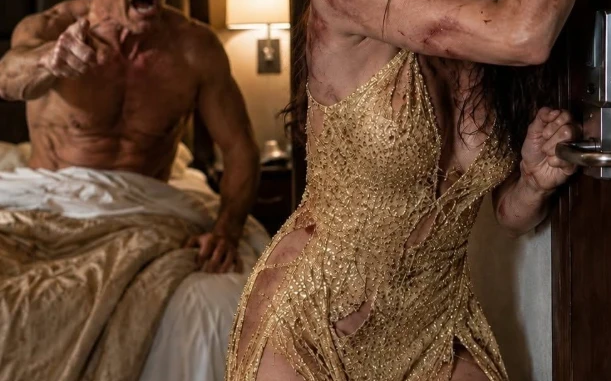
At twenty-four, my stepmother tried to trade me to one of her wealthy business partners to save her company—and when I escaped through a bathroom window, barefoot and bleeding, the people she sent after me were already closing in. Then a black car appeared through the storm, and I threw myself in front of it, never imagining the stranger inside might be even more powerful than the family I was running from.
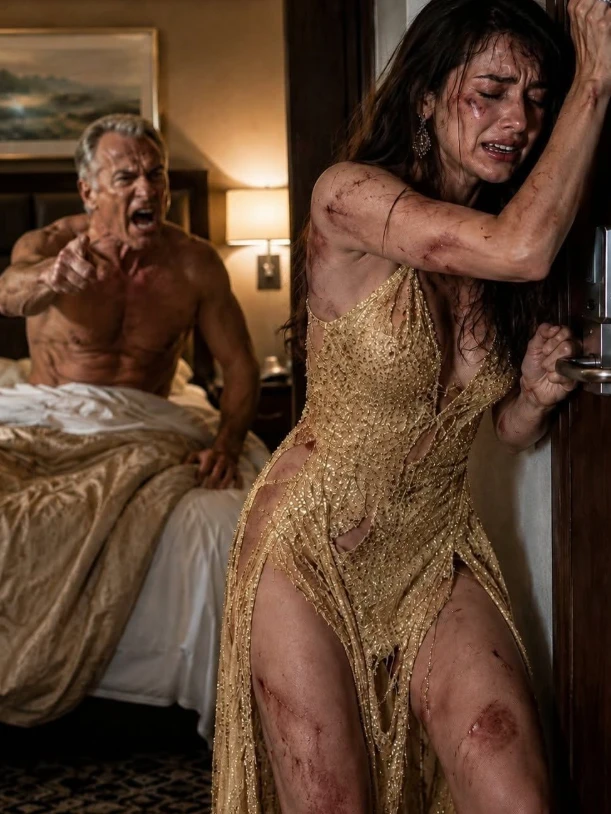
“Has anyone found her?” I heard my stepmother shout somewhere behind me. A man answered, “No, ma’am. She ran toward the back road.”
Rain hammered the trees as I stumbled away from the mansion, my bare feet sliced by stones and my torn silver dress plastered against my skin. My cheek throbbed where my stepmother, Diane, had struck me with the heavy ring on her hand.
I wasn’t running toward safety; I was simply running away from the nightmare behind me. A flashlight suddenly swept through the trees, and then Diane’s voice cut through the storm: “Emily! Come back before you make this worse!”
An hour earlier, she had smiled in front of our guests while adjusting my necklace as if she were a loving mother. Then she whispered that Mr. Ambrose was wealthy and powerful enough to save our struggling family business—and that it was time for me to repay everything she had spent raising me.
She shoved me into an upstairs bedroom and locked the door from the outside, leaving me alone with a man old enough to be my grandfather. When I fought back, Diane slapped me so hard the room spun, and when I cried, she coldly told me that silence would make me seem more grateful.
Then Mr. Ambrose reached toward the wineglass beside the bed, and I noticed the bathroom window. I climbed through it without thinking, dropped into the mud below, and ran.
Now headlights suddenly pierced the rain ahead of me.
A black car came racing down the deserted road, and I stepped directly into its path with both hands raised. “Please! Stop!” I screamed as the brakes shrieked and the car stopped inches from my knees.
I pounded desperately on the passenger window. “Help me! Please, don’t leave me here!”
A man in the back seat stared at me through the rain-streaked glass. His name, I would soon learn, was Matthew Carter, and everything about him—the perfectly tailored suit, unreadable expression, and calm authority—told me he was accustomed to being obeyed.
His gaze moved from the bruise on my cheek to my bleeding feet, then toward the approaching flashlight behind me. “Open the door,” he quietly told his driver.
I climbed inside and curled against the warm leather, shaking uncontrollably as the mansion disappeared behind us. Matthew removed his coat and placed it over my shoulders before asking, “Who are you running from?”
“My stepmother,” I whispered through tears. “She tried to give me to her business partner tonight. She said my body was the only valuable thing I had left.”
The entire car fell silent.
I told him about the locked bedroom, the slap, and my escape through the bathroom window. “I don’t have my phone or shoes,” I said. “I don’t even know where I am.”
Something changed in Matthew’s eyes, though his face remained terrifyingly calm. Before he could answer, lightning illuminated the road behind us—and I saw another SUV burst from the same dirt road, accelerating toward us.
My blood turned cold. “That’s them.”
Their headlights grew larger in the mirror, getting closer with every second. Matthew leaned toward his driver and said in a voice quieter than anger, “Don’t take the main road.”
“Don’t take the main road.”
Matthew’s driver did not ask why.
He simply nodded once.
The black sedan continued through the rain while the SUV behind us gained ground.
I twisted in the seat.
“They’re coming.”
Matthew looked through the rear window.
His expression did not change.
“Do you know who’s driving?”
“No.”
“Security from the house?”
“Probably.”
“Armed?”
My stomach dropped.
“I don’t know.”
He nodded.
Not disappointed.
Not alarmed.
Just filing away facts.
Then he reached toward the center console.
I flinched.
Hard.
Matthew’s hand stopped immediately.
He looked at me.
“I’m calling the police.”
I stared at him.
“Oh.”
He picked up his phone only after I relaxed.
That tiny hesitation mattered.
I did not understand why yet.
He told the dispatcher where we were, gave the vehicle description behind us, and said there was a twenty-four-year-old woman in his car reporting unlawful confinement and assault.
Not hysterical woman.
Not domestic dispute.
Not confused guest.
Unlawful confinement.
Assault.
Words large enough to hold what had happened.
The SUV came closer.
Its headlights filled the rear window.
Matthew’s driver, a gray-haired man named Daniel, glanced toward the mirror.
“They’re flashing us.”
“Ignore them.”
Matthew said.
My breath shortened.
“What if they hit us?”
Matthew looked at me.
“We’re not going back.”
Not:
I won’t let them take you.
Not:
You’re mine now.
Just:
We’re not going back.
The difference was small.
It mattered.
The SUV pulled alongside us for half a second.
Through sheets of rain, I saw a man in the passenger seat.
Diane’s security manager.
Martin Bell.
He raised his phone toward the glass.
Calling.
Matthew’s phone rang almost immediately.
Unknown number.
He looked at me.
“Do you want me to answer?”
That question surprised me.
“Why are you asking me?”
“Because whoever is calling is probably looking for you.”
My throat tightened.
“Answer.”
He did.
Speaker off.
“Carter.”
A man’s voice came faintly through the phone.
Urgent.
Polite.
The kind of polite men use when they expect compliance.
“Mr. Carter, apologies for disturbing you. There’s been a misunderstanding. You appear to have picked up a young woman from Mrs. Hartwell’s property.”
So he knew Matthew.
Matthew’s eyes moved toward mine.
“What young woman?”
A pause.
“Emily Hartwell.”
There.
My name sounded wrong in that stranger’s mouth.
Matthew answered:
“Is Emily a missing child?”
Silence.
“No.”
“Is she under guardianship?”
“No.”
“Court order?”
“No.”
“Then explain what authority you have to demand that an adult woman be returned to you.”
The man’s voice changed.
“She’s emotionally distressed.”
I almost laughed.
Of course.
“She ran out of a private family event.”
“She may have hurt herself.”
Matthew looked at my bleeding feet.
“She says she was locked in a bedroom with Victor Ambrose.”
Silence.
The SUV drifted slightly farther away.
Matthew continued:
“She says Diane Hartwell struck her.”
Another pause.
Then:
“Mr. Carter, with respect, you don’t understand the situation.”
Matthew’s expression finally changed.
Not anger.
Something colder.
“I understand that you are following my vehicle after an adult passenger asked me for help.”
“She’s vulnerable.”
“So call the police.”
Silence.
“Unless there is a reason you don’t want them involved.”
The line went dead.
Matthew lowered the phone.
I stared.
“You know them.”
“I know of them.”
“Diane?”
“Yes.”
“How?”
His gaze returned to the rear window.
“Business.”
My blood went cold.
Of course.
Of course the first stranger I threw myself in front of would somehow belong to the same world.
I pulled his coat tighter around my torn dress.
“What kind of business?”
Matthew looked at me.
“My company reviewed Hartwell Atelier’s debt six months ago.”
I stopped breathing.
Hartwell Atelier.
My father’s company.
Diane’s company now, according to every newspaper article.
But it had not begun as hers.
My father, Richard Hartwell, built it from one interior-design studio into a luxury furnishing company with showrooms in New York, Chicago, Los Angeles, London, and Paris.
When he died, Diane became chief executive.
I became the grieving daughter no one invited into meetings.
Matthew continued:
“We declined to finance them.”
“Why?”
“Financial inconsistencies.”
My stomach tightened.
“What kind?”
“I can’t discuss confidential due diligence casually.”
I almost laughed.
“I just climbed through a bathroom window because my stepmother tried to trade me to one of her creditors.”
Matthew accepted that.
“Fair.”
Then:
“Enough inconsistencies that I walked away.”
“Ambrose didn’t.”
“No.”
“What does he want?”
Matthew studied me.
“I was hoping you could tell me.”
Before I could answer, blue lights appeared through the rain ahead.
The SUV behind us slowed.
Then stopped.
My whole body sagged.
Two police vehicles pulled onto the roadside.
Daniel stopped the sedan.
Matthew did not move toward the door.
He looked at me.
“Do you want to speak to them?”
I stared.
“What happens if I say no?”
“We keep you physically safe tonight and call an attorney.”
“But if those men claim I’m unstable?”
“They can claim anything.”
“Claims are not court orders.”
I swallowed.
“And if I say yes?”
“You tell the truth you can tell.”
The truth I could tell.
Not all at once.
Not perfectly.
Enough.
“Yes.”
The officer who approached was a woman.
Sergeant Lena Ortiz.
Forty-something.
Rainwater running from the brim of her hat.
She looked at Matthew first.
Then me.
And immediately changed her posture.
Not because she recognized him.
Because she saw my face.
My bare feet.
My dress.
The coat.
“Ma’am, are you injured?”
“Yes.”
“Did someone hurt you?”
“Yes.”
“Are you in danger from anyone currently present?”
I looked behind us.
The SUV had stopped fifty yards away.
Martin Bell stood beside it talking to another officer.
“Yes.”
Lena nodded.
“Okay.”
No demand for full story on roadside.
“Would you like medical attention?”
“Yes.”
That word came easier than expected.
“Do you want the people in that SUV near you?”
“No.”
“Okay.”
Again.
She opened the rear door but did not touch me.
“You can stay seated until the ambulance gets here.”
My teeth started chattering.
Not cold.
Shock.
Matthew remained beside me.
Lena looked at him.
“Relationship?”
“None.”
I almost laughed.
Most powerful answer in the world.
None.
“He stopped when I stepped into the road.”
I said.
“She asked for help.”
Matthew added.
Lena looked at me.
“You confirm that?”
“Yes.”
“Good.”
Then to Matthew:
“Do you mind stepping out while I speak with her privately?”
“Not at all.”
He did.
No protest.
No:
She needs me.
No:
I’m responsible.
He simply got out.
Another thing I noticed.
Another thing I stored.
I told Lena enough.
The party.
Diane.
Victor Ambrose.
The locked bedroom.
My attempt to leave.
Diane’s slap.
The bathroom window.
The men searching.
She did not ask me to describe what Ambrose intended beyond what I wanted to say.
Good.
When I said Diane told me my body was the only valuable thing I had left, Lena’s jaw tightened.
“Did Mr. Ambrose touch you?”
“He grabbed my wrist.”
“Anything else?”
“No.”
“He tried.”
I stopped.
“I don’t want to…”
“You don’t have to give me more detail right here.”
Relief.
The ambulance arrived.
A paramedic wrapped my feet.
The cuts were not deep.
My cheek needed cleaning.
My wrist was bruised where Ambrose grabbed me.
Nothing catastrophic.
That almost made me feel fraudulent.
Then I remembered the locked door.
You do not need broken bones to prove a cage was real.
Lena asked where I wanted to go.
“Hospital.”
Then:
“I don’t want Diane there.”
“She won’t be allowed in if you say no.”
“Can she make them release me to her?”
Lena looked at me.
“How old are you?”
“Twenty-four.”
“Then unless a court has declared otherwise, no.”
I almost cried.
The sentence was so simple.
No.
She cannot.
I had spent years feeling sixteen in Diane’s presence.
Legally I was twenty-four.
That mattered.
Matthew followed the ambulance to the hospital but did not enter my examination room until I asked.
That mattered too.
A nurse offered me scrubs because my dress was torn.
I changed.
Someone cleaned my feet.
Photographed injuries with my consent.
A physician documented the facial bruise and wrist injury.
Lena returned.
Then a detective.
Then another question.
“Do you have somewhere safe to stay?”
I thought.
Friends?
Diane knew them.
My apartment?
Owned by Hartwell Atelier.
Credit cards?
Corporate family account.
My phone?
Still at mansion.
Passport?
In apartment.
Bank account?
Yes.
Maybe twenty-three hundred dollars.
Suddenly twenty-four years old felt very young.
“I don’t know.”
The detective said:
“We can connect you with emergency housing.”
Matthew sat in a chair near the wall.
Silent.
I looked toward him.
He did not jump in.
Good.
Then I remembered something.
“Aunt Beatrice.”
“Who?”
Lena asked.
“My father’s sister.”
“Where is she?”
“Boston.”
“Do you trust her?”
“Yes.”
I had not spoken to Beatrice in almost a year.
Diane called her destabilizing.
Dramatic.
Bitter about inheritance.
Funny how controlling people always have descriptions ready for anyone who asks inconvenient questions.
“I need a phone.”
Matthew handed me his.
Not unlocked.
He opened the call screen.
Then passed it over.
Another tiny thing.
No reason for me to see his messages.
No reason for him to see mine.
Boundaries.
I knew Beatrice’s number by memory.
She answered after four rings.
“Hello?”
“Aunt Bea.”
Silence.
Then:
“Emily?”
My throat closed.
“Yes.”
“Where are you?”
I started crying.
No explanation.
Just crying.
Beatrice’s voice changed immediately.
“Tell me whether you are safe.”
“I’m at a hospital.”
“What happened?”
“Diane.”
Silence.
Then very quietly:
“What did she do?”
I told her.
Not all.
Enough.
Beatrice swore.
My aunt had taught literature at Wellesley for thirty years.
Hearing profanity in her Boston accent should not have comforted me.
It did.
“I’m coming.”
“You don’t have to.”
“I know.”
“Bea—”
“I am coming.”
Then:
“Do not go back to that house.”
“I won’t.”
“Do not sign anything.”
“I won’t.”
“Do not accept any lawyer Diane sends.”
“I won’t.”
“And Emily?”
“Yes?”
“Your father did not leave you with nothing.”
My heart stopped.
“What?”
She hesitated.
Then:
“Not on the phone.”
“Aunt Bea.”
“Not tonight.”
My stomach tightened.
“What did Dad leave me?”
“More than Diane ever wanted you to understand.”
The line disconnected.
I stared at the phone.
Then at Matthew.
He had heard.
So had Lena.
Matthew’s expression changed slightly.
“What?”
I asked.
He looked away.
“Nothing.”
“No.”
I straightened.
“What?”
He met my eyes.
“Hartwell Atelier’s corporate filings list a Richard Hartwell family trust.”
My breathing changed.
“Okay.”
“I assumed you knew.”
“Knew what?”
He stopped.
“Matthew.”
This time he did not correct my use of his first name.
“The trust appears to control a substantial block of voting shares.”
My stomach dropped.
“How substantial?”
“I don’t know current percentage.”
“Six months ago, approximately forty-six percent.”
I stared.
“Diane owns the company.”
“No.”
He said it carefully.
“She runs it.”
“That is not necessarily the same thing.”
Beatrice arrived at 10:40 the next morning.
Hair damp from rain.
Camel coat buttoned wrong.
She hugged me so tightly my bruised wrist hurt.
I did not care.
Then she stepped back.
Looked at my cheek.
My feet.
Her face went white.
“Did she do this?”
“Some.”
“Ambrose grabbed me.”
Beatrice closed her eyes.
Then opened.
“Where is he?”
“Not here.”
“Good.”
Matthew was sitting near the window speaking quietly with Daniel.
Beatrice saw him.
Froze.
“Why is Matthew Carter here?”
Matthew stood.
They knew each other.
Of course.
I laughed.
Actually laughed.
Everyone stared.
“What?”
Beatrice asked.
“I’m apparently the only person in America who doesn’t know Matthew Carter.”
He almost smiled.
Beatrice looked at him.
“You helped her?”
“She stopped my car.”
“Lucky car.”
Matthew nodded.
“Apparently.”
Beatrice’s expression softened for one second.
Then hardened again.
“Did you call counsel?”
“Yes.”
“Who?”
“Sarah Chen.”
Good.
Beatrice knew the name.
Former federal prosecutor.
White-collar defense.
Internal investigations.
Nothing about trafficking or family law, but apparently someone Matthew trusted enough to call.
Beatrice looked at me.
“You need your own lawyer.”
“Yes.”
“I called Helena Morris.”
I blinked.
“Dad’s old estate lawyer?”
“She left the firm after he died.”
“Why?”
Beatrice looked at me.
“Diane.”
There it was again.
Always Diane.
“What happened?”
“Wait for Helena.”
“No.”
Beatrice sighed.
“Emily.”
“I spent ten years being told to wait outside rooms.”
“No more.”
My aunt stared.
Then nodded.
“Fair.”
She sat.
“Your father created three trusts.”
I froze.
“Three?”
“One for charitable holdings.”
“One for you.”
“One voting trust controlling his shares in Hartwell Atelier.”
“Diane told me she inherited Dad’s controlling stake.”
“She lied.”
The room disappeared.
Matthew looked down.
He already suspected.
Beatrice continued:
“Diane inherited income rights from part of the estate during her lifetime.”
“Not full beneficial ownership.”
“Your father gave her management authority over the company until you turned twenty-five or until the trustees determined you were prepared earlier.”
I stopped breathing.
“I turn twenty-five in four months.”
“Yes.”
“What happens then?”
“The voting trust terminates in stages.”
“You receive direct control of thirty-eight percent.”
“Another eight percent transfers into a separate trust where you are primary beneficiary and co-trustee.”
Forty-six.
Matthew’s number.
My stomach turned.
“So I own forty-six percent?”
“Beneficially, yes.”
“And Diane?”
“Personally?”
“About eleven.”
I stared.
“She runs a company I almost own.”
“Yes.”
“Why didn’t I know?”
Beatrice’s face tightened.
“You were supposed to.”
“Your father’s trustees were supposed to provide annual accountings once you turned eighteen.”
“Who are trustees?”
She looked away.
“Diane.”
Of course.
“And?”
“Martin Bell.”
My blood went cold.
Her security manager.
The man chasing me last night.
I started laughing again.
This time not because anything was funny.
“What about independent trustee?”
“There was one.”
“Helena Morris.”
“What happened?”
“Diane removed her.”
“How?”
“Your father’s documents allowed removal for cause by majority trustee vote.”
“Diane and Martin accused Helena of conflict.”
“Was there one?”
“No.”
“Then why didn’t Helena sue?”
“She tried to challenge removal.”
“Diane threatened to freeze your college funding and claimed litigation would harm you.”
My stomach turned.
“Everyone protected me by lying.”
Beatrice flinched.
“Yes.”
That answer mattered.
No defense.
She continued:
“I should have told you directly.”
“Yes.”
“I was afraid Diane would cut me off from you completely.”
“She did anyway.”
“Yes.”
Silence.
Beatrice’s eyes filled.
“I’m sorry.”
I looked away.
My father’s trust.
Forty-six percent.
A company on the edge of failure.
Victor Ambrose.
Two more questions collided.
“Why does Diane need Ambrose?”
Matthew answered before Beatrice could.
“Debt.”
I looked toward him.
“Hartwell Atelier has approximately thirty-one million dollars coming due within six months.”
My mouth went dry.
“How do you know?”
“We reviewed refinancing.”
“What else?”
Matthew hesitated.
Confidentiality again.
I almost admired him for still caring.
Then he said:
“Enough is now public through lending disclosures.”
“Revenue is down.”
“Inventory financing is overextended.”
“Several European subsidiaries are losing money.”
“Diane needs new capital.”
“Ambrose?”
“He controls Ambrose Capital.”
“Private credit.”
“He could refinance.”
“At what cost?”
Matthew looked at Beatrice.
Then me.
“Probably control.”
My stomach tightened.
“Of the company?”
“Yes.”
“And me?”
Matthew’s expression hardened.
“That part wasn’t in any financial proposal I saw.”
Of course not.
No respectable term sheet says:
One young woman included.
Beatrice said:
“Emily, why did Diane say Ambrose needed you specifically?”
I closed my eyes.
The bedroom.
Diane locking the door.
Her whisper.
Don’t embarrass me tonight. Victor is prepared to save this family. All you have to do is make him believe you belong with him.
I repeated it.
Beatrice went pale.
Matthew became very still.
Then:
“She wanted an engagement.”
I looked at him.
“What?”
“Maybe more.”
“How would that help?”
Beatrice answered.
“If Ambrose married you before your trust converted…”
She stopped.
“No.”
“What?”
“Tell me.”
“Marriage itself would not give him your shares.”
Good.
Then:
“But Diane may believe a spouse could pressure you into voting agreements.”
Matthew added:
“Ambrose could also make financing conditional on governance arrangements you personally approve once your shares transfer.”
My stomach turned.
“They didn’t need my body.”
“No.”
Matthew said.
“They needed your signature.”
Then he looked at me.
“And Diane may have decided the easiest way to control your signature was to make you dependent on a man she chose.”
There.
My entire life.
Summarized.
Helena Morris arrived before noon.
She carried a leather file case.
Sixty.
Silver hair.
No apology in posture.
When she saw me, she stopped.
“Emily.”
“You were my trustee.”
“Yes.”
“You let them remove you.”
Pain crossed her face.
“Yes.”
“Why didn’t you tell me?”
“I tried twice.”
“When?”
“At nineteen.”
“And twenty-one.”
I remembered.
Two letters Diane said were “legal spam” from someone trying to exploit Dad’s death.
I never opened them.
My hands became fists.
Helena sat.
“I should have tried harder.”
“Yes.”
“I agree.”
Good.
No excuse.
She opened her case.
“Your father kept duplicates outside Hartwell counsel.”
“Where?”
“With me.”
My heart stopped.
“Trust agreements?”
“Yes.”
“Share schedules?”
“Yes.”
“Letters?”
“Yes.”
“What letters?”
Helena looked at me.
“One to you.”
My throat closed.
She handed me an envelope.
Emily
My father’s handwriting.
Ten years vanished.
Hospital room.
Cancer.
His hand on mine.
“You’re stronger than you think.”
I had hated that sentence after he died.
I did not want strength.
I wanted him.
My fingers shook.
“Can I read this alone?”
“Of course.”
Everyone stood.
Even Matthew.
I looked at him.
“Stay.”
The word surprised us both.
He sat.
Not beside me.
Across.
Good.
I opened the letter.
My Emily,
If you are reading this because Helena has determined you are ready for the truth about Hartwell Atelier, then I hope I was wrong about many things.
My eyes filled.
I hope Diane loved you as her own.
I stopped.
She hadn’t.
Not once.
I continued.
I hope the company gave you choices rather than obligations.
No.
And I hope you never confuse ownership with duty.
That line mattered.
You do not owe Hartwell Atelier your life because my name is on the building. You may run it, sell your interest, hold it, or walk away. The shares are property, not a command from a dead father.
I cried.
Quietly.
Matthew looked toward the window.
Giving me privacy without leaving.
I placed the voting shares in trust because you were fourteen when I became ill and sixteen when the final documents were drafted. Diane is a skilled executive, but she believes control is safety. That belief can become dangerous when other people’s choices interfere with her plans.
My breath stopped.
Dad knew.
Not all.
Enough.
If she ever tells you that you owe the company because she raised you, remember this: children do not repay adults for being raised. That is not how love works.
I covered my mouth.
The exact weapon Diane had used.
Everything she spent raising me.
Everything I owed.
Dad had seen it before dying.
If a marriage, investor, board member, or family friend ever asks you to exchange your freedom for the company’s survival, let the company fail.
I stared.
Matthew’s eyes lifted.
He had heard my breath change.
I read the sentence again.
Let the company fail.
Not save legacy.
Not protect employees at any cost.
Not preserve his name.
Freedom first.
My father’s final business advice was permission to walk away.
The letter continued.
Companies can be rebuilt. Money can return. A life trained to believe it belongs to other people is harder to recover.
I cried until I could not see.
At the end:
You are not Hartwell Atelier. You are Emily.
That was true before I built anything. It will remain true after everything I built is gone.
Dad
I folded the letter.
Matthew said nothing.
Good.
Then I looked at Helena.
“What do we do now?”
There.
Not:
Save company.
Not:
Punish Diane.
What do we do.
Helena opened another file.
“First, protect you.”
“Second, preserve trust assets.”
“Third, obtain accounting.”
“Fourth, investigate what Diane and Martin have done as trustees.”
“And the company?”
“Later.”
I looked toward Matthew.
“What would you do?”
He answered immediately.
“Nothing today.”
I stared.
“Aren’t you some famous dealmaker?”
“Yes.”
“Then?”
“You escaped a locked room less than twenty-four hours ago.”
“Anyone who asks you to make a thirty-million-dollar decision today should be removed from the room.”
That included him.
Good.
Diane called the hospital nine times.
Then sent counsel.
I refused both.
She issued a statement through Hartwell Atelier.
Emily Hartwell experienced an emotional episode during a private family gathering. The family requests privacy while she receives appropriate care.
I read it.
Then laughed.
“Emotional episode.”
Beatrice swore.
Matthew said nothing.
Helena looked toward me.
“Want to respond?”
My first instinct was yes.
Destroy her.
Tell everyone.
Then Dad’s letter.
Panic destroys evidence.
No—different father, but same principle perhaps. My father in this story hadn’t said it. Still could learn.
“What does responding help?”
Helena smiled slightly.
“Good question.”
“Does it help trust litigation?”
“No.”
“Criminal investigation?”
“Probably not.”
“Then no.”
Diane wanted narrative.
I wanted records.
Records last longer.
Police searched the mansion two days later.
Not because Matthew demanded.
Because Lena Ortiz and the detective obtained warrants based on my statement, injury documentation, witness information, and other evidence.
The upstairs bedroom door had an exterior lock.
Photographed.
The bathroom window had blood on frame matching my injury.
My phone was found in Diane’s desk drawer.
My shoes were under the banquet table.
Victor Ambrose had left before police arrived the night I escaped.
His attorney said he denied any wrongdoing.
Fine.
Evidence would speak.
Then investigators found something unexpected.
A folder on Diane’s office computer.
E. HARTWELL PERSONAL
Inside were background reports.
Photographs.
My college relationships.
Medical appointments.
Apartment visitors.
Credit history.
Everything.
My stepmother had built a due-diligence file on me as if I were an acquisition.
Then messages with Ambrose.
Not explicit enough for headlines.
Explicit enough for me.
Diane: Emily is difficult when she feels cornered. Better to make her believe the decision is hers.
Ambrose: Then stop presenting it as financing. Present it as family rescue.
Another:
Diane: She still has sentimental attachment to Richard. Mention preserving his company.
Another:
Ambrose: Once she is engaged, the governance agreement becomes easier.
There.
Not rape written in an email.
Not sale.
Something more polished.
Marriage as leverage.
My body as route to signature.
Another message two days before the party:
Diane: She refuses dinner again. I’ll handle her Friday.
Ambrose:
I expect privacy.
Diane:
You’ll have it.
My hands shook when Helena showed me the court filing containing excerpts.
“Privacy.”
Beatrice looked sick.
Matthew’s face turned stone.
I looked at him.
“What?”
He hesitated.
“Ambrose tried something similar before.”
My blood went cold.
“With who?”
“Not this.”
“What?”
“He has a history of tying personal relationships to investment access.”
“That sounds sanitized.”
“It is.”
“Why?”
“Because I only know rumors and one civil case that settled.”
“With a woman?”
“Yes.”
“Did you know when you reviewed Hartwell?”
“Yes.”
My anger moved.
“Then why didn’t you warn me?”
Matthew did not defend himself.
“I didn’t know you.”
“That’s not answer.”
“No.”
He looked at me.
“I treated Ambrose as a commercial risk, not a human one.”
There.
Honest.
“In my world, people say things like governance concerns and reputational exposure.”
“We convert ugly behavior into neutral words because it’s easier to discuss at conference tables.”
His jaw tightened.
“I should have taken the pattern more seriously.”
I looked away.
“You didn’t cause this.”
“No.”
“But I might have known enough to ask harder questions.”
Good.
No savior.
No self-absolution.
He sat with discomfort.
That mattered.
Trust court moved quickly because of the approaching transfer date.
Helena petitioned to suspend Diane and Martin as trustees.
The judge granted temporary suspension.
Diane’s attorney argued I was unstable.
That backfired.
Because the medical records showed injuries.
Police reports showed external lock.
The mansion footage showed search parties sent after me.
Not rescue.
Search.
Martin Bell eventually admitted Diane instructed him:
“Bring her back before she gets to road.”
No police call.
No ambulance.
No concern.
Bring her back.
The court appointed an independent fiduciary.
For the first time in ten years, Diane could not touch the trust.
Then accounting began.
That was when the company story became worse.
Diane had borrowed against dividends expected from my trust.
Improper.
Used related-party vendors.
Paid Martin through consulting entities.
Transferred more than $4.8 million to companies controlled by people close to her.
Not all stolen.
Some services existed.
But pricing was inflated.
Records incomplete.
Conflicts undisclosed.
Hartwell Atelier’s debt crisis was not only bad market conditions.
It had been bled.
Matthew’s due diligence had been right.
He had seen smoke.
Now we found fire.
I moved temporarily into Beatrice’s apartment in Manhattan.
Not Matthew’s penthouse.
Not a hotel he owned.
Not a secret estate.
Aunt Bea’s two-bedroom apartment full of books and furniture too old to impress anyone.
Perfect.
Matthew called once the first week.
Not every day.
That surprised me.
“Are you okay?”
“No.”
“Good.”
I stared at phone.
“Why does everyone say that?”
“Because if you said yes after this, I would assume you were lying.”
Fair.
He asked:
“Do you want dinner?”
“No.”
“Okay.”
No persuasion.
Three days later, I called him.
“Dinner.”
He paused.
“Is that request?”
“Yes.”
“Then yes.”
We met in a public restaurant.
No private room.
I insisted.
He approved.
I hated that he approved.
“Stop looking pleased.”
“I’m not.”
“You are.”
“I’m relieved you’re making choices.”
“That sounds patronizing.”
“It probably is.”
“Fix it.”
He thought.
“I like knowing what you want.”
Better.
Dinner became two hours.
No business first.
I learned Matthew was forty-one.
Divorced.
No children.
His father had started Carter Freight with four trucks.
Matthew turned it into Carter North Holdings—rail logistics, industrial real estate, data infrastructure, ports.
Rich beyond anything I understood.
More powerful than Diane.
Maybe Ambrose.
Yet he spoke about money without worship.
I asked why.
“My father lost almost everything twice.”
“How?”
“Debt.”
“Bad partners.”
“Ego.”
“Then?”
“He rebuilt.”
“What did you learn?”
“That money is temporary.”
“Control?”
He smiled faintly.
“More temporary than people think.”
I studied him.
“Why did your marriage end?”
He looked surprised.
“You’re direct.”
“I climbed through window.”
“Fair.”
He thought.
“I treated marriage like a well-run division.”
I almost laughed.
“That sounds horrible.”
“It was.”
“My ex-wife, Rachel, would tell you I scheduled intimacy.”
“You’re joking.”
“I wish.”
I laughed.
He smiled.
“Eventually she said she wanted a husband, not quarterly review.”
“Did you fight?”
“Yes.”
“Did you fix?”
“No.”
“Why?”
“I was convinced being competent meant being loving.”
That sentence stayed.
“We divorced seven years ago.”
“Friends?”
“Not exactly.”
“Enemies?”
“No.”
“Accurate.”
He smiled.
“Trying.”
Good.
Diane’s criminal exposure widened slowly.
Not because courts moved like movies.
They do not.
Ambrose’s involvement became complicated.
His attorney argued he believed I was willingly attending a private engagement discussion.
There was no written contract exchanging financing for me.
Of course not.
The criminal case focused on what could be proved.
Unlawful restraint.
Assault by Diane.
Potential conspiracy around confinement.
Witness statements from staff.
My injuries.
The lock.
Messages.
Ambrose’s conduct inside the room.
A housekeeper named Rosa had heard me say:
“Open the door.”
Then Ambrose reply:
“Stop making this childish.”
She had been afraid to speak.
Now she did.
Another employee saw Diane take my phone.
Martin admitted he ordered guards to find me.
Gradually, the night became document instead of accusation.
Ambrose was charged with offenses connected to unlawful restraint and assaultive conduct supported by evidence, while some more sensational claims never became charges.
Good.
I did not need prosecutors to overstate.
Diane faced separate charges.
She also faced civil trust litigation and corporate claims.
The financial side would probably hurt her more than prison.
That felt fitting, though I stopped saying such things aloud.
Revenge is intoxicating.
So is power.
I had just escaped one.
I did not want to become addicted to the other.
Four months after the storm, I turned twenty-five.
No party.
No champagne.
No Diane adjusting my necklace.
I sat in Helena’s office with Beatrice and the independent trustee.
Matthew was not there.
My request.
This was mine.
The trust converted.
Thirty-eight percent of Hartwell Atelier voting shares transferred directly to me.
Eight percent remained in a beneficiary trust where I became co-trustee with the independent fiduciary.
Forty-six percent economic interest.
Forty-six percent voting influence, subject to class structure.
Diane’s eleven.
Other shareholders fragmented.
I was suddenly the largest individual shareholder.
Helena placed documents in front of me.
“Read every page.”
I smiled.
“Dad?”
“Me.”
Good.
I read.
Two hours.
Questions.
Changes.
Then signed.
My hand did not shake.
At the end, Helena said:
“Congratulations.”
I looked at the certificates.
“For what?”
“Ownership.”
I thought.
“No.”
She waited.
“Congratulations on information.”
That mattered more.
Ownership without information had almost become another cage.
Now I had both.
The board meeting happened three days later.
First time I entered Hartwell Atelier headquarters as something other than Richard Hartwell’s daughter.
Diane was still CEO pending board action.
Legally.
Barely.
She sat at head of table.
Cream suit.
Perfect hair.
No visible bruise.
I had one faint scar near my temple from the bathroom window.
She looked at me.
“Emily.”
No mother.
No warmth.
I sat opposite.
Not beside.
Board members shifted.
Matthew had no seat.
Good.
Ambrose had no investment.
Good.
Helena attended as my counsel.
Independent auditors joined.
Diane opened.
“I hope we can keep family matters separate from company governance.”
I almost laughed.
“You locked me in a bedroom with a lender because of company governance.”
Silence.
Helena touched my arm lightly.
Not warning.
Reminding.
Process.
I breathed.
Then:
“But yes.”
I opened my folder.
“Let’s discuss company governance.”
That frightened Diane more.
Good.
Auditors presented.
Related-party transactions.
Unauthorized trust-linked advances.
Conflicted vendor contracts.
Debt maturity.
Liquidity.
Diane interrupted repeatedly.
I did not.
Numbers were patient.
They waited for people to finish lying.
At the end, lead independent director called for executive session.
Diane objected.
Motion carried.
She was removed as CEO pending investigation.
Not from the board immediately.
Process.
The interim CEO became CFO Miriam Blake.
Forty-nine.
Quiet.
Competent.
Had warned Diane about leverage two years earlier.
Diane had sidelined her.
Now Miriam sat at head.
I expected triumph.
Instead I felt tired.
Outside the boardroom, Diane followed me.
“Emily.”
I kept walking.
“You think Matthew Carter did this for you?”
I stopped.
Turned.
There.
Her favorite weapon.
Making every woman’s power belong to a man.
“No.”
“He’s using you.”
“Maybe.”
That surprised her.
I continued:
“If he ever does, I’ll deal with him too.”
Her face hardened.
“You know nothing about running this company.”
“Correct.”
“You’ll destroy your father’s legacy.”
“Maybe.”
Her eyes widened.
I smiled.
“Dad gave me permission.”
Then walked away.
Hartwell Atelier nearly failed anyway.
That mattered.
Removing Diane did not magically fix debt.
The company had thirty-one million due.
Cash flow weak.
Suppliers nervous.
Employees frightened.
Board considered bankruptcy protection.
Asset sales.
Equity injection.
Matthew’s company came up.
Of course.
Miriam said:
“Carter North could provide bridge financing.”
Every eye turned toward me.
“No.”
Silence.
One director frowned.
“Because of your personal relationship?”
“There is no personal relationship.”
Not then.
“Because if Matthew lends while I’m controlling shareholder, everything becomes confused.”
Miriam nodded slowly.
“What do you suggest?”
“Competitive process.”
Good.
We hired independent advisor.
Solicited offers.
Four lenders.
Matthew’s company submitted one.
He did not call me.
That impressed me more than flowers would have.
His term sheet was not cheapest.
It was cleanest.
No board control.
Strong covenants.
Expensive interest.
The board chose another lender with slightly better economics.
I voted with majority.
Matthew called afterward.
“You rejected me.”
“Yes.”
“You sound pleased.”
“I am.”
“Cruel.”
“You’ll survive.”
“I suppose.”
Then:
“Dinner?”
I smiled.
“Yes.”
That was when I realized I liked him.
Not because he rescued me.
Because he could lose a deal and still ask me what I wanted for dinner.
My civil case against Diane settled after eighteen months.
Not because I forgave.
Because trials cost time.
She repaid and forfeited claims to certain trust-linked assets.
Her equity was reduced through negotiated restitution and corporate clawbacks where enforceable.
She resigned from board permanently.
Her criminal case ended separately with convictions and a negotiated sentence involving confinement, assault, evidence-related conduct, and financial offenses.
Not every charge.
Enough.
Ambrose’s case took longer.
He eventually pleaded to offenses tied to unlawful restraint and coercive conduct, while civil claims stripped away much of the respectable silence around his behavior.
Other women came forward.
Not because of me alone.
Because one public case made private memories feel less impossible to speak.
I never called them brave in interviews.
I knew how exhausting that word can be.
I said:
“They deserve to be believed enough for evidence to be examined.”
Better.
Diane wrote from prison.
The first letter began:
After everything I did for you—
I stopped.
Returned unread.
Second came six months later.
Emily, I understand now that beginning with what I did for you is part of the problem.
Better.
I read.
She wrote about marrying Dad.
How intimidated she felt by his success.
How becoming CEO after his death made her feel she had finally earned legitimacy.
How my shares remained a reminder that ultimate control would eventually move to me.
“I resented a teenager.”
She wrote.
“Because a dead man trusted her with what I believed I had worked for.”
There.
Not love.
Competition.
She continued:
When the company began failing, I experienced your refusal to sign governance papers as betrayal. I told myself I had raised you, educated you, protected you, and therefore you owed me cooperation.
No.
But accurate.
Ambrose understood my fear. He offered financing if he could build a personal relationship with you and if your eventual voting power aligned with his. I told myself you might like him if forced to spend time with him.
I had to stop.
Walk away.
Return later.
By the night of the party, I knew you did not want him. I locked the door anyway.
No euphemism.
Good.
I struck you because I was losing control of the evening.
Good.
When you escaped, my first fear was not that you were hurt. It was that you would ruin the deal.
I cried.
That sentence was the truth.
Maybe the worst one.
At the end:
Your father was right about me. Control became safety in my mind, and eventually anything that threatened my control felt dangerous enough to justify cruelty.
Then:
I am sorry. I know apology creates no obligation.
I folded the letter.
No reply.
Not yet.
Maybe never.
Choice.
Matthew and I did not kiss until nearly two years after the storm.
Ridiculous.
Beatrice called us Victorian.
I reminded her we lived in Manhattan, not Montana.
She said emotional repression crosses genres.
Fair.
Matthew asked me to dinner often.
I said yes sometimes.
No sometimes.
He never turned no into persuasion.
That became one of the ways trust grew.
Once I canceled ten minutes before because a news article about Ambrose triggered panic.
Matthew replied:
Okay. Need anything?
I wrote:
No.
He sent:
Okay.
Nothing else.
No flowers.
No food.
No I’m coming anyway.
Just okay.
The next week I called.
“Why didn’t you check on me?”
He paused.
“You told me you didn’t need anything.”
“I could have been lying.”
“Yes.”
“So?”
“So if you want me to challenge your answers, you’ll need to tell me when.”
I stared at the phone.
“That sounds annoying.”
“It is.”
“But you’re not going to decide my no secretly means yes?”
“No.”
I closed my eyes.
Good.
Very good.
Our first kiss happened in an elevator.
Not romantic.
The elevator stalled between floors for seven minutes.
My entire body panicked.
Locked bedroom.
Bathroom window.
No exit.
I started breathing too fast.
Matthew immediately pressed emergency call.
Then turned away from me.
Not closer.
“Do you want me near you?”
“Yes.”
He stepped closer.
“Touch?”
I nodded.
He offered his hand.
I took it.
We stood.
No speech.
No telling me to calm down.
No:
You’re safe.
Because my body did not feel safe.
He simply stayed.
When doors opened, I almost ran out.
Then stopped.
Turned.
Matthew was still inside.
“You okay?”
“No.”
He smiled faintly.
“Accurate.”
I laughed.
Then stepped back toward him.
“Can I kiss you?”
His face changed.
Not triumph.
Surprise.
“Yes.”
I kissed him.
Brief.
My choice.
When I pulled back, he looked slightly stunned.
“That was…”
“Don’t ruin it.”
“I was going to say good.”
“Worse.”
He laughed.
The elevator doors started closing again.
I jumped out.
He followed.
Very quickly.
We laughed all the way down the hallway.
That became one of my favorite memories.
A locked space transformed not because someone saved me.
Because a door opened and I chose what happened next.
Hartwell Atelier survived.
Barely.
Then better.
Miriam became permanent CEO.
Not me.
That shocked business press.
FOUNDER’S DAUGHTER REFUSES TOP JOB
They made it sound dramatic.
I simply did not want it.
Dad said ownership was not duty.
I believed him.
I joined the board.
Learned.
Asked stupid questions.
Then better ones.
At twenty-eight, I started my own foundation focused on financial and legal independence for young adults emerging from coercive family systems.
Not named after me.
Not named after Dad.
Beatrice suggested “Bathroom Window Fund.”
I threatened to cut her off.
She reminded me I did not control her money.
Fair.
We called it Open Door Initiative.
We funded independent legal advice.
Emergency housing.
Identity document replacement.
Financial counseling.
Not because every family conflict resembles mine.
Because dependence becomes dangerous when one person controls housing, money, transportation, documents, reputation, and information at once.
People need exits before emergencies.
That was the point.
Matthew donated once.
I returned half.
He called.
“You rejected charity.”
“No.”
“I accepted what fits budget.”
“You could use more.”
“Everyone can use more.”
He laughed.
Then:
“Control?”
“Governance.”
“Same?”
“No.”
Good.
He understood.
I married Matthew at thirty-two.
Eight years after the storm.
Not because it took eight years to know I loved him.
It took less.
It took eight years before marriage stopped feeling like a structure someone could use to own me.
Matthew never pressured.
Once, around year four, I asked:
“Do you want to marry me?”
“Yes.”
“Why haven’t you asked?”
He looked confused.
“Because you told me engagement language makes you nauseous.”
“Oh.”
“Should I ask?”
“No.”
“Okay.”
Infuriatingly healthy.
Years later, I asked him.
We were eating noodles from cartons at my apartment.
No diamonds.
No black car.
No rain.
“Do you still want to marry me?”
He stopped chewing.
“Yes.”
“Okay.”
He stared.
“Okay?”
“Ask.”
He put down carton.
“Emily Hartwell, will you marry me?”
I thought.
Long enough to make him sweat.
Then:
“Yes.”
He exhaled.
“Cruel.”
“Useful.”
We had a prenup.
Obviously.
Separate premarital property.
Clear joint accounts.
No automatic voting authority over Hartwell shares.
No personal guarantees without independent counsel.
No access to trust documents by marriage alone.
Matthew’s attorney called it unusually specific.
Mine said:
“Good.”
Matthew signed without complaint.
Then added one clause through his attorney:
Each spouse retains the right to independent legal counsel at any time, paid from individually controlled funds, without explanation to the other.
I stared.
“Why?”
He shrugged.
“Because exits should exist even if we hope no one uses them.”
I cried.
Then signed.
We did not merge houses immediately.
Even after marriage.
Three nights mine.
Three his.
One wherever.
Ridiculous.
Perfect.
Eventually we bought a place together.
Not his.
Not mine.
Ours.
Both names.
Both money.
No family history inside walls.
The first evening there, Matthew handed me keys.
I looked at them.
Then:
“Where are yours?”
He held up identical set.
Good.
No symbolic surrender.
Shared access.
Simple.
Diane was released when I was thirty-six.
I did not see her.
Not then.
She asked.
I said no.
Two years later, she asked again.
No.
At forty, yes.
Why?
I was tired of imagining.
We met in public garden.
No lawyers.
Security nearby but not visible.
My choice.
Diane looked smaller.
Age.
Prison.
Consequences.
No expensive ring.
I noticed that first.
The ring she hit me with had been forfeited with other assets.
Good.
She looked at me.
“Emily.”
“Diane.”
Silence.
Then:
“You look like your father.”
I almost left.
She saw.
“Sorry.”
Good.
We sat.
She did not ask forgiveness immediately.
Better.
She told me she worked now in administrative bookkeeping for a nonprofit reentry program.
Less glamorous.
More honest, perhaps.
She said:
“I used to think losing Hartwell destroyed me.”
“Did it?”
“No.”
“What did?”
She thought.
“Seeing how relieved everyone was when I no longer controlled anything.”
That was brutal.
I believed her.
Then she said:
“I loved your father.”
“I know.”
“I did not love you well.”
“No.”
“I thought providing meant ownership of gratitude.”
“Yes.”
Silence.
Then:
“Did you ever think of me as mother?”
I looked at her.
“Sometimes.”
Her eyes filled.
“Do you now?”
“No.”
She cried.
I let her.
Not cruel.
Not comfort.
Truth.
After a while she asked:
“Can we become something?”
I thought.
“Maybe.”
She smiled sadly.
“There’s that word.”
We had never used it before.
Still fit.
We met twice a year after that.
Not family exactly.
Not strangers.
Accurate distance.
Enough.
Victor Ambrose died before Diane.
I read obituary.
Philanthropist.
Investor.
Patron of arts.
One paragraph mentioned legal controversies.
That angered me.
Then passed.
Obituaries are not verdicts.
Records existed elsewhere.
Women existed beyond his obituary.
I stopped needing one newspaper to tell truth perfectly.
Matthew and I never had children.
Not by accident.
By choice.
At thirty-four I realized I did not want pregnancy.
Maybe fear.
Maybe preference.
Both.
Matthew wanted children more than I did.
That required conversation.
Real one.
He said:
“I imagined a daughter.”
My chest tightened.
“I’m sorry.”
“No.”
He looked at me.
“Don’t apologize for body choice.”
“I can still be sad you’re sad.”
“Yes.”
Both.
We considered adoption.
Then did not.
Considered foster care.
Then decided our work lives were too unpredictable to promise what children deserved.
No tragic explanation.
No last-minute miracle.
We built a family differently.
Beatrice.
Friends.
Employees who became friends.
Matthew’s nieces.
My foundation community.
Enough.
Marriage without children remained marriage.
Life without motherhood remained full.
That mattered to me.
Diane had once told me my body was the only valuable thing I had left.
I spent decades proving nothing.
I did not need to prove she was wrong through productivity.
She was wrong before I escaped.
Before board seat.
Before money.
Before Matthew.
Before foundation.
Worth did not arrive afterward.
I learned that slowly.
Beatrice died at eighty-four.
I was fifty-six.
At funeral, I found a note in her desk.
Emily,
I am sorry I let fear of Diane keep me from telling you the truth sooner.
Of course.
Everyone left letters.
Family tradition apparently.
I told myself staying available to you indirectly was better than confronting her and being cut off. Maybe it was. Maybe not. What I know is that adults should not make secrecy sound noble because they are afraid of conflict.
Good.
You survived because you ran. But please remember you should never have needed to.
I cried.
That sentence.
For years people called me brave for climbing out bathroom window.
I hated it sometimes.
Because bravery sounds like compliment where prevention should have been.
I should never have been locked in.
Still.
I ran.
Both true.
Beatrice’s final line:
Always keep shoes by the door.
I laughed through tears.
At my foundation, we later started an emergency kit program.
Identification copies.
Prepaid phone.
Transportation funds.
Shoes.
Always shoes.
No one knew the joke except me.
Matthew died at seventy-two.
I was fifty-five.
Cancer.
Fast.
Unfair.
No amount of power helped.
Again, money could buy excellent care.
Not immortality.
His final weeks were at home.
He hated being helped.
Hypocrite.
I reminded him.
He said:
“I’ve grown.”
“Apparently backward.”
One night he woke and found me sitting beside bed.
“What?”
“Nothing.”
He frowned.
“Your nothing has face.”
I laughed.
Sloan not here; careful not to cross story. No issue.
I said:
“I’m scared.”
“Good.”
I stared.
He smiled weakly.
“Accurate.”
Still.
He reached out.
Stopped before touching.
Even dying.
“Want?”
I took his hand.
“Yes.”
We sat.
Then he whispered:
“Black car.”
I laughed softly.
“What?”
“You ruined upholstery.”
“I was bleeding.”
“Still.”
“I’ll reimburse estate.”
“Too late.”
Silence.
Then:
“Do you regret stopping?”
“What?”
“That night.”
His eyes filled.
“No.”
“Even after everything?”
“No.”
“What if I had been dangerous too?”
He looked at me.
“Then you would have kept running.”
My throat broke.
He understood.
No destiny.
No:
You were meant to find me.
Just:
You would have kept choosing survival.
He squeezed my hand.
“You didn’t owe me trust because I opened a door.”
I cried.
“I know.”
“Good.”
Then:
“You chose me later.”
“Yes.”
“That was everything.”
He died two days later.
I kept his coat.
The one he put over my shoulders in the car.
Black cashmere.
Ruined once by mud and blood.
Cleaned.
Patched.
Old.
Worth more to me than any Carter share.
Not because it was rescue.
Because he gave it without asking what he would get.
Then spent twenty-three years proving the gesture had not created a debt.
I am sixty-eight now.
Hartwell Atelier no longer carries Hartwell name.
That surprises people.
At fifty-nine, board approved merger with another design group.
We became Atelier North.
I voted yes.
Dad would have too, I think.
Maybe not.
Doesn’t matter.
Dead people do not get permanent votes unless we write them into documents.
I refused.
My shares became diversified holdings.
Enough wealth to become dangerous if worshiped.
I gave much away.
Kept plenty.
No sainthood through self-impoverishment.
Abundance can be used.
Not hoarded.
Not surrendered to prove goodness.
Managed.
Chosen.
The Open Door Initiative expanded to eight cities.
We helped people leave many kinds of coercive situations.
Not only women.
Not only families.
Young adults leaving financial control.
Elderly people pressured by relatives.
People whose partners withheld identification.
People whose employers tied housing to silence.
Every story different.
Same basic question:
Do you have somewhere to go if you say no?
Too many answered no.
We worked on that.
I kept Dad’s letter.
Original.
Yellow now.
The sentence I return to is not:
Let company fail.
Though I love it.
It is:
Children do not repay adults for being raised.
Diane had built her entire claim around debt.
I fed you.
Clothed you.
Sent you to school.
Introduced you to the right people.
Saved your father’s company.
Therefore:
Obey.
Smile.
Marry.
Sign.
Stay.
Silence.
The most important thing I learned is that gratitude and consent are separate.
You can be grateful and still refuse.
Love someone and still leave.
Accept help and still owe no body.
Take money and still retain a voice unless you explicitly agreed otherwise.
A gift that secretly purchases obedience was never a gift.
Matthew understood that better than anyone I met.
Dad too.
Diane eventually.
Late.
Still.
People tell the dramatic version of my story.
Barefoot woman runs through storm.
Men chasing.
Black car.
Powerful stranger.
Rescue.
Then love.
Perfect.
That is not how I tell it.
Matthew did not rescue my life.
He opened a car door.
Police documented.
Doctors treated.
Beatrice came.
Helena produced paper.
Auditors found money.
Judges suspended trustees.
Prosecutors built cases.
Boards voted.
I learned company.
Diane faced consequences.
Ambrose lost power.
Matthew stood beside me.
And I chose.
Again.
Again.
Again.
The car door was important.
But so was every door after.
Hospital room I could close.
Beatrice’s apartment I could leave.
Boardroom I could enter.
Restaurant where I could say no.
Elevator that opened.
Apartment I rented myself.
Marriage contract I read.
House with two sets of keys.
The opposite of captivity was not romance.
It was exit.
That sounds strange until you have been locked in a room.
A relationship becomes safer when leaving remains possible.
Not emotionally painless.
Not financially trivial.
Possible.
Diane’s power over me depended on making alternatives disappear.
No phone.
No shoes.
No money.
No information.
No trusted lawyer.
No knowledge of shares.
No belief I could survive outside family.
Matthew’s kindness mattered because it did not narrow options.
It widened them.
Hospital?
Police?
Attorney?
Aunt?
Stay?
Go?
Speak?
Wait?
Choice after choice.
That was why I eventually loved him.
Not because he was more powerful than Diane.
He was.
Not because he could destroy Ambrose.
He probably could have financially.
Not because he owned black cars and companies and rooms where people listened.
I loved him because he understood power was most trustworthy when it did not need to be used to make someone stay.
Years after we married, I asked:
“What would you have done if I got out of your car that first night at the police checkpoint and never called again?”
He said:
“Gone home.”
I laughed.
“That’s it?”
“What did you expect?”
“Search Manhattan.”
“Hire investigators.”
“Stand in rain.”
He looked offended.
“You had already had enough people searching for you.”
That was Matthew.
Not destiny.
Restraint.
My great-niece once asked me if I was scared when I stood in front of the car.
She was ten.
Beatrice’s granddaughter.
Smart.
Too curious.
I said:
“Yes.”
“Did you know Matthew would stop?”
“No.”
“What if he didn’t?”
I looked away.
“I don’t know.”
She frowned.
“Then why do it?”
Because behind me were people who believed I belonged to them.
Ahead was unknown.
Sometimes unknown is safer than certainty.
I did not tell a ten-year-old that exactly.
I said:
“I needed someone to see me.”
She thought.
“Matthew saw?”
“Yes.”
“Then he saved you.”
I smiled.
“He stopped.”
“Same thing.”
“No.”
“How?”
“He stopped the car.”
“I saved myself by getting in.”
She looked dissatisfied.
Good.
Children like heroes.
Adults need accuracy.
Then she asked:
“Was he prince?”
I laughed so hard I cried.
“No.”
“Billionaire?”
“Yes.”
“Same.”
“Absolutely not.”
She rolled her eyes.
Maybe she will understand later.
Maybe her life will be kinder enough that she never has to.
I hope so.
Diane died at seventy-nine.
We had become something by then.
Not mother and daughter.
Not exactly.
We exchanged birthday cards.
Coffee twice a year.
She attended Matthew’s memorial but sat far back because she understood she did not belong near family.
Afterward, she approached.
“I’m sorry.”
“For?”
“Everything.”
I almost laughed.
“Too broad.”
She smiled sadly.
“You taught me that.”
Then:
“I’m sorry I made what I spent on you into an invoice.”
My throat tightened.
Good.
“I’m sorry I hit you.”
Good.
“I’m sorry I locked the door.”
Good.
“I’m sorry I saw your fear and still cared more about financing.”
There.
The hard one.
“I’m sorry I spent years telling myself Matthew stole you from me.”
I stared.
She continued:
“You were already leaving.”
“Yes.”
Silence.
Then:
“I’m glad he stopped.”
So was I.
We hugged once.
First real hug in decades.
Not forgiveness ceremony.
Just human.
When she died, I attended.
I cried.
Some people would not understand.
Fine.
Grief does not acquit.
It remembers complexity.
Diane had done terrible things.
She had also once sat beside me when I had pneumonia at twelve.
Braided my hair before school dances.
Taught me how to drive.
Made terrible pancakes.
Loved Dad.
Envied me.
Controlled me.
Failed me.
Changed somewhat.
All true.
I refused to reduce her because reduction was what she once did to me.
That did not mean pretending harm away.
It meant accurate size.
The silver dress from that night disappeared.
Police held it as evidence.
Later returned.
I could not look at it.
For years it remained sealed in a box.
At forty-five, I opened.
Silver fabric.
Torn.
Dried mud stain that cleaners never removed.
Small dark mark from blood near hem.
I expected panic.
Nothing.
Just cloth.
That surprised me.
Trauma objects sometimes lose power quietly.
I did not burn it.
Did not preserve it.
Donated fabric to an artist working on an exhibition about coercion and autonomy.
She asked whether I wanted my name attached.
“No.”
Why?
“Because not everything has to become legacy.”
Dad would have liked that.
The black coat remains.
Different.
I wear it sometimes.
Old.
Slightly frayed.
People say:
“That must be vintage Carter.”
I say:
“Very.”
No more explanation.
Not everything needs public meaning.
Some things can remain warm cloth.
If I could speak to the woman running barefoot through rain, I would not tell her Matthew is ahead.
That would turn survival into romance.
I would tell her something better.
Keep running.
Not toward a man.
Toward choice.
The car may stop.
Maybe it won’t.
The police may believe enough to investigate.
The aunt may answer.
The lawyer may have papers.
The company may fail.
People may call you unstable.
Your stepmother may tell everyone she loved you.
The man in the locked room may insist you misunderstood.
There may be no clean moment when everyone agrees what happened.
Run anyway.
Because the most dangerous lie Diane ever taught me was not that my body was valuable.
It was that my value depended on usefulness.
To the company.
To the family.
To a man.
To a legacy.
That was never true.
I was valuable in the bathroom.
Before I climbed.
When I was terrified.
Barefoot.
Bleeding.
With nothing to offer anyone.
No company control.
No famous husband.
No foundation.
No board seat.
Nothing.
I was enough then.
Matthew did not create that.
He was simply the first stranger that night who behaved as if it were already true.
He opened the door.
I got in.
And after years of people deciding what I owed because they had once given me something, I finally learned the rule that changed everything:
A door opened for you is not a debt.
It is only a door.
You still decide where to go.
Để lại một phản hồi