FULL STORY
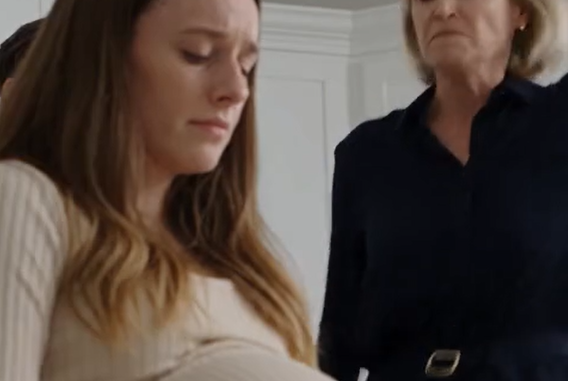
The silence that followed Daniel’s statement felt heavier than lead.
Officer Miller took a slow step between Daniel and Margaret, his hand resting casually near his duty belt.
“Ma’am, I need you to step out into the corridor immediately,” the officer commanded.
Margaret’s face morphed from disbelief into sheer, burning outrage.
“Do you know who my family is?” she snapped, clutching the Pyrex dish to her chest like a shield.
“I don’t care who your family is, ma’am,” Officer Miller replied without a hint of hesitation.
“Daniel, you tell this man to leave us alone,” she insisted, her voice trembling with an unnatural fury.
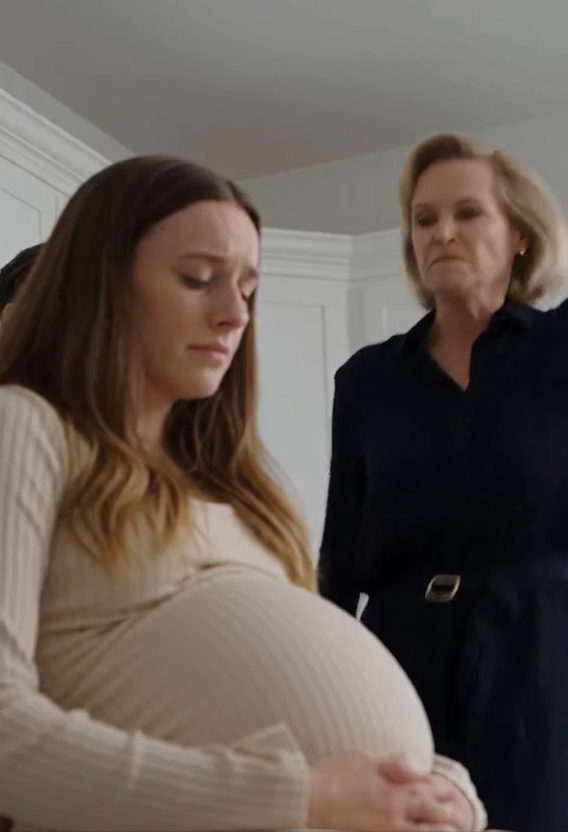
Daniel did not raise his head from his hands.
“Get her out of here, Officer,” Daniel whispered, his voice cracked and hollow.
“Please, just take her away.”
Officer Miller gestured firmly toward the open doorway of the hospital room.
“Outside, ma’am. Now.”
Margaret backed out slowly, her eyes glaring at me through the dim light of the recovery room.
“You’ve ruined this family, Emily,” she hissed, spitting the words like poison.
“You’ve poisoned my boy against his own mother.”
The officer guided her into the hallway, his voice rising in authority as he called for security.
The heavy door clicked shut, cutting off the venom of her voice.
I lay frozen beneath the thin hospital blanket, unable to make sense of the void in my body.
The monitor beside my bed hummed a steady, mocking rhythm.
It had measured two heartbeats only a few hours ago.
Now, it only measured mine.
Daniel stood up, his tall frame trembling violently under the sterile fluorescent light.
His shirt was still stained with dark, dried patches of my blood.
He walked toward my bed and fell to his knees beside the guardrail.
“Emily,” he choked out, burying his face into the rough cotton sheets.
“I’m sorry. I am so, so sorry.”
I couldn’t lift my arm to touch his hair.
My body felt disconnected, as if my nerves had severed the moment that blow struck my side.
“He was thirty-two weeks, Daniel,” I whispered, tears spilling hot and fast down my temples.
“He was kicking during the drive over.”
Daniel let out a broken sob that shook the entire bed frame.
“I should have never brought you there,” he wept, gripping my fingers tightly.
“I knew what she was like, and I brought you right into her path.”
“You didn’t kick me, Daniel,” I said, though my voice sounded strange and foreign even to me.
“Your mother did.”
“And she is going to prison for it,” Daniel said, lifting his head.
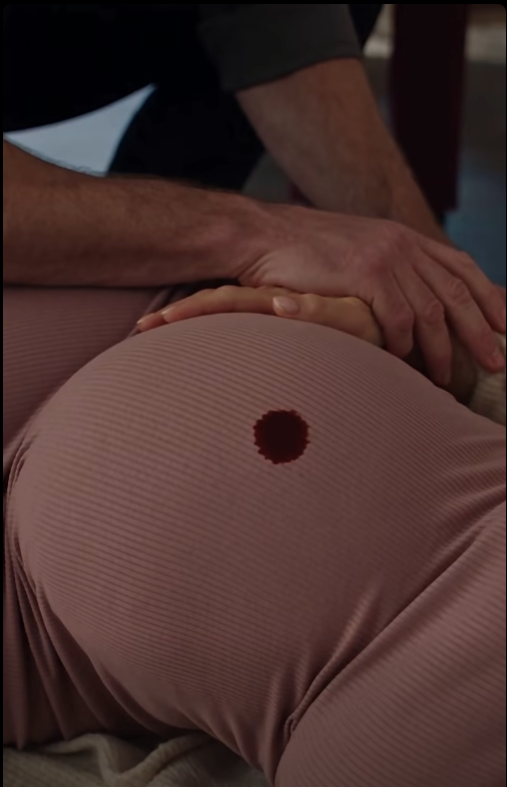
His eyes were bloodshot, rimmed with dark, red circles of grief and absolute rage.
“I swear to God, Emily, she will never walk into our lives again.”
The door opened gently, and a woman in a dark gray suit entered, accompanied by Officer Miller.
Her badge identified her as Detective Ramos from the Special Victims Unit.
“Mr. and Mrs. Hayes?” she asked softly, stepping near the foot of the bed.
Daniel stood up and nodded, wiping his wet cheeks with the back of his sleeve.
“I’m Detective Ramos,” she said, her expression grim and professional.
“I need to take your official statements while the events are still fresh.”
“She assaulted my wife,” Daniel stated firmly.
“My mother deliberately kicked Emily during an argument.”
Detective Ramos pulled a small digital recorder from her blazer pocket.
“We have Mrs. Margaret Hayes detained down the hall in a private consultation room,” the detective explained.
“She claims Mrs. Hayes tripped over a dining chair while experiencing pregnancy-related dizziness.”
A bitter, hysterical laugh tore out of my throat before I could stop it.
“Dizziness?” I asked, looking straight at the detective.
“She looked me in the eye and told me my baby wasn’t going to take her son away.”
“She swung her foot back and kicked me right into my abdomen,” I said, every word feeling like glass in my lungs.
“Did anyone else witness the altercation?” Detective Ramos inquired, clicking the recorder on.
“My father was in the kitchen, washing a platter,” Daniel answered immediately.
“He came into the dining room right after she kicked Emily, when the chair crashed.”
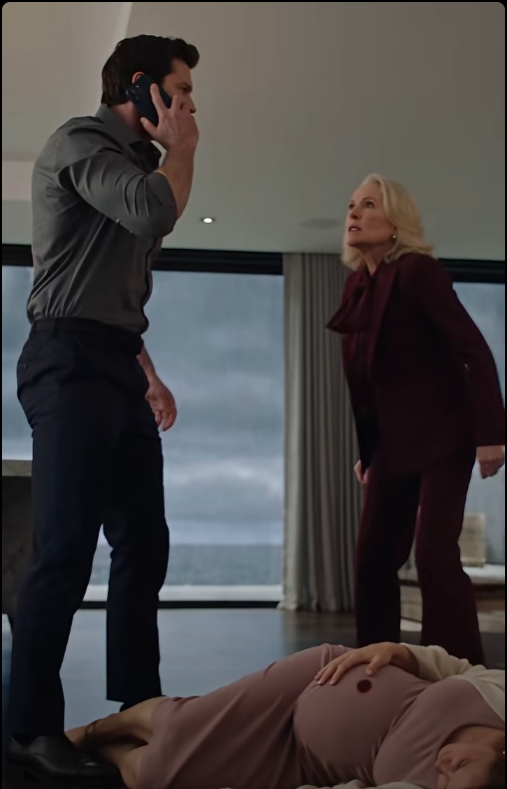
“Where is your father now?” the detective asked.
“He’s at the precinct, or on his way here with Margaret’s attorney,” Daniel said, his jaw tightening.
“My father has spent thirty years covering up my mother’s outbursts.”
“He will try to protect her,” Daniel added, staring directly into the camera lens of the detective’s recorder.
“He will lie for her, just like he always does.”
“But I was standing three feet away, Detective.”
“I saw her foot connect with my wife’s body.”
“I saw Emily collapse.”
“And I am willing to testify under oath in front of any judge or jury in this country.”
Detective Ramos took thorough notes, her pen scratching rhythmically across her pad.
“The attending physician has already documented severe blunt-force trauma to Mrs. Hayes’s left side,” she said.
“The placenta detached catastrophically as a direct result of the blow.”
Hearing the clinical explanation of my son’s death felt like a second blow to my chest.
Placental abruption.
That was the phrase the surgeon had used before they wheeled me into the operating theater.
A sudden, violent separation caused by external force.
“We are charging her with felony aggravated assault causing termination of pregnancy,” Detective Ramos said calmly.
“Depending on the district attorney’s review, that may be upgraded to aggravated manslaughter.”
The reality of those words hung suspended in the cold room.
Manslaughter.
My mother-in-law had killed her own unborn grandchild over a Sunday dinner argument.
“Will she get bail?” Daniel demanded, his voice dropping into a harsh, cold tone.
“She has a bail hearing scheduled for tomorrow afternoon,” Detective Ramos replied.
“Her attorney, Arthur Vance, has already contacted the magistrate.”
“Arthur Vance,” Daniel spat out, disgust dripping from his voice.
“Of course. The family fixer.”
“He’s the one who buried her hit-and-run three years ago when she took out a neighbor’s mailbox while drunk.”
Detective Ramos looked up sharply.
“Did you report that incident at the time, Mr. Hayes?”
“My father paid off the neighbor before the paperwork was filed,” Daniel confessed, closing his eyes.
“I was complicit because I stayed quiet back then.”
“I told myself it wasn’t my business, that keeping peace in the family was what mattered.”
Daniel looked down at me, his fingers trembling as he smoothed the hair back from my forehead.
“Staying quiet cost me my son.”
“I will not be quiet ever again.”
Detective Ramos nodded, switching off her recorder.
“Rest now, Mrs. Hayes. We have your statement, and we have the medical records.”
“A crime scene team is already securing the Hayes residence to photograph the dining area and collect any physical evidence.”
“Thank you, Detective,” I murmured.
As the detective left, my own mother rushed through the doorway, her coat half-fastened and tears streaming down her face.
“Emily! Oh, my baby girl!” my mother cried, rushing past Daniel to wrap her arms around my shoulders.
I broke down completely, burying my face against my mother’s familiar perfume, soaking her collar with my tears.
“He’s gone, Mom,” I sobbed, the words tearing through my throat like barbed wire.
“He’s gone, and he was completely healthy.”
My mother held me tightly, her body shaking with furious, helpless grief.
“I know, darling. I know,” she wept, rocking me gently.
Then she looked up at Daniel, her eyes blazing with raw accusation.
“You promised me she would be safe,” my mother said to him, her voice trembling with heartbreak.
“You promised me your mother wouldn’t cross the line!”
Daniel took a step back, taking the blow without offering a single word of defense.
“You’re right, Mrs. Jenkins,” Daniel said, his voice completely flat, completely shattered.
“I failed her. I failed our son.”
“Daniel, stop,” I whispered, pulling back from my mother’s embrace.
“It wasn’t Daniel. He called the police on her. He stood up to her.”
My mother looked between Daniel’s bloodied shirt and my pale face, the anger draining into pure sorrow.
“What kind of monster does this to her own family?” my mother asked the empty air.
Before anyone could answer, the door swung open again without a knock.
Standing in the frame was Arthur Vance, impeccably dressed in a tailored wool coat, holding a leather briefcase.
Behind him stood Daniel’s father, Richard Hayes, looking disheveled, pale, and desperate.
“Daniel,” Richard said, his voice cracking as he stepped into the room.
“Son, please. We need to talk before this gets out of hand.”
Daniel’s posture transformed instantly, his shoulders squaring and his fists clenching at his sides.
“Get out of this room,” Daniel said, his voice dropping into a dangerous, low growl.
Arthur Vance raised a manicured hand, adopting a placating, professional tone.
“Daniel, we understand the tremendous grief you and Emily are experiencing right now.”
“This is an unspeakable tragedy,” the lawyer continued smoothly.
“However, turning a catastrophic domestic accident into a criminal prosecution will only destroy this family further.”
“Accident?” Daniel shouted, stepping forward until he was mere inches from the lawyer’s face.
“She kicked my wife in the stomach!”
“She shouted that the baby belonged to her, and then she kicked her like an animal!”
Richard grabbed his son’s arm, his eyes pleading.
“Daniel, your mother was panicked! Emily lunged at her, and Margaret reacted out of self-defense!”
I pulled myself up in the hospital bed, the surgical stitches in my lower abdomen screaming in agony.
“You liar!” I screamed at Richard, the pain tearing through my core.
“You were in the kitchen! You didn’t even see it!”
Richard flinched, looking away from my glare.
“Margaret told me what happened, Emily,” Richard mumbled, his voice weak.
“She said you grabbed a carving knife from the breadboard.”
The sheer audacity of the lie struck the room like a physical slap.
Daniel stared at his father as if he were looking at a complete stranger.
“A breadboard?” Daniel asked quietly, the rage burning out into something far colder, far more lethal.
“We were eating cake, Dad. There was no carving knife on that table.”
“Daniel, please,” Richard begged, tears finally welling in his aged eyes.
“Your mother cannot survive prison. Her heart condition—”
“She didn’t care about our baby’s heart!” Daniel roared, grabbing Richard by the lapels of his jacket.
“She stopped our son’s heart forever!”
Arthur Vance reached out to separate them, but Daniel shoved his father back against the doorway.
“Get out before I have the police arrest both of you for witness tampering!” Daniel bellowed.
Two hospital security guards appeared in the hallway, alerted by the shouting.
Arthur Vance adjusted his coat, his expression hardening into cold professionalism.
“We offered you an amicable resolution, Daniel,” the attorney said quietly.
“If you pursue this, we will be forced to present Emily’s history of anxiety and emotional instability in open court.”
“We will paint this as a chaotic domestic dispute where Emily initiated the physical confrontation.”
I felt the blood drain from my face at the lawyer’s calculated cruelty.
They were already planning to smear me to save Margaret.
Daniel looked at Arthur Vance with a deadly calm that sent a chill through the room.
“Go ahead, Vance,” Daniel said softly.
“Tell the jury that Emily attacked an old woman with a phantom knife.”
“Tell them whatever lies Margaret feeds you.”
“Because I have something you don’t know about.”
Richard looked up, fear flickering in his eyes.
“What do you mean, Daniel?”
Daniel pulled out his smartphone and held it up between his thumb and forefinger.
“When Mom started screaming during dessert, I knew she was going to escalate.”
“I set my phone face up on the table next to my water glass.”
“The voice recorder was running for twenty-two minutes.”
The hallway fell completely silent.
Arthur Vance froze, his polished veneer cracking for the very first time.
Richard’s mouth fell open, his hands beginning to shake uncontrollably.
“You recorded your own mother?” Richard whispered, horrified.
“I recorded a criminal,” Daniel corrected coldly.
“I have her voice on tape saying Emily wasn’t going to take her grandson away.”
“I have the sound of the chair falling.”
“I have Emily screaming in pain.”
“And I have Margaret’s exact words right after: ‘She made me do it.’”
Daniel took a step closer to his father, his eyes dead and unyielding.
“Now get out of my sight before I play this recording for every news station in the city.”
Arthur Vance stepped backward into the corridor, pulling Richard Hayes with him by the elbow.
Neither man uttered another syllable.
The hospital security guards positioned themselves squarely across the threshold, blocking any possibility of re-entry.
Daniel stood completely motionless until the elevator chimes down the hall signaled their departure.
When he finally turned around, the fierce intensity in his face gave way to utter exhaustion.
He collapsed back onto the plastic visitor’s chair beside my mattress.
My mother approached the bed and laid a trembling hand on Daniel’s shoulder.
“I was wrong about you tonight, Daniel,” she said softly, wiping her cheeks with a damp tissue.
“You protected my daughter when it mattered most.”
Daniel looked down at his shoes, shaking his head slowly.
“I should have protected both of them hours before any of this happened.”
“You did not invite evil into that house, Daniel,” I told him, reaching across the rail to clasp his wrist.
“Your mother brought that evil all on her own.”
The door cracked open twenty minutes later, and Detective Ramos reappeared with a forensic evidence bag.
“Mr. Hayes, I need you to surrender your phone as critical evidence immediately,” she stated.
“Did Vance try to intimidate you?” Daniel asked, handing over the passcode-unlocked device without hesitation.
“Mr. Vance attempted to file an emergency injunction claiming Mrs. Hayes had a psychotic break,” Detective Ramos replied flatly.
“However, when we informed him that we recovered the dining room surveillance footage, his tone changed dramatically.”
Daniel jerked upright, his eyes widening in shock.
“Surveillance footage?” he asked.
“My parents don’t have indoor cameras.”
“Your father installed an interior security system last November,” the detective explained, sealing the smartphone in plastic.
“He told the alarm company it was for monitoring potential elder-care risks and estate security.”
“The central hub in the master study was recording the entire ground floor, including the dining room.”
A cold chill ran straight down my spine.
Richard had known the truth before he even entered my hospital room.
He had stood at the foot of my bed, spinning a manufactured lie about a carving knife, while holding digital video proof of his wife’s brutality.
“Does the footage show the strike?” I whispered, my voice breaking.
Detective Ramos looked directly into my eyes, her jaw clenched tight.
“The camera was angled from the ceiling archway connecting the foyer and the dining room.”
“It shows the entire confrontation in high definition.”
“It clearly captures Mrs. Margaret Hayes winding back her right leg and delivering a deliberate, violent kick directly into your lower torso.”
“There is no knife on the table.”
“There is no aggressive movement on your part.”
“You were attempting to push back your chair to stand up and leave.”
Hearing an objective law enforcement officer confirm what happened stripped away any lingering fog of disbelief.
“Where is Margaret now?” Daniel demanded.
“She has been processed and moved to the county holding facility,” Detective Ramos said.
“Given the video evidence, the district attorney has bypassed preliminary review.”
“She is formally charged with aggravated manslaughter of an unborn child and first-degree aggravated assault.”
“Her bail hearing is set for ten o’clock tomorrow morning.”
“The prosecutor will be requesting a complete denial of bail due to flight risk and the violent nature of the offense.”
Detective Ramos gave a respectful nod to my mother and left the room to process the digital audio file.
That night was the longest night of my life.
Every time the nurses came in to change the saline bags or check my surgical incision, the pain reminded me of what was gone.
My womb felt utterly hollow, like an empty chamber that had been forcibly emptied of life.
I barely slept.
Whenever my eyes closed, I heard the sound of that dining chair toppling backward.
I heard Margaret’s voice snarling that my baby was not going to take her son away.
By dawn, the local news trucks had already stationed themselves outside the county courthouse.
Because Richard Hayes had served on the municipal planning board for fifteen years, his family name was prominent throughout the county.
The story was irresistible to the press: a wealthy matriarch accused of killing her unborn grandchild at Sunday dinner.
At nine in the morning, my doctor entered to conduct a final examination before discharging me into my mother’s care.
“The physical damage will heal over the next six weeks, Emily,” the surgeon said gently.
“The emotional trauma, however, requires time and professional counseling.”
“We will never step foot near that family again,” Daniel promised, standing faithfully at my bedside with an overnight bag.
He had not slept a single minute.
He had spent the early morning hours on the phone with our bank, our landlord, and a moving company.
“We’re breaking our apartment lease today,” Daniel told me after the doctor left.
“I hired a packing crew to clear out our apartment in the city.”
“Everything is going directly into storage until we find a permanent house near your mother’s hometown.”
“What about your job, Daniel?” my mother asked from the corner armchair.
“I submitted my resignation letter at six this morning,” he answered without flinching.
“My company’s board of directors shares two corporate partners with my father’s commercial firm.”
“I will not draw a single paycheck that connects to Richard Hayes’s sphere of influence.”
“We are starting over from ground zero.”
His resolve was absolute, but the grief beneath it was deep and suffocating.
At nine-forty-five, Daniel kissed my forehead and walked out of the hospital to attend Margaret’s bail hearing.
I wanted to accompany him, but my body was too weak to navigate the sea of reporters outside the courthouse steps.
My mother drove me to her suburban bungalow twenty miles north of the city.
She helped me up the front porch stairs and into the guest bedroom, tucking the blankets around my shivering frame.
I turned on the small television sitting on the dresser, tuning directly into the local news live feed.
The screen showed the courthouse steps swarming with camera crews and microphones.
Moments later, the broadcast switched inside courtroom 4B.
Margaret Hayes was seated at the defense table, wearing an orange correctional jumpsuit over her slight frame.
Her hair, normally styled into an immaculate silver bob, hung tangled around her ears.
Her handcuffs clinked against the wooden table as she whispered urgently to Arthur Vance.
Behind her, Richard Hayes sat in the front spectator row, staring down at his interlocked fingers.
Daniel walked into the courtroom alone, wearing his black suit, his expression carved out of solid stone.
He did not glance toward his parents for even a fraction of a second.
He took a seat on the prosecution’s side of the aisle, right behind the assistant district attorney, Sarah Campbell.
Judge Evelyn Morales took the bench, her reading glasses perched low on her nose as she shuffled through the case files.
“Case number 2026-CR-4412,” the court clerk announced.
“The State versus Margaret Hayes.”
“Bail review hearing for felony charges of aggravated manslaughter and first-degree assault.”
Arthur Vance rose to his feet immediately, assuming an air of seasoned confidence.
“Your Honor, my client is a sixty-two-year-old grandmother with no prior criminal record.”
“She is an active member of numerous civic foundations and community boards.”
“This tragic incident represents a catastrophic domestic misunderstanding occurring within a private residence.”
“Mrs. Hayes suffers from severe cardiac arrhythmia and requires regular specialist monitoring.”
“We request that bail be set at a reasonable amount, coupled with electronic home confinement at her primary estate.”
Judge Morales looked over her glasses at the assistant district attorney.
“Ms. Campbell, does the State wish to respond?”
Sarah Campbell rose, opening a heavy manila folder on the podium.
“Your Honor, this was not a misunderstanding.”
“This was an intentional, unprovoked physical assault upon a thirty-two-week pregnant woman.”
“The medical examiner and surgical staff have confirmed that the blunt force delivered by the defendant’s foot tore the placenta from the uterine wall.”
“The infant died within minutes of impact.”
Margaret buried her face in her cuffed hands, producing dry, theatrical sobs that echoed across the microphone.
“She’s lying!” Margaret cried out suddenly, violating courtroom decorum.
“I stumbled! Emily pushed me first!”
Judge Morales banged her gavel with authority.
“Counsel, maintain control of your client, or she will be removed to the holding cells immediately.”
Arthur Vance placed a firm hand on Margaret’s shoulder, urging her back into her seat.
“Your Honor,” Sarah Campbell continued relentlessly.
“The State has submitted both audio and video evidence retrieved directly from the Hayes residence.”
“The video clearly demonstrates that Mrs. Hayes stood up, paused, and intentionally swung her right boot into the victim’s pregnant abdomen.”
“Furthermore, the digital audio captured by the defendant’s own son documents the defendant stating, and I quote:”
“‘That child will carry our name, and you are not going to use my grandson to take my son away from me.’”
“Followed moments later by: ‘She made me do it.’”
A collective murmur erupted throughout the gallery of journalists and observers.
Richard Hayes dropped his face entirely into his hands, unable to look up.
“In addition,” the prosecutor added, glancing back toward Daniel.
“The victim’s husband, who is the defendant’s biological son, is present today to provide an impact statement regarding bail.”
Arthur Vance sprang to his feet, waving his arms.
“Objection, Your Honor! Bail proceedings do not accommodate victim impact statements when the defense is merely establishing appearance security!”
“Overruled, Mr. Vance,” Judge Morales stated firmly.
“Under state victim rights statutes, the immediate next-of-kin has standing to address potential safety concerns.”
“Mr. Daniel Hayes, you may approach the podium.”
Daniel stood up, tall and unyielding, smoothing down his dark jacket.
He walked up to the microphone, his posture rigid with an icy, calm fury.
Margaret turned her head, her face twisting into a pleading, motherly expression.
“Daniel,” she whimpered, letting her tears spill openly.
“Daniel, my boy, look at me. Tell them it was an accident.”
Daniel looked down at her from the wooden podium, his eyes colder than the winter sky outside.
“My name is Daniel Hayes,” he began, speaking clearly into the microphone.
“The woman sitting in the orange jumpsuit gave birth to me thirty-two years ago.”
“For my entire life, she treated everyone around her as an extension of her own ego.”
“She controlled my education, my career choices, and tried to control my marriage.”
“When she realized she could not control the child my wife was carrying, she destroyed him.”
Margaret let out an audible gasp, clutching Vance’s sleeve.
“Daniel, stop this!” Richard shouted from the spectator benches, leaping to his feet.
The bailiff immediately pushed Richard back down into the wooden pew, warning him to remain silent.
Daniel did not even flinch at his father’s outburst.
“Margaret Hayes did not stumble,” Daniel continued, his voice ringing through the silent courtroom.
“She kicked my wife deliberately, with full knowledge that Emily was eight months pregnant.”
“She killed our son, who we had already named Liam.”
“Liam never got to open his eyes.”
“Liam never got to draw a single breath of air.”
“He died in a pool of his own mother’s blood on Margaret Hayes’s dining room floor.”
Several people in the gallery wiped their eyes, the sheer horror of the testimony gripping the entire room.
“If this court grants her bail,” Daniel said, turning to look directly at Judge Morales.
“You are telling every violent abuser in this state that money and prestige allow you to murder your own grandchild with impunity.”
“She is not a fragile grandmother.”
“She is a danger to my wife, to my community, and to anyone who dares to tell her no.”
“The State of Ohio must keep her locked behind bars where she belongs.”
Daniel stepped away from the podium and walked back to his chair, not once looking at his mother.
Margaret began shrieking hysterically, kicking against the modesty panel of the defense table.
“He’s an ingrate! I bought him everything! I gave him his life!”
“He was nothing without me! Nothing!”
Judge Morales slammed her gavel down three times in rapid succession.
“Bail is denied,” Judge Morales ruled without an ounce of hesitation.
“The defendant will remain remanded in custody without bond pending trial.”
“Trial date is set for March fourteenth.”
Two armed deputies seized Margaret under her arms, hoisting her up from the defense chair.
She thrashed against their grip, her face contorted with unadulterated venom as she glared at her only son.
“You’re dead to me, Daniel!” she screamed as they dragged her toward the steel holding door.
“You will rot in hell for betraying your own mother!”
The steel door slammed shut behind her, cutting off the echoes of her screaming.
Daniel stood up, buttoned his jacket, and walked out the side exit accompanied by court security officers.
Watching the television screen from my mother’s bedroom, I let out a long, ragged sob.
She was behind bars, but the justice did not bring Liam back.
An hour later, the front door of my mother’s house opened, and Daniel stepped inside.
He took off his coat, walked down the narrow hallway, and entered my bedroom.
He sat on the edge of the mattress and pulled me into his arms, burying his face into my neck.
We wept together for hours, mourning the boy who would never sleep in the wooden crib we had assembled in our city apartment.
Two weeks passed in a daze of funeral arrangements, private memorial services, and legal depositions.
We held a private burial for Liam under an ancient oak tree in my hometown cemetery.
No members of the Hayes family were invited.
Two security guards stood at the cemetery gates to ensure Richard Hayes could not approach the perimeter.
When we returned to my mother’s home after the burial, a registered courier van pulled into the driveway.
The courier handed Daniel a certified legal packet bearing the letterhead of Hayes Capital Management.
Daniel tore open the thick cardboard envelope on the kitchen counter.
Inside was a series of legal notices signed by Richard Hayes.
The first document was an immediate demand for the repayment of a two-hundred-thousand-dollar personal loan Daniel had supposedly received for college tuition ten years prior.
The second document was an eviction notice and a claim of property repossession for our city vehicle, which had originally been registered under a Hayes corporate leasing account.
Richard Hayes was attempting to financially bankrupt his own son to force Daniel to drop the criminal testimony against Margaret.
Daniel held the documents in his trembling hands, a strange, bitter smile touching his lips.
“They really think they can buy our silence with threats,” Daniel murmured, dropping the papers onto the kitchen table.
“What does he want, Daniel?” my mother asked, looking over the legal notices with deep concern.
Daniel looked up, his eyes hardened with a renewed, ferocious determination.
“He wants me to recant my testimony before the grand jury convenes next Tuesday.”
“He thinks if he cuts off our resources, we will crumble and accept a plea deal that keeps Margaret out of prison.”
“What are you going to do?” I asked, leaning against the doorframe for support.
Daniel walked over to the kitchen counter, picked up his phone, and dialed a number he had kept saved in his contacts for five years.
“I’m calling the Internal Revenue Service and the State Securities Commission,” Daniel said calmly.
“My father spent fifteen years using his corporate accounts to hide Margaret’s offshore assets and evade state real estate taxes.”
“He forced me to sign balance sheets as a junior partner when I was twenty-four.”
“I still have access to the mirrored financial servers.”
“If Richard Hayes wants to use the law as a weapon to protect a murderer,” Daniel whispered, pressing the call button.
“I am going to burn his entire empire to the ground.”
Daniel held the phone to his ear, his knuckles white against the dark casing.
The line clicked on the fourth ring.
“Federal Investigations Division, Agent Miller speaking,” a sharp voice answered.
“Agent Miller, my name is Daniel Hayes,” he said, speaking without a tremor.
“I am the junior managing partner of Hayes Capital Management.”
“I have complete digital ledgers, offshore shell accounts, and double-entry balance sheets proving fifteen years of continuous wire fraud and tax evasion.”
There was a sudden, pregnant pause on the other end of the line.
“Mr. Hayes,” the agent responded, his tone shifting into immediate professional alertness.
“Are you prepared to provide sworn depositions and physical media drives under federal subpoena?”
“I am at my mother-in-law’s residence right now,” Daniel answered steadily.
“I will deliver encrypted external flash drives containing every transaction ledger to your regional field office by noon tomorrow.”
“We will dispatch two federal agents to escort you, Mr. Hayes,” Agent Miller replied.
“Do not alter, move, or discuss those digital files with any family member.”
Daniel disconnected the call and placed his phone face down on the laminate table.
He looked over at my mother, who stood frozen with her hand over her mouth.
“Daniel,” she whispered, her eyes wide with shock.
“Your father is an influential man. Won’t this pull you down with him?”
“I signed those corporate documents under duress when I was fresh out of business school,” Daniel said coldly.
“I kept duplicate transaction logs because I always knew that family would turn their claws on me if I stepped out of line.”
“I never planned to use them.”
“I wanted to move away quietly, raise Liam, and build our own life.”
He looked across the kitchen toward me, his gaze softening into profound grief.
“They didn’t just cross a line, Emily.”
“They killed my boy and then mailed me a bill for my college education to keep me quiet.”
“They have nothing left to threaten me with.”
Over the next twenty-four hours, the reality of our new life took shape with terrifying speed.
At seven o’clock the following morning, two black sedans pulled into the gravel driveway.
Agent Miller, a tall man in a navy overcoat, walked up the steps accompanied by a forensic financial analyst.
Daniel invited them into the modest living room, placing four encrypted hard drives onto the coffee table.
“This contains fifteen years of transaction records from Hayes Capital Management,” Daniel explained, pointing to the silver drive.
“The primary server route maps through an account in Grand Cayman under the entity name ‘Mar-Rich Holdings.’”
“Margaret controlled the signatory rights for the shell corporation, while my father moved commercial real estate assets through it to evade municipal taxes.”
Agent Miller inspected the hardware and slipped each drive into an anti-static evidence bag.
“If the metadata matches the initial filings, Mr. Hayes, this will trigger an immediate asset freeze by the Department of Justice.”
“Freeze every single cent,” Daniel said without an ounce of hesitation.
“Let them see how Arthur Vance defends a manslaughter charge when their legal retainers bounce.”
At noon, the legal net expanded even further.
Assistant District Attorney Sarah Campbell arrived at the house accompanied by Detective Ramos.
They sat around our small kitchen table, spreading out color photographs taken from the dining room security system.
My heart seized at the sight of the polished oak table, the knocked-over chair, and the dark pool staining the cream carpet.
“Emily,” Sarah Campbell said gently, resting a hand over mine.
“The grand jury has reviewed the surveillance footage and Mr. Hayes’s audio recording.”
“They returned a true bill on all counts.”
“Margaret Hayes is formally indicted on aggravated manslaughter, first-degree felony assault, and intentional termination of a pregnancy.”
“Her trial will proceed without delay.”
“What about Richard?” Daniel asked, leaning forward against the counter.
“Richard Hayes approached a state witness yesterday,” Detective Ramos interjected, pulling out an incident report.
“He attempted to deliver financial retaliation documents to Daniel through an unsanctioned legal courier.”
“The state has obtained an emergency order of protection.”
“If Richard Hayes comes within five hundred yards of you, Emily, or this property, he will be arrested on felony witness intimidation charges.”
A wave of relief washed over me, though it could not extinguish the constant, hollow ache in my chest.
Later that afternoon, the news broke across every local and regional television station.
The screen flashed breaking alerts: *“HAYES CAPITAL MANAGEMENT RAIDED BY FEDERAL AGENTS; ASSETS FROZEN IN MULTI-MILLION-DOLLAR FRAUD PROBE.”*
The news cameras caught Richard Hayes leaving his downtown corporate office in handcuffs, his jacket pulled over his face to shield his identity from the reporters.
Arthur Vance was seen running through the lobby, pursued by journalists demanding to know if the firm had collapsed.
Daniel watched the screen in absolute silence.
“He chose his side thirty years ago,” Daniel whispered to the empty room.
“He protected her monstrous ego at the expense of every person around them.”
Three weeks turned into two grueling months of preparation for Margaret’s trial.
Every morning, I woke up to an empty cradle in my heart.
The physical bruises on my ribs and side had faded into faint yellowish marks, but the incision on my abdomen remained a jagged, raised line.
It was a permanent scar reminding me of the son who had been stolen from me.
I spent hours walking through the quiet woods behind my mother’s house, trying to breathe, trying to learn how to exist in a world where my baby did not live.
Daniel was my rock, though I knew he cried in the shower every morning so I wouldn’t hear him break down.
He cooked our meals, managed every communication with the prosecution, and worked a part-time remote consulting job to keep our finances afloat.
Then came March fourteenth.
The day of the trial.
The morning air was freezing as Daniel and I arrived at the county courthouse in an unmarked police vehicle.
A barricade of state troopers held back dozens of photographers and news vans that had lined up around the block.
Daniel held my hand tightly as we walked through the metal detectors and into the fourth-floor corridor.
The double doors of Courtroom 4B swung open.
The room was packed to capacity with reporters, legal observers, and curious spectators.
Margaret Hayes was seated at the defense table, wearing a dark gray suit that hung loosely from her bony shoulders.
Two months in county lockup had stripped away her arrogant, polished exterior.
Her hair was entirely gray, unstyled and limp, and deep creases framed her thin, pale lips.
Beside her sat Arthur Vance, looking visibly exhausted and surrounded by piles of legal folders.
In the second row of the gallery, Richard Hayes sat wearing an ill-fitting trench coat, his eyes darting anxiously around the room.
He had posted bail on his federal fraud charges by mortgaging their summer cottage, but his corporate accounts were completely frozen.
He looked broken, aged by ten years in the span of two months.
When Margaret saw Daniel walk through the swinging gate, her eyes flared with a desperate, wild intensity.
She half-rose from her chair, her hand reaching out across the wooden divider.
“Daniel! Daniel, look at your mother!” she whispered frantically before Vance grabbed her arm and forced her back down.
Judge Evelyn Morales entered the courtroom, and the bailiff called the session to order.
The twelve jurors filed in, their faces solemn and neutral as they took their seats in the jury box.
Sarah Campbell stepped up to the podium to deliver the state’s opening statement.
She did not use dramatic gestures or theatrical flourishes.
She simply told the brutal, unvarnished truth.
“Ladies and gentlemen of the jury,” Campbell began, her voice steady and resonant.
“On the evening of November eighteenth, thirty-two-week-pregnant Emily Hayes sat down for Sunday dinner with her family.”
“She was carrying a healthy, thriving baby boy.”
“By nine o’clock that night, that unborn child was dead.”
“He did not die from an illness.”
“He did not die from a genetic complication.”
“He died because the defendant, Margaret Hayes, became enraged that she could not control where her adult son lived.”
Campbell pointed an accusatory finger directly at Margaret, whose gaze dropped down to the defense table.
“The evidence will show that Margaret Hayes intentionally, violently drove her booted foot into Emily’s pregnant abdomen.”
“You will hear the digital audio recording of the attack.”
“You will see the defendant’s own high-definition surveillance cameras capturing the exact moment of impact.”
“You will hear from the surgeon who had to pull a deceased infant from Emily’s ruptured womb.”
“And you will hear from the defendant’s own biological son, who stood three feet away and watched his mother destroy his child.”
Campbell paused, letting the silence settle heavily over the jury box.
“At the conclusion of this trial, justice demands only one verdict: guilty on all counts.”
When Campbell returned to her table, Arthur Vance stood up slowly to address the jury.
His confident swagger from the initial bail hearing was entirely gone.
“Members of the jury,” Vance began, his voice hoarse.
“What occurred on November eighteenth was an unimaginable family tragedy.”
“A loss of life within any family is devastating.”
“However, the State wants you to believe that a sixty-two-year-old grandmother planned a malicious, cold-blooded assault.”
“The defense will demonstrate that the dining room was an environment of escalating emotional turmoil.”
“My client suffered from severe clinical anxiety and cardiovascular episodes.”
“When Mrs. Emily Hayes stood up aggressively during the argument, my client reacted instinctively out of panic and lost her balance.”
“It was an unfortunate, tragic physical collision—not a crime.”
A quiet scoff escaped Daniel’s lips, prompting the judge to cast a cautionary glance toward our side of the courtroom.
The prosecution wasted no time in presenting their overwhelming evidence.
First came Dr. Robert Patel, the chief trauma surgeon who operated on me the night of the attack.
He took the witness stand and pulled up large, medical projection slides showing diagrams of uterine anatomy.
“The blunt-force impact was localized precisely beneath the victim’s navel on the lower left quadrant,” Dr. Patel testified.
“The force generated by the strike caused immediate, complete placental abruption.”
“The blood supply to the fetus was severed instantaneously.”
“Dr. Patel,” Campbell asked, “could a stumble or an accidental brushing against a person create this degree of internal trauma?”
“Absolutely not,” Dr. Patel answered unequivocally.
“The force required to shear the placenta in this manner is equivalent to a high-speed vehicle impact or a direct, concentrated kick delivered with full physical force.”
“It was violent, focused trauma.”
Vance cross-examined the doctor, attempting to suggest that my previous history of anemia could have weakened the placenta.
“Doctor, could pre-existing vascular fragility contribute to an abruption during an accidental fall?” Vance asked.
“No amount of vascular fragility causes localized subcutaneous bruising in the exact shape of a blunt toe-cap while the patient is still standing,” Dr. Patel retorted coldly.
Vance sat down, looking defeated.
Next came the state’s forensic video technician, who set up a large television monitor directly facing the jury box.
Sarah Campbell stepped forward and addressed Judge Morales.
“Your Honor, the State moves to publish Exhibit 14: the digital security footage recovered from the Hayes residence.”
Judge Morales nodded. “Exhibit 14 is received and may be published.”
The lights in the courtroom dimmed.
The screen lit up with the clear, high-definition view of the Hayes dining room.
I felt Daniel’s hand grip mine so hard his knuckles turned white.
On the screen, Daniel and I were sitting at the table, eating dessert while Margaret paced by the sideboard.
The digital clock at the bottom right corner read 8:42 PM.
Margaret stopped, turning toward me, her face contorted with anger.
The surveillance video played without sound, but the audio file captured by Daniel’s phone was synchronized perfectly through the courtroom speakers.
Margaret’s harsh voice filled the silent courtroom:
*“That child will carry our name, and you are not going to use my grandson to take my son away from me.”*
On the screen, my own figure pushed back the wooden dining chair and placed my hands on the table to stand.
My voice echoed through the speakers:
*“This baby is not a tool. And you don’t get to talk about my child like he belongs to you.”*
The visual that followed tore the breath straight from my chest.
Margaret took two swift, aggressive steps forward.
Her right leg cocked back like an athlete winding up for a strike.
Then, with calculated, brutal precision, she drove the heavy toe of her boot directly into the curve of my belly.
The sickening thud resonated through the courtroom speakers, followed instantly by my high-pitched, agonized scream.
On the screen, my hands flew to my stomach as I collapsed sideways onto the floor, the heavy wooden chair crashing over beside me.
Two female jurors in the front row audibly gasped, covering their mouths with their hands.
The foreperson of the jury leaned forward, his face hardening into absolute disgust.
On the monitor, Daniel sprang up from his seat, knocking over his water glass as he scrambled to the floor beside me.
Then, Margaret stood over my writhing body, smoothed her cardigan, and uttered the words that sealed her fate:
*“She made me do it.”*
The screen froze on Margaret’s cold, remorseless face looking down at the blood spreading across the rug.
The lights in the courtroom snapped back on.
The silence that blanketed the room was absolute, suffocating, and condemning.
Sarah Campbell stood beside the frozen monitor, looking directly at the jury.
“No further questions for this witness, Your Honor.”
Arthur Vance did not even stand up to cross-examine.
He stared down at the wooden table, his face pale and drained of all hope.
Judge Morales cleared her throat, her voice tight with suppressed emotion.
“We will take a fifteen-minute recess before the next witness.”
As the jury filed out, Margaret Hayes turned her head slowly toward our bench.
Her eyes locked onto mine, but the haughty arrogance was completely gone.
In its place was a terrifying, hollow madness.
She mouthed three words across the crowded courtroom:
*“You stole him.”*
Daniel stood up, stepping directly between his mother and me, shielding me entirely from her gaze.
“Next witness is me,” Daniel whispered to me, kissing the crown of my head.
“And I am going to make sure she never sees the sun again.”
The fifteen-minute recess passed in an agonized hush.
Spectators in the hallway whispered behind their hands, casting uneasy glances toward Arthur Vance and Richard Hayes.
Richard stood isolated near the frosted window, his back turned to the crowd, his shoulders hunched in defeated silence.
When the courtroom bailiff called everyone back inside, the air felt charged, crackling with impending reckoning.
Judge Morales settled into her elevated chair and nodded to the prosecution table.
“Ms. Campbell, you may call your next witness.”
Sarah Campbell stood upright, her posture radiating quiet confidence.
“The State calls Mr. Daniel Hayes.”
Daniel released my hand under the table, giving my fingers one last grounding squeeze.
He walked past the wooden swinging gate, his strides even, measured, and resolute.
As he passed the defense table, Margaret tracked his every movement like a starved predator.
“Daniel,” she whispered, the syllable breaking like brittle glass against the room’s silence.
Daniel did not turn his head.
He stepped onto the elevated witness box, placed his left hand flat on the Bible, and raised his right hand.
“Do you solemnly swear to tell the truth, the whole truth, and nothing but the truth, so help you God?” the clerk asked.
“I do,” Daniel answered, his voice clear and resonant.
He sat down in the wooden witness chair, adjusting the microphone in front of him.
Sarah Campbell approached the podium, resting her hands lightly on the wooden rim.
“State your name and relationship to the defendant for the record.”
“My name is Daniel Hayes,” he replied evenly.
“The defendant, Margaret Hayes, is my biological mother.”
“Mr. Hayes, I want to take you back to the evening of November eighteenth,” Campbell said softly.
“Why did you and your wife, Emily, attend dinner at your parents’ house that evening?”
“We went because my mother had demanded an in-person conversation regarding our upcoming relocation,” Daniel said.
“Emily was thirty-two weeks pregnant and exhausted, but I convinced her to come.”
Daniel’s voice caught slightly, a flicker of raw agony surfacing through his composed exterior.
“I told Emily it would be the last dinner before the baby arrived.”
“I told her we would set clear boundaries, make peace, and move on.”
“What occurred during the dinner, Mr. Hayes?”
“From the moment we arrived, my mother was aggressive,” Daniel testified, looking straight at the jury box.
“She treated our decision to move three hours north, near Emily’s mother, as a personal insult.”
“She believed that because she had provided financial support throughout my early twenties, she held parental rights over our unborn son.”
Margaret shifted in her chair, shaking her head with exaggerated grief, whispering something frantic to Arthur Vance.
Vance placed his hand flat over her forearm, silently urging her to remain quiet.
“Describe the atmosphere at the table right before the assault occurred,” Campbell instructed.
“My mother began cataloging every favor, every tuition payment, and every family connection she had ever extended to me,” Daniel stated.
“She stated explicitly that our child was her heir, carrying her family name.”
“She told Emily: ‘You are not going to use my grandson to take my son away from me.’”
“How did your wife respond?”
“Emily stood up calmly,” Daniel said.
“She told my mother that our baby was not a tool, and that she had no right to claim ownership over him.”
“And what did the defendant do next?” Campbell asked, stepping back to let Daniel have the floor.
Daniel looked directly across the well of the courtroom, locking eyes with Margaret for the first time that day.
Margaret flinched, shrinking back against the leather seat under the cold, unyielding weight of her son’s gaze.
“My mother pushed back her chair and walked toward Emily,” Daniel said, his voice dropping into a razor-sharp register.
“I stood up immediately and ordered her to stop.”
“Did she stop?”
“No.”
“What did she do, Mr. Hayes?”
“She cocked her right leg back and drove the toe of her boot directly into Emily’s abdomen.”
“Right beneath her navel.”
“With everything she had.”
A juror in the back row winced, shifting uncomfortably in her seat.
“Did Mrs. Emily Hayes make any threatening gestures toward your mother?” Campbell asked.
“None,” Daniel said without hesitation.
“Emily was merely pushing back her chair to leave the table.”
“Was there any knife, fork, or weapon in Emily’s hands?”
“No. We had finished dessert twenty minutes prior. There was nothing on the table except two coffee cups and water glasses.”
“What happened after the blow was struck?”
Daniel swallowed hard, his throat working as he relived the darkest minute of his life.
“The chair went over. Emily screamed—a sound I had never heard a human being make before—and collapsed onto her knees.”
“She hit the floor, curling into a ball.”
“Blood began pooling on the floor beneath her almost instantly.”
“And what did the defendant say, Mr. Hayes?”
“My mother looked down at my wife bleeding on the rug,” Daniel said, his voice trembling with suppressed fury.
“She crossed her arms and said: ‘She made me do it.’”
“Did your mother attempt to administer first aid?”
“No.”
“Did she dial nine-one-one?”
“No. She stood there and watched.”
“Who called emergency services, Mr. Hayes?”
Daniel lifted his chin, his eyes blazing with an unshakeable moral clarity.
“I did.”
“I held my wife with one hand, took my phone out with the other, and dialed nine-one-one.”
“I told the dispatcher that my mother had assaulted my pregnant wife and that we needed an ambulance and the police immediately.”
“Did your mother try to intervene during the call?” Campbell asked.
“She tried to tell me that we could handle it privately.”
“She told me that family problems did not belong in the hands of the police.”
“And what did you say to her, Mr. Hayes?”
“I told her that my son was dying, and that she was no longer my family.”
Campbell paused, letting the profound finality of Daniel’s statement echo across the high-ceilinged room.
“Thank you, Mr. Hayes. Your witness, counsel.”
Campbell returned to her table and sat down beside me.
Arthur Vance stood up slowly, adjusting his glasses.
He walked to the podium, his demeanor cautious and apologetic.
“Mr. Hayes,” Vance began smoothly.
“We all acknowledge the immense tragedy that occurred that evening.”
“However, you testified that the conversation had become very heated before the incident, correct?”
“My mother was screaming,” Daniel answered directly. “Emily and I were speaking in normal tones.”
“Is it possible, Mr. Hayes, given the rapid escalation of the argument, that your mother’s movement was an uncoordinated physical reflex?”
“No,” Daniel replied instantly.
“She paused, balanced her weight on her left foot, and kicked my wife with athletic deliberation.”
“You are not a biomechanical expert, Mr. Hayes,” Vance countered, raising his tone slightly.
“I am an eyewitness with twenty-twenty vision who was standing forty inches away,” Daniel fired back, refusing to yield an inch.
“I know the difference between an accidental stumble and a woman kicking my unborn child to death.”
A ripple of murmured reactions passed through the gallery.
Judge Morales tapped her gavel lightly once.
“The gallery will maintain order.”
Vance shifted his legal pad, visibly grasping for a lifeline.
“Mr. Hayes, isn’t it true that in the days following this tragedy, you provided federal authorities with confidential corporate documents belonging to your father’s business?”
Sarah Campbell sprang to her feet.
“Objection, Your Honor! Relevance! Corporate financial matters have no bearing on the physical assault before this court!”
Judge Morales peered over her glasses at Vance.
“Where is this going, Mr. Vance?”
“Your Honor, it goes directly to witness bias and motive,” Vance argued desperately.
“The defense intends to demonstrate that the witness harbored deep-seated financial resentment toward his parents and has orchestrated this narrative to dismantle their legacy!”
Judge Morales’s expression darkened into sheer disbelief.
“The witness’s unborn son died of blunt-force placental abruption on the defendant’s dining room floor, Mr. Vance.”
“The suggestion that he orchestrated a fatal physical assault to gain leverage over corporate accounts is offensive and absurd.”
“The objection is sustained. Move on to your next question, or conclude your cross-examination.”
Arthur Vance’s face turned bright red.
He looked back toward the defense table, where Margaret was frantically mouthing words at him, clawing at her own collar.
Vance closed his notebook with a sharp snap.
“No further questions, Your Honor.”
“The witness may step down,” Judge Morales said gently.
Daniel rose from the witness box, walked past the silent courtroom, and took his seat beside me once more.
He reached beneath the table and held my trembling fingers in his warm, steady grip.
“The State calls Emily Hayes,” Sarah Campbell announced.
A hush fell over the room as every pair of eyes shifted directly to me.
Daniel helped me stand up from the wooden chair.
The surgical scar across my lower abdomen pulled tight, a dull, familiar ache reminding me of the life that was ripped away.
I walked slowly through the gate and ascended the two steps to the witness stand.
I took the oath, my voice quiet but steady, refusing to allow Margaret to see me cower.
“Emily,” Sarah Campbell said, stepping forward with an encouraging smile.
“Take your time, and tell the jury in your own words what happened when you stood up from the dinner table that night.”
I turned my eyes toward the twelve jurors sitting in the box.
“I had loved my son for thirty-two weeks,” I began, tears welling in my eyes despite my effort to stay composed.
“I had felt him kick when I drank cold water.”
“I had felt him hiccup when I was reading books at bedtime.”
“We had painted his nursery yellow because we wanted it to be full of sunlight.”
Several jurors leaned forward, their expressions softening with profound empathy.
“When Margaret told me that my baby belonged to her name, I felt an instinctual need to protect him,” I continued.
“I placed my hands on the table to push myself up.”
“I told her: ‘This baby is not a tool. And you don’t get to talk about my child like he belongs to you.’”
“What did Margaret do then, Emily?”
“She didn’t stumble. She didn’t slip on the carpet,” I said, looking directly at the woman sitting at the defense table.
Margaret looked back, her eyes hollow, wide, and vacant.
“She looked directly at my belly, and she drove her boot into me like she was kicking down a locked door.”
“The pain was blinding.”
“I felt the life inside me stop.”
“I knew right there, while I was choking on my own breath on her rug, that my baby was gone.”
A female juror in the first row brought a handkerchief to her face, silently crying.
“Did you ever threaten Margaret Hayes?” Campbell asked.
“Never.”
“Did you reach for anything on that table?”
“Never. I only wanted to go home with my husband and protect my son.”
Sarah Campbell bowed her head respectfully.
“Thank you, Emily. Your Honor, the State tenders the witness.”
Arthur Vance stood up, but he did not approach the podium.
He looked at me, then looked down at his shoes.
“No questions, Your Honor,” Vance said quietly.
Even her own attorney knew that questioning a grieving, assaulted mother would only seal his client’s doom.
I stepped down from the witness box and returned to Daniel, collapsing into his waiting arms.
He wrapped his coat around my shoulders, shielding me as the court proceedings continued.
“Does the defense wish to call any witnesses?” Judge Morales asked.
Arthur Vance leaned over Margaret, whispering urgently for nearly two minutes.
Margaret was violently shaking her head, pushing his hands away.
Suddenly, Margaret pushed her chair back, scraping the legs loudly across the parquet floor, and stood up.
“I want to testify!” she announced, her voice piercing the stunned courtroom.
Vance leaped up beside her, terror flashing across his face.
“Your Honor, I strongly advise against this—my client is acting against legal counsel!”
“I have a right to speak!” Margaret shrieked, clutching the edge of the defense table.
“This is my life! These are my people! I will tell the truth!”
Judge Morales banged her gavel with stern precision.
“Mrs. Hayes, you have a constitutional right to testify in your own defense, provided you understand that you will be subject to cross-examination by the State under penalty of perjury.”
“Do you understand this right?”
“Yes, Your Honor!” Margaret snapped, smoothing down her wrinkled blazer with trembling, claw-like hands.
Arthur Vance closed his eyes, dropping his face into his hands in absolute surrender.
Margaret walked toward the witness box like a queen mounting a ruined throne.
She took the oath with a theatrical lift of her chin, sitting down and arranging her sleeves with deliberate care.
Vance stood at the podium, his voice devoid of any hope.
“Mrs. Hayes… please explain to the jury what happened on the evening of November eighteenth.”
Margaret smiled—a chilling, fragile smile that looked entirely detached from reality.
“I am a mother,” Margaret began, addressing the courtroom as if she were hosting an afternoon tea party.
“A mother’s duty is to protect her family lineage.”
“Emily was an interloper from the very beginning.”
“She came from nothing, and she sought to pull Daniel away from his legacy, his inheritance, and his responsibilities.”
In the gallery, spectators gasped at her brazen, unhinged venom.
“When they announced they were moving, I knew Emily was alienating my son,” Margaret continued, her voice rising in pitch.
“She was using that unborn child as a bargaining chip!”
“She provoked me! She stood up, she looked down her nose at me in my own dining room, and she defied me!”
“Mrs. Hayes,” Vance interrupted frantically, “did you intend to cause physical injury?”
Margaret glared at her attorney as if he were an insolent servant.
“I intended to teach her respect!” Margaret shouted, slamming her fist against the wooden witness rail.
“She needed to learn who holds the authority in the Hayes family!”
“I am the mother! I built everything! No girl from nowhere gets to take my grandchild away from me!”
The entire courtroom froze in absolute, stunned horror.
Arthur Vance turned completely white.
He slowly walked back to the defense table and sat down without speaking another word.
Sarah Campbell stood up from the prosecution table, her eyes sharp as a surgeon’s scalpel.
She did not even approach the podium.
She stood in the middle of the room, looking at Margaret like a spider viewing an insect caught firmly in its web.
“Mrs. Hayes,” Campbell began, her voice icy and deliberate.
“You just testified under oath that you intended to teach Emily respect.”
Margaret blinked, realizing too late the catastrophic admission she had just blurted out.
“I… I meant that she was being disrespectful,” Margaret stammered, her voice suddenly trembling.
“No, Mrs. Hayes,” Campbell pressed relentlessly, taking three deliberate steps forward.
“You did not stumble, did you?”
“It was a chaotic situation—”
“Did you, or did you not, intentionally kick your pregnant daughter-in-law to teach her respect?”
Margaret’s face flushed purple with a mixture of trapped terror and uncontrollable rage.
She gripped the edges of the witness stand, her knuckles protruding white through her withered skin.
She looked toward Daniel, searching for an ounce of the obedient boy she had dominated for thirty years.
Daniel sat motionless, his face set in cold, unforgiving granite.
“He was my grandson!” Margaret screamed, breaking down completely, her sanity fracturing in front of the twelve jurors.
“He carried Hayes blood! He belonged to me!”
Sarah Campbell turned her back on Margaret and addressed Judge Morales.
“The State rests, Your Honor.”
Judge Morales stared down from the bench at Margaret Hayes for several agonizing seconds.
The courtroom remained so dead silent that the hum of the overhead air vent sounded like a roar.
“The witness may step down,” Judge Morales said, her tone devoid of any warmth or mercy.
Margaret sat frozen in the witness chair for a second, her chest heaving as reality began to settle over her.
She looked around the room, realizing that not a single eye held pity for her.
The jury foreperson was writing frantically on his notepad, his expression set in hard, stony anger.
Arthur Vance did not even rise to offer his arm as she staggered down the wooden steps.
She dragged her feet back to the defense table, clutching her blazer around herself like an inmate wrapping a bedsheet.
“Both sides have rested,” Judge Morales announced, adjusting her glasses.
“Closing arguments will commence immediately.”
Sarah Campbell stood before the jury box once more, her posture commandingly still.
She did not pace.
She did not wave dramatic exhibits in the air.
“Ladies and gentlemen of the jury, you have witnessed something rare in this courtroom today,” Campbell said quietly.
“You have witnessed the defense of arrogance stripping off its own mask.”
“Margaret Hayes took that witness stand and confessed under oath to the core elements of the crime.”
“She told you she struck Emily Hayes to teach her respect.”
“She told you she viewed that unborn baby not as a human being with a right to live, but as family property.”
“A possession she felt entitled to control or destroy.”
Campbell gestured toward the empty space between the tables.
“Liam Hayes never took a breath because his grandmother decided her ego was worth more than his life.”
“The law does not bow to social standing.”
“It does not bow to wealth, or family name, or manufactured excuses of accidental stumbles.”
“The video showed you the strike.”
“The audio let you hear the malice.”
“And the defendant’s own mouth confirmed the intent.”
“Find her guilty of every count, and bring this family the only measure of peace our laws can provide.”
Campbell returned to her seat and sat down next to me, her breathing steady and calm.
Arthur Vance stood up to deliver his closing argument, but the spirit had completely abandoned him.
He spoke for less than seven minutes.
He pleaded for leniency, attempting to steer the jury toward lesser charges of reckless endangerment.
He spoke of Margaret’s declining health, her age, and the psychological pressures of a family dispute.
Every word fell flat, ringing hollow against the memory of Margaret shrieking that her grandson belonged to her.
When Vance sat down, he took off his glasses and dropped his head, refusing to look at his client.
“Members of the jury,” Judge Morales instructed, reading the final charge from her binder.
“You will now retire to deliberate upon a verdict for each of the counts presented.”
The bailiff escorted the twelve men and women out through the side door.
Daniel leaned over and took my trembling hands in his.
“It’s almost over, Em,” he whispered into my hair.
“We’re going to get justice for Liam.”
I nodded against his shoulder, clutching the small silver pendant around my neck that held a lock of our son’s fine dark hair.
We were escorted to a small conference room down the hall to await the deliberation process.
My mother brought us paper cups of lukewarm tea from the vending machine down the corridor.
We prepared ourselves for a long, grueling wait.
Sarah Campbell had warned us that juries often deliberated for twelve to twenty-four hours in felony manslaughter cases.
Yet forty-eight minutes later, a loud knock rattled the conference room door.
Detective Ramos opened it, her eyes wide with surprise.
“They have a verdict,” she announced.
Daniel and I stood up simultaneously, our hearts pounding in unison against our ribs.
Forty-eight minutes.
In criminal jurisprudence, a deliberation that brief meant the jury had experienced zero internal debate.
We filed back into Courtroom 4B and resumed our seats behind the prosecution table.
The gallery had doubled in size, packed tight with journalists holding digital tablets and microphones ready for broadcast.
Richard Hayes was not in his seat.
He had left the courthouse entirely, unable to witness the final judgment on his life’s companion.
Margaret sat alone beside Vance, her hands gripping the wooden armrests so violently that her knuckles were chalk-white.
The door on the right opened, and the twelve jurors marched back inside in single file.
None of them looked at the defense table.
Two of them looked directly at Daniel and me, their eyes steady and solemn.
“Has the jury reached a unanimous verdict?” Judge Morales asked, leaning forward over her bench.
“We have, Your Honor,” the foreperson answered, standing tall in the front row.
He handed a folded white slip of paper to the bailiff, who carried it up to the bench.
Judge Morales unfolded the slip, read it silently without betraying a flicker of emotion, and handed it back.
“The defendant will rise to face the jury,” Judge Morales ordered.
Arthur Vance placed a hand under Margaret’s elbow, forcing her to stand on her shaking legs.
Her knees buckled slightly, but she caught herself against the tabletop, her mouth half-open in terrified anticipation.
“On count one,” the clerk read into the microphone, “aggravated manslaughter of an unborn child, how do you find?”
“Guilty,” the foreperson declared, his voice ringing like a bronze bell through the rafters.
An audible gasp washed over the gallery.
Margaret’s head snapped back as if she had been slapped across the face.
“On count two,” the clerk continued, “felony assault in the first degree, how do you find?”
“Guilty.”
“On count three, intentional termination of a human pregnancy through unlawful force, how do you find?”
“Guilty.”
Margaret let out an unearthly wail, dropping into her chair and burying her face into her trembling hands.
“No! No! You don’t understand! He was my blood!” she screamed, thrashing against Vance’s grip.
Judge Morales slammed her gavel down twice, the sharp cracks echoing like gunshots.
“Order in this court!” Judge Morales demanded, her gaze fixing upon Margaret with piercing sternness.
“The jury is excused with the sincere gratitude of the court.”
The jurors stood and filed out of the box, their duty solemnly discharged.
Judge Morales turned her attention directly to the defense table, ignoring Margaret’s continued hysterical sobs.
“Because of the exceptional brutality of this crime, the intentional nature of the assault, and the defendant’s total lack of remorse,” Judge Morales said, “I see no reason to delay sentencing.”
Arthur Vance jumped up, his voice cracking.
“Your Honor, we request a standard sixty-day sentencing postponement for psychological and medical evaluations—”
“Denied,” Judge Morales cut him off with absolute finality.
“The court heard the defendant’s testimony firsthand.”
“The court observed her remorseless demeanor and her brazen declarations of ownership over an innocent life.”
“Margaret Hayes, stand up.”
Margaret did not move.
Two bailiffs stepped forward, seized her under each arm, and hoisted her to her feet.
She hung between them, her gray hair tangled, tears streaking mascara down her sunken cheeks.
“You committed an act of unspeakable cruelty within your own home,” Judge Morales addressed her.
“You weaponized violence against a vulnerable young woman carrying your grandchild because your vanity could not tolerate independence.”
“You extinguished an innocent life before it had the chance to begin.”
“For the charge of aggravated manslaughter, I sentence you to twenty-five years in the state correctional institution.”
“For the charge of first-degree felony assault, I sentence you to an additional ten years, to run consecutively.”
“For count three, five years, to run concurrently.”
“Total sentence: thirty-five years without eligibility for parole for the first thirty years.”
Thirty-five years.
At sixty-two years of age, the sentence was an absolute life term.
Margaret Hayes would leave prison in a wooden box.
Margaret’s legs gave out entirely.
She dropped to her knees, clinging desperately to the front of the wooden defense desk.
“Daniel!” she screamed, her voice tearing raw into the microphone.
“Daniel, help me! I’m your mother! Tell them to stop! Tell them who I am!”
Daniel stood up from his chair.
He walked past the swinging gate, stopping just two feet from where she knelt on the floor.
Margaret reached out a trembling hand, her fingers clawing toward the hem of his dark trousers.
“Daniel… please… forgive me… tell them it was a mistake…” she begged, her haughty pride dissolving into pathetic terror.
Daniel looked down at her.
There was no hatred left in his eyes.
There was only a vast, infinite ocean of dead emptiness.
“You asked me at dinner whose family I was choosing, Margaret,” Daniel said, his voice quiet, clear, and utterly cold.
“I told you that night, and I will say it for the last time.”
“I chose my wife.”
“I chose the son you killed.”
“You are not my mother.”
“You are simply the criminal who took everything from us.”
Daniel took a step back, pulling his trousers away from her reaching fingers.
“Bailiff,” Daniel said, turning his back on her, “take her away.”
The two officers grabbed Margaret’s arms, hauling her roughly backward through the steel holding door.
She thrashed and shrieked his name until the heavy magnetic latch engaged, cutting off the noise forever.
Daniel walked back to me, took my trembling face between his warm hands, and kissed my lips.
Tears streamed down both our faces, soaking our collars.
For the first time in four months, the suffocating weight in my lungs lifted enough to allow a full, clean breath.
Over the following months, the remnants of the Hayes family dynasty disintegrated entirely.
Richard Hayes pleaded guilty to multiple counts of federal wire fraud and tax evasion to avoid a maximum sentence.
He was stripped of his commercial real estate licenses, his accounts were liquidated to pay restitution to the state, and he was sentenced to seven years in federal prison.
The grand family estate where that fateful Sunday dinner occurred was seized by the federal government and auctioned on the courthouse steps.
Every antique chair, every crystal glass, and every silver platter that Margaret had cherished more than human life was sold off to strangers to pay her legal debts.
Daniel and I packed the final boxes from our temporary room at my mother’s house six months after the trial ended.
We bought a small, white clapboard cottage four hundred miles away, in a quiet coastal town where no one recognized our last name.
We legally changed our surname to Jenkins, taking my family name and cutting the final thread connecting us to the past.
Daniel started an independent accounting consultancy out of our spare bedroom, while I began teaching art at the local elementary school.
In the back garden of our new cottage, beneath a weeping willow tree that overlooked the salt marshes, Daniel built a small stone bench.
On the backrest of the bench, he carved three simple words with his own hands:
*Liam’s Peaceful Garden.*
Every morning, I sit on that bench with a warm cup of tea, listening to the seabirds circling against the sunrise.
The phantom ache in my abdomen has never completely vanished.
Some wounds carve so deeply into a woman’s soul that time can only soften the edges, never erase the scars.
Yet when Daniel walks out across the grass, sits down beside me, and wraps his arm around my shoulders, I know we survived the darkness.
He did not falter when his own flesh and blood demanded his silence.
He stood as a shield between madness and the woman he loved.
And in that quiet garden, with the ocean wind blowing through the willow branches, we finally learned how to live again.
THE END.
Để lại một phản hồi