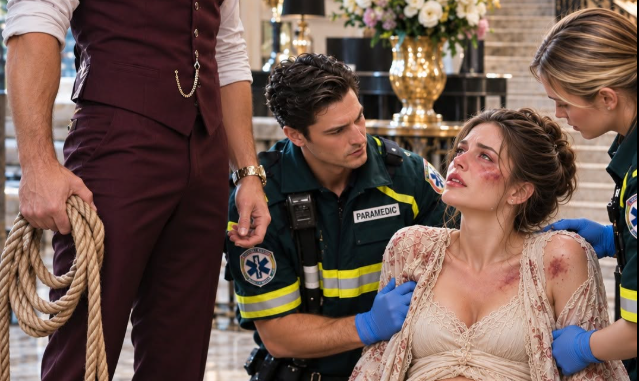
My name is Rachel, and until that doctor said the word “suspension,” my husband Daniel was still sitting outside the exam room telling everyone I had fallen while doing laundry.
The room smelled like antiseptic and stale coffee. A blood-pressure cuff squeezed my arm every few minutes, and each time it tightened, my body remembered the rope around my ankles.
Daniel had called for help only after I stopped responding. He had carried me upstairs, left the rope in the utility room, and told the paramedics I had slipped. He even repeated the story in the emergency department with the calm voice he used whenever he wanted strangers to believe he was the reasonable one.
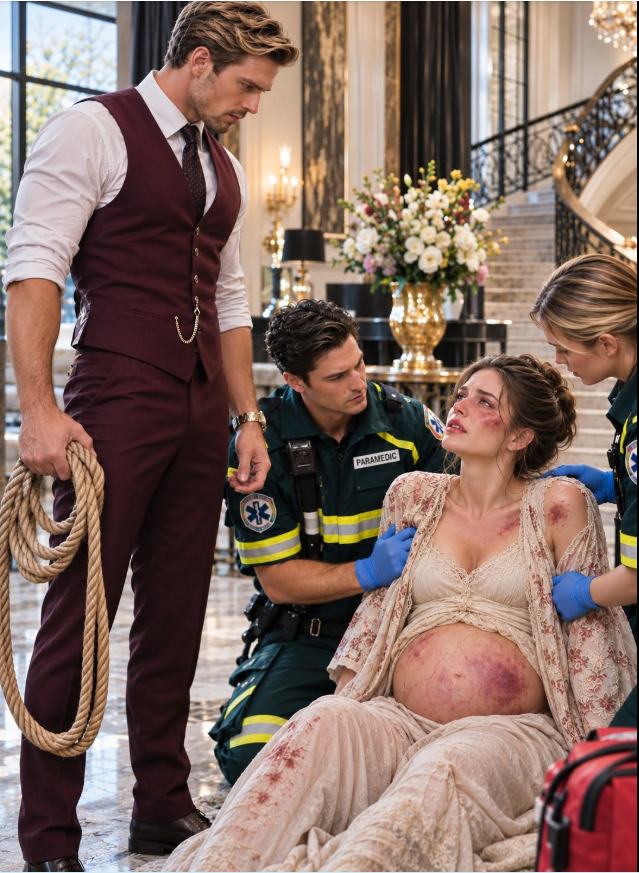
The scans would not cooperate with his lie.
The doctor pointed to the injury pattern along my spine, then to the deep pressure marks around both ankles. She did not make a speech. She simply said, “A fall does not explain this.”
I stared at the ceiling tiles and thought about how many smaller things I had explained away before that night: Daniel taking my car keys because pregnancy made me “forgetful,” checking every grocery receipt, answering my phone before I could reach it, and telling my older sister Emily that I needed space.
Three months earlier, Emily had stood in my driveway and said, “You do not have to defend him to me. Just remember my number.”
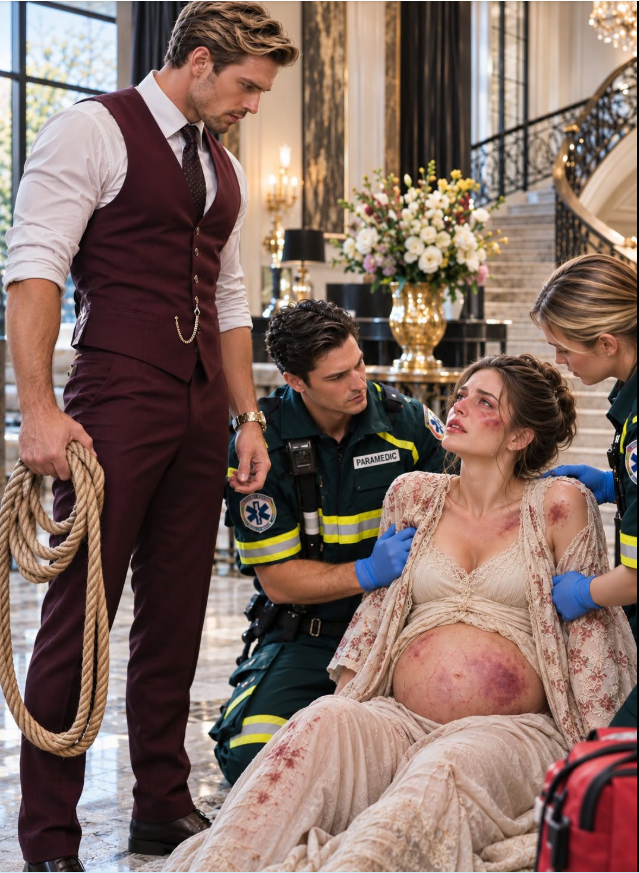
I had remembered it.
The doctor asked whether Daniel had hurt me before. I said no automatically, then heard how frightened that answer sounded. My hand moved over the hospital blanket toward the place where my baby had been moving the day before.
“He never did this before,” I whispered. “But he kept saying the baby had to be a boy.”
Outside the door, Daniel’s voice rose. He wanted to know why the exam was taking so long. He wanted my phone. He wanted discharge papers.
The doctor looked at the nurse, and the nurse quietly locked the door.
Daniel knocked once, hard enough to shake the metal frame. “Rachel, tell them you fell. We can go home and try again.”
Something inside me changed—not because I suddenly stopped being afraid, but because he had said “try again” before I had even been allowed to grieve.
The doctor stepped closer to the door. “Did Rachel fall,” she asked, “or did you hang her from that beam?”
Daniel answered through the wood without hesitation.
“I did what I had to do. She knew how important a son was.”
The doctor’s pen stopped over the chart. Daniel had not denied the rope, the beam, or the reason. He had corrected her wording, as if cruelty became acceptable when a husband called it necessary.
She turned back to me. “Rachel, do you want his exact words entered into your medical report?”
For the first time since Daniel tied the rope around my ankles, the next choice belonged to me.
I opened my mouth and said
Yes,” I said. “Write every word.”
The doctor nodded, and something in her expression hardened.
Outside, Daniel went silent.
Then his shoes scraped across the floor.
“He’s leaving,” the nurse whispered.
But he never reached the elevator.
Two police officers were already waiting at the end of the corridor.
Daniel shouted when they stopped him. He demanded to see me, demanded his phone, demanded everyone listen to “his side.”
His voice carried through the walls.
“She’s my wife!”
One officer answered, “That doesn’t make her your property.”
I closed my eyes.
For years, Daniel had made every room feel like it belonged to him.
That hospital room was the first one that didn’t.
Emily arrived twenty minutes later.
The moment she saw my face, she covered her mouth.
“Oh, Rachel.”
I expected questions.
Instead, she sat beside me and held my hand.
“I remembered your number,” I whispered.
She started crying.
“So did I,” she said.
That night, detectives photographed my injuries and collected the rope from our house.
Daniel had not even bothered to hide it.
But what they found beside it changed everything.
Inside a locked cabinet in the utility room were photographs.
Not of me.
Of another woman.
Pregnant.
Bruised.
Standing beneath the same ceiling beam.
On the back of one photograph, Daniel had written a date from six years earlier.
The detective stared at it for a long time.
“Rachel,” she asked carefully, “did Daniel ever tell you he was married before?”
My stomach turned colder than the hospital sheets.
“He said he’d never been married.”
The detective exchanged a look with her partner.
Then she showed me a second photograph.
The woman was younger than me, but the fear in her eyes was painfully familiar.
Written beneath her picture were four words:
SHE FAILED ME TOO.
I could barely breathe.
“Who is she?”
The detective pulled a chair closer.
“We’re trying to confirm that.”
Her phone rang.
She answered, listened, and slowly stood.
“What?” Emily asked.
The detective looked directly at me.
“They found her.”
My heart stopped.
“Alive?”
The detective hesitated.
“No.”
Then she added quietly, “And Rachel… she wasn’t the first.”
Để lại một phản hồi